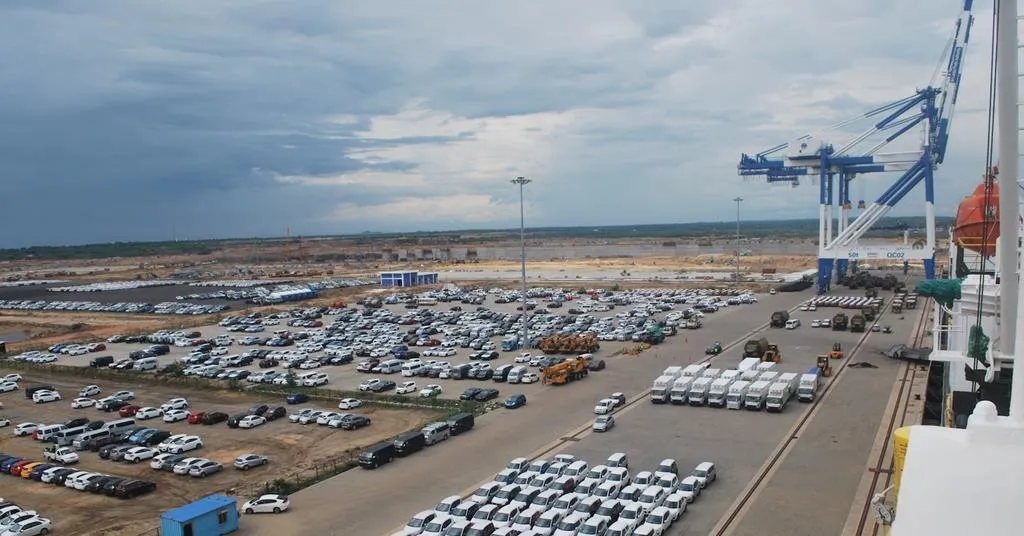
Why the government imposed a 50% duty surcharge? Sri Lanka’s vehicle imports have become a renewed external-sector concern in 2026, after Central Bank of Sri Lanka data showed a sharp rise in imports of personal and commercial vehicles. Vehicle imports reached US$195 million in March 2026, bringing total vehicle imports in the first quarter of the year to US$613 million. If that pace were to continue for the full year, the annual vehicle import bill would be around US$2.4 billion.
Against this backdrop, the government imposed a temporary 50% surcharge on the applicable Customs Import Duty for selected imported motor vehicles, effective from 16 May 2026 for a period of three months. Vehicles for which Letters of Credit were opened on or before 15 May 2026 are exempt from the new surcharge.
Surging vehicle imports: the numbers behind the concern
The sharp increase in vehicle imports reflects the release of pent-up demand after years of import restrictions. According to CBSL, vehicle imports, including both personal and commercial vehicles, amounted to US$195 million in March 2026, taking the first-quarter total to US$613 million.
This matters because vehicle imports add directly to Sri Lanka’s import bill. In the first quarter of 2026, the merchandise trade deficit widened to US$2.3 billion, compared to US$1.5 billion during the same period in 2025. The rupee had also depreciated by 2.9% year-to-date against the US dollar by end-April 2026, amid external-sector pressures linked to the Middle East conflict.
Also in Explained | Global Sources Dominating Sri Lanka’s Vehicle Imports: Key Countries, Business Networks, and Emerging Risks in 2026
Why vehicle imports matter for foreign exchange
Vehicle imports are foreign-exchange intensive because they require significant dollar outflows. When vehicle imports rise quickly, they increase demand for foreign currency and can add pressure to the balance of payments.
Sri Lanka’s external position is stronger than it was during the 2022 crisis, but it is still sensitive to large import outflows. CBSL reported that Gross Official Reserves stood at US$7.0 billion at end-March 2026, including the swap facility with the People’s Bank of China. CBSL also noted that reserves declined during March mainly due to external debt service payments, despite net foreign exchange purchases by the Central Bank.
At the same time, Sri Lanka is facing higher fuel import costs. CBSL said fuel import expenditure rose by 74.7% year-on-year to US$630 million in March 2026, due to higher fuel prices and volumes caused by the Middle East war. This means vehicle imports are rising at a time when fuel imports are also placing pressure on foreign exchange.
What the 50% surcharge means
The new measure is not a vehicle import ban. It is a temporary tax measure that raises the effective cost of selected imported vehicles.
The Ministry of Finance announced an additional 50% levy on the existing Customs Import Duty for imported vehicles. The existing 30% Customs Import Duty on motor vehicles is supplemented by the further 50% surcharge, formalised through a Gazette notification issued under the signature of President Anura Kumara Dissanayake.
The Gazette Extraordinary notification was issued under President Anura Kumara Dissanayake’s signature in his capacity as Minister of Finance, and the surcharge will remain in force for three months.
The exemption for vehicles backed by Letters of Credit opened on or before 15 May 2026 gives already-committed importers different treatment from new import orders.
Balancing revenue and economic stability
Vehicle imports can support government revenue through Customs duties and other taxes. However, they also increase demand for foreign exchange. That is the policy tension behind the latest surcharge.
The government’s move can be understood as a demand-management measure. By increasing the cost of new vehicle imports, the surcharge may slow import demand and reduce pressure on the external sector without completely stopping vehicle imports.
This is particularly important because Sri Lanka is still managing several external pressures at once: a wider trade deficit, higher fuel import costs, rupee depreciation, and external debt service payments.
What this means for businesses and consumers
For vehicle importers and dealers, the surcharge creates short-term uncertainty. Importers with Letters of Credit opened on or before 15 May 2026 are exempt, while newer import orders will face the higher cost structure.
For consumers, the measure is likely to push up prices of newly imported vehicles during the three-month period. This could shift demand towards vehicles already in the market, used vehicles, or more fuel-efficient options.
For policymakers, the issue shows the need for a clearer long-term vehicle import policy. Sri Lanka needs to balance consumer demand, government revenue, foreign exchange stability, fuel-use concerns, and transport-sector needs.
Conclusion on Why the Government Imposed a 50% Duty Surcharge
Sri Lanka’s vehicle import surge in early 2026 shows the challenge of managing economic recovery after years of restrictions. CBSL data confirm that vehicle imports reached US$613 million in the first quarter of 2026, and a continuation of that pace could push the annual bill close to US$2.4 billion.
The temporary 50% surcharge on applicable Customs Import Duty, effective from 16 May 2026, is best understood as a measure to moderate vehicle import demand at a time when Sri Lanka is facing wider external-sector pressure. It is not a ban, but it sends a clear signal that vehicle import growth will be managed more cautiously while the country protects reserves, controls foreign exchange pressure, and maintains macroeconomic stability.
Also in Explained | Buyer’s Guide: Verifying Imported Vehicles in Sri Lanka and Avoiding Import Fraud