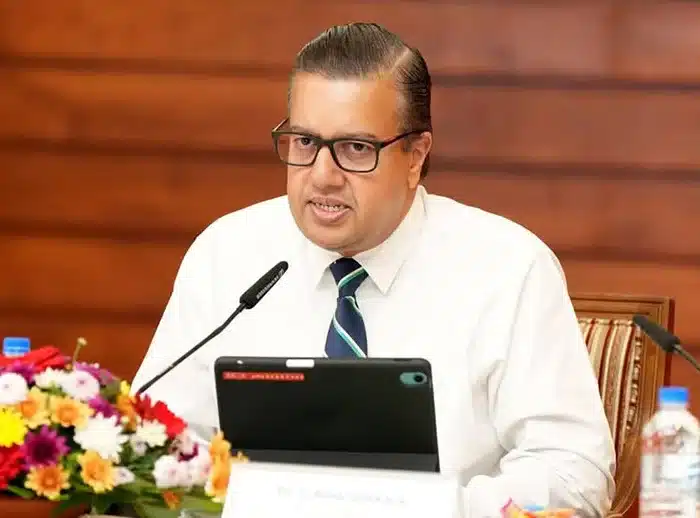
CBSL Chandranath Amarasekara on Energy Pricing | “The truth may be bitter, but it still needs to be told,” said Dr. Chandranath Amarasekara, Deputy Governor of the Central Bank of Sri Lanka, in a recent public lecture. His remarks highlight a fundamental economic reality that Sri Lanka continues to grapple with: as a country heavily dependent on imported energy for transport, electricity generation, and industrial use, it cannot realistically insulate domestic fuel and electricity prices from global market fluctuations. Amarasekara’s message is clear, expecting governments to keep prices artificially low indefinitely is unrealistic; instead, prices must be cost-reflective, supported by targeted relief for the vulnerable and aggressive promotion of renewable energy.
Speaking at a SLEA/GCF public lecture, the Deputy Governor stressed that while governments have a role in providing temporary, well-targeted support during global price spikes, long-term sustainability requires structural change. He particularly urged stronger efforts toward energy source diversification and renewable energy generation and use.
Also in Explained | PayPal Set to Launch in Sri Lanka from 15 May 2026
The Core Message: Cost-Reflective Pricing is Inevitable
Amarasekara pointed out a common behavioural inconsistency among Sri Lankans. When travelling abroad, people readily accept that fuel prices at the pump change daily in line with global oil markets. Yet, upon returning home, there is an expectation that domestic fuel prices should remain unchanged forever.
He explained:
“Countries like ours, which depend heavily on imported energy for transport, electricity generation, and industrial use, cannot set retail petroleum and electricity prices in isolation from global energy markets. Expecting governments to fix these prices is unrealistic; they must be cost-reflective.”
This statement comes at a time when Sri Lanka has seen electricity tariff adjustments in 2026, alongside continued sensitivity to global fuel price volatility and the need to move toward cost-reflective utility pricing. The Deputy Governor’s remarks reinforce the Central Bank’s long-standing position that unsustainable subsidies distort markets, strain public finances, and ultimately undermine economic stability.
The Role of Government and the Push for Renewables
While advocating for cost-reflective pricing, Amarasekara acknowledged that governments are not without responsibility. Where fiscal space allows, authorities should provide temporary and targeted relief to low-income and vulnerable households during sharp global price increases.
Crucially, he emphasised the need for long-term solutions:
“Especially in good times, it is for governments to encourage diversification of energy sources and actively promote renewable energy generation and use.”
This aligns with Sri Lanka’s national target of achieving 70% renewable electricity by 2030. Greater investment in solar, wind, hydro, and other renewables would reduce dependence on imported fossil fuels, lower the import bill, enhance energy security, and eventually moderate domestic price volatility.
Why This Message Matters for Businesses, Households and Policymakers
For businesses, Amarasekara’s message is a call to accelerate energy efficiency and renewable adoption. Companies that diversify their energy sources through rooftop solar, hybrid systems, or corporate PPAs can better manage costs and protect themselves from future tariff hikes.
For households, the emphasis on targeted relief rather than blanket subsidies suggests a shift toward more efficient social safety nets, such as targeted welfare support for the most vulnerable.
For policymakers, the remarks serve as a reminder that short-term price controls must be balanced with long-term structural reforms in the energy sector. Without sustained progress on renewables and demand-side management, Sri Lanka will remain vulnerable to repeated cycles of price shocks and fiscal strain.
A Pragmatic Path Forward – CBSL Chandranath Amarasekara on Energy Pricing
Deputy Governor Chandranath Amarasekara’s frank assessment cuts through popular expectations and highlights an uncomfortable but necessary truth. Sri Lanka must move toward a more sustainable energy pricing framework backed by meaningful diversification into renewables. This transition will not be easy, but it is essential for long-term economic stability, reduced import dependence, and protection against global volatility.
As Amarasekara noted, these are his personal views as an economist. However, they carry significant weight coming from one of the Central Bank’s senior leaders and reflect a growing consensus on the need for pragmatic, forward-looking energy policies in Sri Lanka.
The path to energy resilience requires honest conversations, cost-reflective pricing where feasible, strong social protection for the vulnerable, and accelerated investment in renewables. The sooner Sri Lanka embraces this reality, the stronger its economic foundation will become.
Also in Explained | Sri Lanka’s FMCG Sector Embraces Health and Sustainability Trends