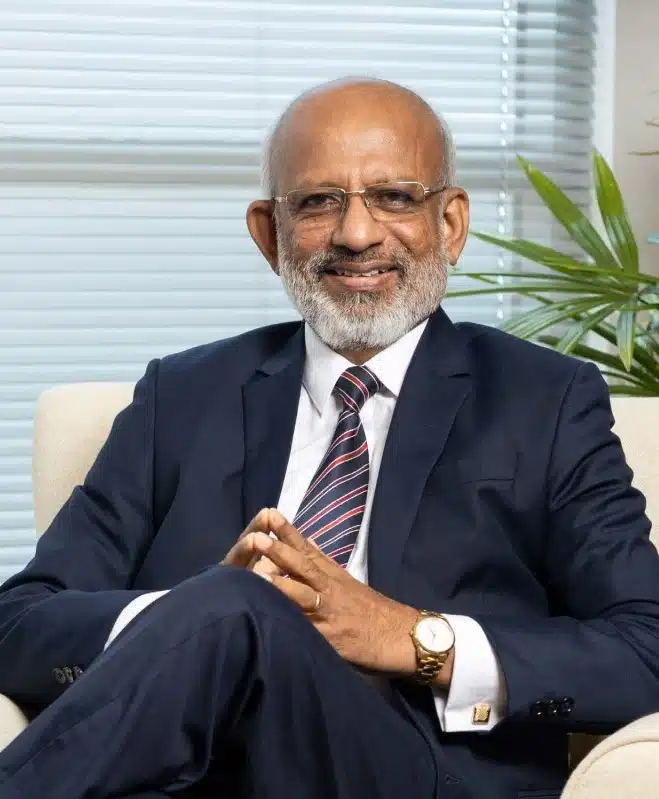
Chairman – Securities and Exchange Commission of Sri Lanka
SEC Chairman Review On Annual Report 2025
The year 2025 marked a period of stabilisation for the Sri Lankan economy, characterised by cautious optimism and a gradual rebound from the 2022 economic crisis. This progress was supported by improved macroeconomic fundamentals, including strengthened fiscal discipline, enhanced foreign reserve buffers, and restored policy credibility, which helped rebuild investor confidence and revive activity across multiple sectors. The economy expanded by 5% during the year, demonstrating strength amid heightened global uncertainty, while a long-anticipated sovereign rating upgrade marked Sri Lanka’s exit from default, signalling an important turning point in the recovery trajectory.
Within this improving macroeconomic environment, the CSE also rebounded strongly, recording an exceptional performance in 2025, underpinned by renewed investor confidence and underscoring the role of the SEC in fostering a fair, transparent, and resilient market.
Fulfilling the SEC’s Dual Mandate
Fulfilling the dual mandate of the SEC requires a careful balance between protecting investors and fostering capital formation, while also serving as a creator, facilitator, developer, and regulator of the capital market. In discharging this responsibility, we adopt a holistic approach, ensuring that each element of our mandate is appropriately reflected in policy decisions, while supporting a vibrant and resilient capital market.
12 Pillars Reform Agenda
As part of its forward-looking reform agenda, the SEC launched 12 key capital market transformation strategies under the theme ‘12 Pillars, One Vision for a Resilient Market,’ supported by dedicated committees comprising representatives from the SEC and the broader industry to ensure effective implementation. These initiatives, progressing at varying stages, collectively form a coherent roadmap to modernise market infrastructure, strengthen regulation, deepen product offerings, and enhance investor participation. Anchored on innovation, digitalisation, and robust risk management, the strategy addresses current market needs while also aligning with the evolving expectations of future investors, including the emerging Generation Alpha and Generation Beta cohorts. As these projects advance, they are expected to foster a more robust, inclusive, and globally competitive capital market.
Capital Market’s Role in Economic Growth
Sustaining Sri Lanka’s economic advancement and achieving stronger long-term growth will require a significant scaling up of investment and a corresponding expansion of the country’s capital base. At this critical juncture, the mobilisation of long-term, stable financing becomes imperative. The capital market therefore assumes a central role in facilitating efficient capital allocation, enabling both corporates and State-Owned Enterprises (SOEs) to access funding through a diverse range of instruments. Notably, 2025 witnessed a strong uptake in capital-raising activity through the CSE, reflecting growing confidence in market-based financing and reinforcing its role in supporting the country’s growth ambitions.
Supporting Corporate and SOE Funding
Notwithstanding these developments, several large, well-established Sri Lankan companies have yet to consider listing on the stock exchange, having traditionally relied on preferential bank financing. However, in light of the Central Bank of Sri Lanka’s (CBSL) directive to reduce single borrower limits effective January 2026, these companies may need to increasingly explore alternative funding avenues. In response, the SEC, together with the CSE, actively engaged with corporates to demonstrate how listing can serve as a viable and sustainable funding solution.
Many SOEs continue to face structural challenges, including fiscal constraints, governance gaps, and limited access to diversified financing. The capital market offers a viable pathway to enhance transparency, strengthen accountability, attract strategic investment, and reduce reliance on the Treasury. During the year, the SEC, together with the CSE, Ministry of Trade, Commerce, Food Security and Co-operative Development and Department of the Registrar of Companies facilitated the necessary groundwork to enable SOEs to progressively access market-based funding. This was supported through targeted, industry-specific engagements, including showcasing successful post-listing growth stories.
Regulatory Enhancements
During the year, the SEC also initiated a comprehensive revision of the Listing Rules. Separately, amendments were introduced to provide greater flexibility in the minimum public holding requirements applicable to companies seeking listing by way of Introduction, thereby facilitating broader market access while maintaining investor protection.
Strengthening Market Infrastructure
A significant milestone in strengthening Sri Lanka’s capital market infrastructure is the introduction of the Central Counterparty (CCP) framework, marking a transition towards a more robust and sophisticated post-trade environment. Building on the Delivery versus Payment (DvP) mechanism introduced in 2021, the establishment of CSE Clear (Pvt) Limited (CCL) as a licensed clearing house regulated by the SEC enhances the safety, efficiency, and resilience of the settlement process. This development aligns Sri Lanka’s market infrastructure with international best practices and lays a strong foundation for increased liquidity, broader investor participation, and the introduction of more advanced financial instruments.
Product Innovation and Sustainable Finance
We have also prioritised innovation and product diversification to align Sri Lanka’s capital market with global trends and evolving investor needs. During the year, comprehensive regulatory frameworks were introduced for green, blue, social, sustainable, and sustainability-linked (“GSS+”) bonds, positioning the market at the forefront of sustainable finance.
To date, the CSE has recorded 11 GSS+ issuances, raising approximately Rs. 82.35 billion, reflecting growing issuer readiness and investor confidence in sustainable finance instruments. Notably, 2025 recorded nine GSS+ bond issuances raising approximately Rs. 54 billion, accounting for 40% of the total corporate debt capital raised during the year, while debt capital overall represented 92% of the total capital raised in the market.
In parallel, the product suite was further broadened to include instruments such as perpetual, infrastructure, and high-yield bonds, as well as Sukuk, alongside the introduction of stock borrowing and lending and regulated short selling. Collectively, these initiatives are expected to expand market liquidity, strengthen market resilience, support long-term capital formation, and contribute to Sri Lanka’s sustainable development and climate-related financing objectives.
Investor Education and Protection
Investor education remained a central pillar of the SEC’s mandate, with a renewed focus on fostering informed and confident participation in the capital market. During the year, we strengthened collaboration with the Ministry of Education through a landmark workshop aimed at integrating financial literacy into the national curriculum, while also supporting broad-based awareness initiatives such as the unit trust campaign to promote accessible investment avenues. These efforts were complemented by the development of an educational storybook, alongside the introduction of innovative tools such as a stock market simulator designed to provide hands-on learning experiences. Collectively, these initiatives aim to build a financially literate investor base and deepen public engagement.
Safeguarding investors remained a key priority during the year, particularly in addressing the growing risk of scams and misleading market conduct. The SEC continued to issue timely alerts on potential scams and unlicensed entities through both print and electronic media, as well as through the International Organization of Securities Commissions (IOSCO) International Securities and Commodities Alerts Network (I-SCAN), a global platform for sharing cross-border warnings on suspicious and unlicensed market activities. These efforts were complemented by close collaboration with domestic enforcement agencies to identify, investigate, and take action against fraudulent actors.
Complementing these enforcement efforts, market surveillance was further strengthened through enhanced real-time monitoring capabilities, including the implementation of a Nasdaq-powered surveillance system, supported by robust in-house alert mechanisms, investor complaints, and social media intelligence. At the same time, the SEC intensified its focus on Anti-Money Laundering and Countering the Financing of Terrorism (AML/CFT), expanding supervisory coverage through risk-based inspections, strengthening beneficial ownership verification, and enhancing compliance frameworks across market intermediaries. Together with ongoing onsite and thematic inspections and strengthened governance requirements, these measures reinforce the SEC’s commitment to market integrity and combating financial crime.
Transparency, Engagement and Digital Transformation
Transparency and dialogue are key ingredients in our approach. The SEC believes that both the regulator and stakeholders must be open and clear about their objectives and progress to better identify risks and support positive outcomes. In line with this, we ramped up engagement not only with regulated entities, through regular briefings to share our expectations and observations on areas requiring improvement and encourage timely corrective action, but also with the media, highlighting the importance of responsible reporting and the dissemination of accurate information.
The SEC continued to invest in technology, infrastructure, and cybersecurity in advancing its digital transformation agenda. These efforts are enhancing access to data and information, strengthening the identification of emerging trends and risks, and supporting more informed analysis and decision-making. In tandem, we are actively developing the capabilities and leadership skills required to ensure the SEC remains agile and effective in an increasingly data-driven environment.
Appreciation and Way Forward
In closing, I extend my sincere appreciation to my fellow Commission Members for their invaluable guidance and support, and to the Officer-in-Charge/Deputy Director General and the dedicated staff of the Secretariat for their unwavering commitment and tireless efforts. I also convey my gratitude to the Hon. President and Minister of Finance, Planning and Economic Development, the Deputy Ministers, and all stakeholders whose continued trust and engagement contribute to a capital market that is vibrant, inclusive, and secure. As we move forward, we will continue to work closely with the Government and stakeholders to ensure our priorities remain aligned with national objectives.
Senior Prof. Hareendra Dissabandara
Chairman
Securities and Exchange Commission of Sri Lanka