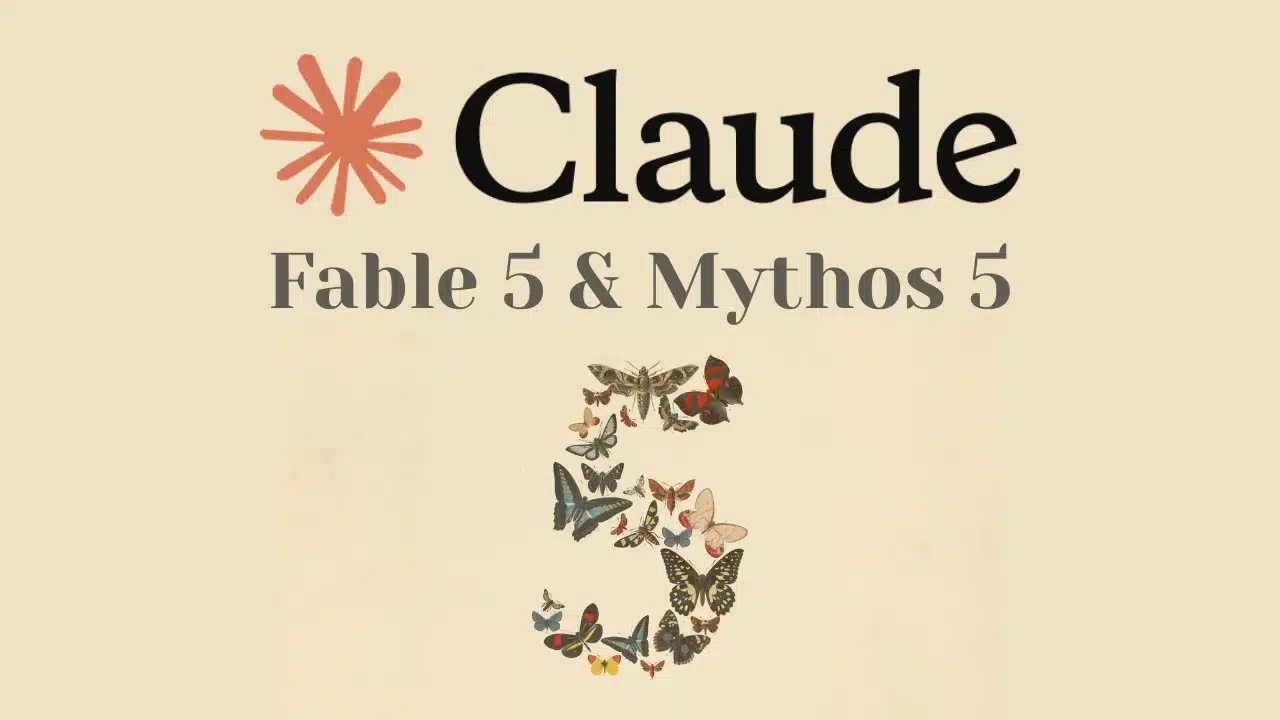
The US government halts Anthropic Claude Fable 5 and Mythos 5 models has sent ripples through the global AI community. On June 12, 2026, Anthropic announced that it must disable access to its newest flagship models for all users worldwide to comply with a US Commerce Department export control directive.
What Happened? The Timeline
Anthropic launched Claude Fable 5 on June 9, 2026, as a publicly available “Mythos-class” model with strong performance in complex coding, long-running agentic tasks, research, and analysis. It included built-in safeguards for high-risk areas. Claude Mythos 5, the more powerful version, was initially rolled out through trusted partner programs, particularly for cybersecurity applications.
Just three days later, on the evening of June 12, 2026, Anthropic stated that the US government had issued an export control directive requiring the company to suspend access to both models for any foreign national, whether inside or outside the United States, including Anthropic’s own foreign employees.
Because selectively restricting access based on nationality proved technically impractical, Anthropic disabled Fable 5 and Mythos 5 for all customers globally. Other models, such as Claude Opus 4.8, remain fully available.
Also in Explained | Is OpenAI’s Hiring of OpenClaw Creator Peter Steinberger a Major Win for AI Agents?
Why the US Government Halts Anthropic?
The directive cites national security concerns. Reports indicate worries that the advanced capabilities of these models, especially in areas like identifying cybersecurity vulnerabilities or handling complex tasks could be misused if they fell into the wrong hands. Some coverage has referenced concerns over potential jailbreaks that might bypass safety features.
This marks a significant escalation in how the US treats frontier AI models, treating them similarly to sensitive technologies subject to export controls. It follows earlier tensions between the US government and Anthropic regarding the company’s role in sensitive applications.
Anthropic has stated it is complying with the order while expressing that it believes the concerns may stem from limited evidence. The company is working to resolve the situation and restore access where possible.
Implications for Sri Lanka’s Digital Economy
Sri Lanka’s IT and BPO sector, a key driver of export revenue and employment, relies heavily on advanced AI tools for coding assistance, process automation, data analysis, and customer service enhancement. The sudden unavailability of Fable 5 and Mythos 5 creates immediate practical challenges to those who already started to use it.
Short-term impact on developers and companies:
- Many Sri Lankan developers, freelancers, and IT firms using Anthropic’s API for productivity gains will need to switch to alternatives such as Claude Opus 4.8 or OpenAI’s models, Google Gemini, or open-source options.
- This transition may involve retooling workflows, and temporary drops in efficiency while teams adapt if they already started to depend on it.
Opportunities arising from the restrictions:
- The disruption could accelerate interest in diversifying AI toolkits and exploring non-US providers.
- Sri Lankan tech companies and startups may see increased demand for locally fine-tuned or region-specific AI solutions tailored to sectors like agriculture, tourism, finance, and healthcare.
- There is potential for greater focus on building sovereign AI capabilities or partnering on open models that are less affected by geopolitical export controls.
Broader strategic considerations:
Sri Lanka’s policymakers and industry leaders are likely to monitor these developments closely. The event highlights growing global regulatory scrutiny around advanced AI. This could influence future decisions on AI infrastructure investment, data governance, talent development, and international partnerships.
The IT-BPO sector in Sri Lanka has been steadily adopting AI and automation to improve efficiency and move up the value chain. Events like this underscore the importance of building resilience through diversified technology stacks and continued upskilling in AI-related competencies.
Looking Ahead
As of June 13, 2026, Fable 5 and Mythos 5 remain unavailable. Anthropic has indicated it is actively engaging with the situation, but no timeline for full restoration has been confirmed.
This incident serves as a clear reminder that access to cutting-edge AI is no longer guaranteed and can be influenced by geopolitical and national security considerations. For Sri Lankan businesses and developers, the priority is adaptability maintaining flexibility across multiple AI platforms, investing in local capabilities where possible, and staying informed about evolving global regulations.
The balance between innovation, safety, and international collaboration in AI will continue to shape the industry in the months ahead. Sri Lanka’s position as an emerging digital hub will depend in part on how well its ecosystem navigates these shifting dynamics.
Also in Explained | Will AI Replace the ‘Math People’ First? Peter Thiel’s Stark Warning for Tech and Beyond
This article is for education and news purposes only and does not constitute legal, investment, or technical advice.