Launch of the National Export Development Plan 2026-2030
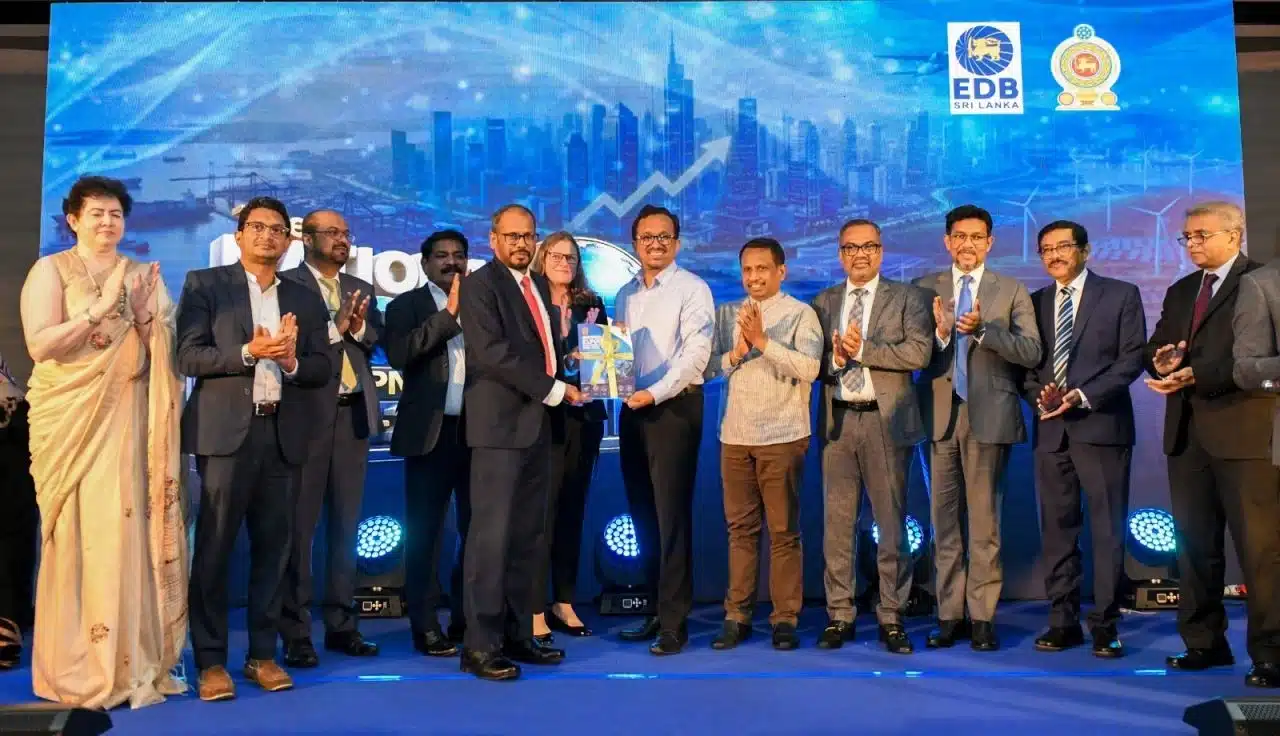
The National Export Development Plan (NEDP) 2026–2030 was launched under the patronage of the Minister of Industry and Entrepreneurship Development, Hon. Sunil Handunnetti. The event brought together senior government officials, including the Governor of the Central Bank of Sri Lanka, other ministers, deputy ministers, and representatives from the private sector and development partners.
The plan was developed under the guidance of the Ministry of Industry and Entrepreneurship Development and the Sri Lanka Export Development Board (EDB), with technical support from the Asian Development Bank (ADB) through its Policy-Based Lending programme. It was approved by the Cabinet of Ministers on 4 May 2026 as the country’s official strategic framework for export development.
Vision and Objectives
The National Export Development Plan 2026-2030 is aligned with the Government’s national vision of “A Prosperous Country, A Beautiful Life.” Its main goal is to transform Sri Lanka into a competitive, logistics-driven, and knowledge-based export hub that serves both regional and global markets.
The plan sets an ambitious yet realistic target of achieving USD 36 billion in export revenue by 2030. This target reflects the Government’s commitment to positioning exports as a key driver of economic growth, job creation, and foreign exchange earnings.
Strategic Framework: Two Pillars for Growth
The National Export Development Plan 2026-2030 is built around two interconnected pillars:
- Six Horizontal Sectors (Horizontals): These focus on cross-cutting areas that support overall export competitiveness. They typically include areas such as trade facilitation, logistics, skills development, technology adoption, regulatory reforms, and market access strategies.
- Eight Priority Sectors (Verticals): These are specific industries identified for focused development and support. The verticals are expected to receive targeted interventions to improve productivity, value addition, and global market reach.
By combining broad foundational improvements (horizontals) with focused support for key industries (verticals), the plan aims to create a balanced and sustainable export ecosystem.
Expected Benefits of the National Export Development Plan 2026-2030
The implementation of the National Export Development Plan 2026-2030 is expected to deliver several important benefits for the Sri Lankan economy:
1. Higher Export Revenue and Economic Growth
Achieving the USD 36 billion target by 2030 would significantly boost foreign exchange earnings and contribute to overall economic expansion. A stronger export sector helps reduce dependence on imports and improves the country’s balance of payments position.
2. Job Creation and Skills Development
Expanding exports, particularly in priority sectors, is likely to create new employment opportunities across manufacturing, services, agriculture, and logistics. The plan’s focus on skills development and technology adoption is expected to help build a more skilled workforce.
3. Improved Competitiveness
The horizontal strategies are designed to address key bottlenecks such as logistics efficiency, trade procedures, and access to finance. These improvements will help Sri Lankan exporters become more competitive in international markets.
4. Diversification of Export Base
By supporting both traditional and emerging sectors, the plan aims to reduce reliance on a few product categories and markets. Greater diversification helps make the export sector more resilient to external shocks.
5. Support for Small and Medium Enterprises (SMEs)
Many of the plan’s interventions are expected to benefit SMEs, which form the backbone of Sri Lanka’s export sector. Improved market access, better logistics, and capacity-building support can help smaller exporters scale up their operations.
6. Integration with Digital and Knowledge Economy
The plan’s emphasis on becoming a knowledge-based export hub aligns with Sri Lanka’s broader digital economy goals. This includes greater use of technology, digital platforms, and innovation to enhance export competitiveness.
Implementation Approach
The National Export Development Plan 2026-2030 will be implemented through coordinated efforts between government institutions, the private sector, and development partners. The Sri Lanka Export Development Board (EDB) is expected to play a central role in coordination and monitoring.
Key implementation elements include:
- Strengthening institutional capacity
- Improving trade facilitation and logistics infrastructure
- Enhancing access to finance for exporters
- Promoting product and market diversification
- Building exporter capacity through training and advisory services
Regular monitoring and progress reviews will help ensure that the plan stays on track and delivers the intended results.
Role in Sri Lanka’s Long-Term Economic Goals
The National Export Development Plan 2026-2030 is closely linked to Sri Lanka’s broader economic recovery and growth objectives. By focusing on export competitiveness and diversification, the plan supports the country’s efforts to achieve higher and more sustainable economic growth.
It also complements other national initiatives aimed at improving the business environment, attracting investment, and strengthening key sectors. A successful export strategy can help Sri Lanka better integrate into global and regional value chains, creating long-term economic benefits.



Way Forward
With the official launch of the National Export Development Plan 2026-2030, Sri Lanka now has a clear and structured roadmap to guide its export sector over the next five years. The plan’s focus on both foundational improvements and targeted sector support provides a balanced approach to building export competitiveness.
The coming years will be critical as government institutions, the private sector, and development partners work together to implement the strategies outlined in the plan. Success will depend on consistent execution, strong public-private collaboration, and the ability to adapt to changing global market conditions.
For Sri Lankan businesses, especially exporters and those looking to enter export markets, the National Export Development Plan 2026-2030 presents new opportunities for growth and expansion. Staying informed about the specific programmes and support mechanisms that will be rolled out under the plan will be important for maximising benefits.
This article is for education and news purposes only and is not intended as investment, financial or market advice.
For More News – Lanka Biz News