
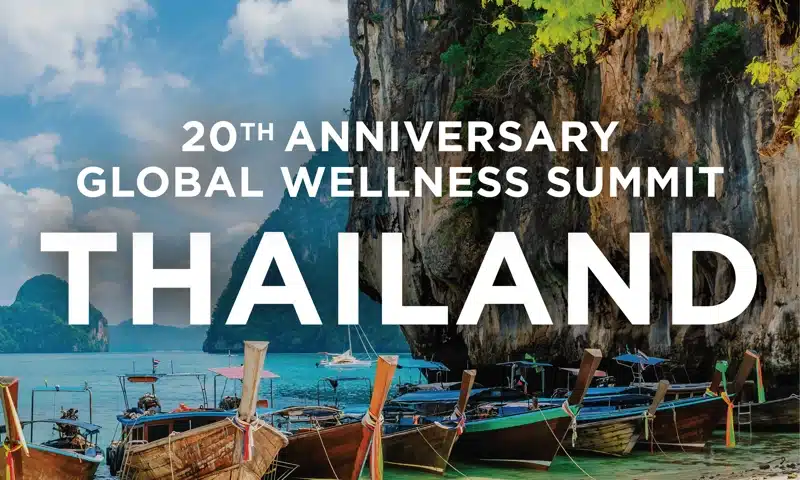
Global Wellness Summit 2026 will bring more than 70 international experts to Phuket, Thailand, from 10 to 13 November, as one of the world’s most influential wellness industry gatherings prepares to mark its 20th anniversary. The Summit’s newly released agenda places longevity science, hospitality, architecture, traditional wellness practices and human connection at the centre of discussions about the industry’s future. Held at Angsana Laguna Phuket under the theme “The Science, Art and Soul of Wellness,” the event will bring together business executives, medical specialists, investors, policymakers and innovators.
The timing is significant. According to the Global Wellness Institute (GWI), the global wellness economy reached US$6.8 trillion in 2024, its latest published measured market value, and is projected to approach US$9.8 trillion by 2029. As the industry expands, the conversation is shifting beyond demand for spas, retreats and wellness products towards how health, wellbeing and longevity can be integrated into businesses, communities and everyday life.
Global Wellness Summit 2026 Sets Out an Agenda for the Next 20 Years
The official agenda announcement released on 27 October reflects the considerable changes the wellness industry has undergone since the Summit was established. What was once a comparatively specialised sector has developed into an interconnected global market spanning preventive health, personal care, mental wellbeing, tourism, property development and technology. The anniversary gathering will examine how these industries are changing and which emerging approaches could define their next phase of growth.
The Summit will also be opened by Her Majesty Queen Suthida of Thailand, adding national significance to the event. Beyond the conference programme, the gathering provides a platform for industry leaders to examine new commercial models, research and partnerships. Its emphasis on science, creativity and traditional knowledge suggests that future growth may depend increasingly on how businesses combine these elements rather than treating wellness as a collection of unrelated services.
Longevity Science Moves from Industry Excitement to Evidence
Longevity is among the most prominent themes in the 2026 programme. Medical researchers and business leaders will examine how the industry can move beyond promises of longer life towards credible approaches that help people remain healthier as they age. Andrea Maier, director of the National University of Singapore’s Academy for Healthy Longevity, is scheduled to discuss health optimisation and precision geromedicine, while longevity researcher Kenneth R. Pelletier will address the distinction between scientific evidence and exaggerated expectations.
The commercial implications extend beyond specialist clinics. Preventive healthcare, insurance, hospitality and workplace wellbeing could all be influenced by growing interest in healthspan, the period of life spent in relatively good health. John Schoonbee, global chief medical officer at Swiss Re, is also among the scheduled speakers, illustrating the wider financial interest in prevention. However, consumer demand and scientific credibility must remain separate considerations. Products or services marketed around longevity still require evidence appropriate to their claims, particularly when they involve medical interventions.
Wellness Is Expanding into Architecture, Design and Human Experience
A distinctive feature of this year’s Summit is its attention to the built environment. British designer Thomas Heatherwick is scheduled to address how architecture influences human experience, while representatives from property development and hospitality businesses will examine healthier buildings, communities and urban environments. These discussions reflect a growing recognition that wellbeing is affected not only by individual lifestyle choices but also by the spaces people inhabit.
This opens a different commercial opportunity for developers, architects and hospitality operators. Natural light, accessible green spaces, walkable neighbourhoods, comfortable shared environments and opportunities for social interaction can become part of a property’s value proposition. The Summit will also examine music, film, immersive entertainment and creative experiences as potential contributors to wellbeing. Such approaches require careful evaluation, but they demonstrate how wellness is moving into industries that previously had little direct association with the sector.
Traditional Wellness Practices Return to the Global Conversation
While scientific innovation occupies a substantial part of the programme, the Global Wellness Summit 2026 will give comparable attention to traditional knowledge, spirituality, nature and human connection. Speakers will explore the continuing relevance of established wellness traditions and how they may fit into contemporary lifestyles. Buddhist teacher Ajahn Jayasāro is among the scheduled contributors, alongside hospitality executives examining how cultural identity and personal meaning influence modern wellness experiences.
For countries with established traditional wellness practices, this renewed attention presents both commercial possibilities and responsibilities. Cultural heritage can provide differentiation in an increasingly competitive global market, but traditional knowledge should not automatically be treated as clinical proof. Businesses seeking international recognition must consider practitioner qualifications, consumer safety, responsible health claims and protection against superficial commercialisation. The long-term value of traditional wellness may depend as much on maintaining authenticity and credibility as on attracting new customers.
From Wellness Experiences to Meaningful Personal Transformation
Another important discussion concerns the movement from an experience-based economy towards what business thinker B. Joseph Pine II describes as a transformation economy. Pine is scheduled to examine how this shift could influence the wellness industry. Rather than selling an isolated treatment or short-lived luxury experience, businesses may increasingly position their services around meaningful, longer-term improvements in customers’ lives.
For wellness destinations, this could change how services are designed and evaluated. A retreat might integrate nutrition education, physical activity, rest and practical lifestyle guidance rather than relying exclusively on treatments and accommodation. However, the language of transformation brings additional responsibilities. Providers need to distinguish measurable benefits from promotional promises, particularly when programmes claim to improve health. The strongest commercial propositions may be those that offer a valuable experience while remaining transparent about what participants can reasonably expect.
Why Thailand’s Hosting Role Matters to Asia’s Wellness Economy
Thailand’s selection as host is particularly relevant because Asia has become a major centre of wellness consumption, traditional practices and new investment. The Asia-Pacific wellness economy was valued at approximately US$2.03 trillion in 2024, according to GWI data. The region combines established wellness traditions with expanding healthcare infrastructure, international tourism and growing interest in specialised health services. Thailand’s own hospitality and traditional medicine industries make Phuket a meaningful setting for these discussions.
The 2026 Summit is supported by Thai tourism and public health institutions, demonstrating how wellness can intersect with national economic development. Representatives from Banyan Group, Chiva-Som and other prominent hospitality businesses will examine the evolving relationship between destination development, commercial growth and cultural identity. For competing destinations, the relevant lesson is not simply that wellness tourism is expanding. Governments and businesses are increasingly treating wellness as an industry that can connect investment, healthcare, hospitality and distinctive national capabilities.
What the Summit Could Mean for Sri Lanka’s Wellness Ambitions
Sri Lanka has a legitimate interest in these developments, although the Summit’s principal focus is global. As previously examined by Lanka Biz News in Wellness Industry Growth: Can Sri Lanka Move Before Rivals Do?, the country’s wellness economy was valued at approximately US$5.85 billion in 2024. That figure covers numerous wellness-related activities and should not be confused with revenue generated solely by wellness tourism. The country’s Ayurveda traditions, natural environment, hospitality industry and agricultural products nevertheless offer an established foundation for further development.
The Summit’s agenda suggests that Sri Lankan businesses should look beyond conventional retreat marketing. Opportunities could emerge through specialised hospitality, credible traditional wellness services, nature-based experiences, healthier property development and wellness-related products. Capturing those opportunities requires more than attractive destinations. Consistent service standards, appropriately qualified practitioners, international market access and credible product development will matter as regional competition increases. Sri Lanka’s strongest position would be one that builds on its distinctive capabilities rather than attempting to reproduce another country’s wellness model.
The Next Chapter of Wellness Will Be Defined by Credibility and Value
One of the most consequential developments expected at the Global Wellness Summit 2026 is the unveiling of the Global Wellness Institute’s new Global Wellness Economy Monitor. The forthcoming research is expected to offer updated evidence on the industry’s scale, sector performance and changing investment landscape. Until those findings are released, the US$6.8 trillion global market figure remains the latest published measured value, referring to 2024 rather than confirmed spending in 2026.
The Summit therefore arrives at an important point for an industry balancing rapid commercial expansion with increasingly complex expectations. Consumers are seeking healthier lives, businesses are exploring new revenue models, and governments are recognising the economic implications of prevention and wellbeing. Yet future success cannot be measured through market growth alone. The businesses and destinations that demonstrate genuine value, scientific responsibility and cultural credibility may be better placed to benefit from the next phase of wellness growth. Phuket’s gathering will not determine the industry’s future by itself, but the discussions taking place there will help reveal the priorities shaping its next decade.
Editorial Disclaimer: This article is based on official Global Wellness Summit announcements and publicly available Global Wellness Institute research as of 29 October 2026. The Summit is scheduled for 10–13 November 2026, and its agenda, speakers and programme remain subject to change. The US$6.8 trillion global wellness economy figure refers to measured activity in 2024, while the US$9.8 trillion estimate for 2029 is a forecast. References to longevity, traditional medicine and wellness services are provided for business and industry analysis and do not constitute medical or investment advice.