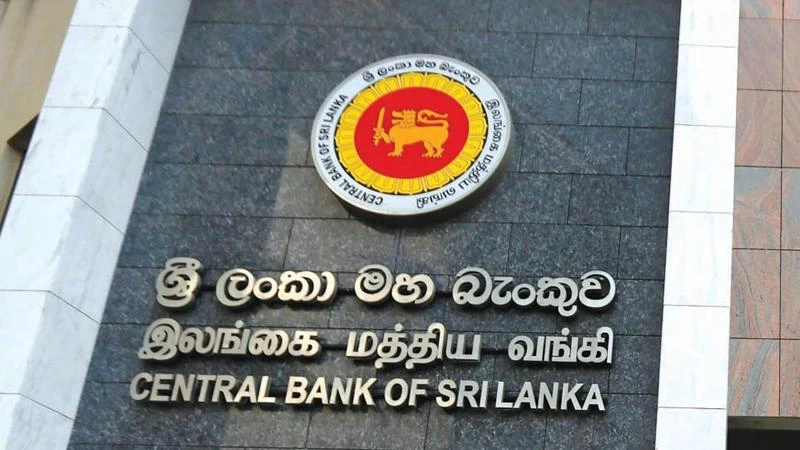

The HSBC Sri Lanka service centre exit is more than a corporate restructuring announcement. It raises an important question about the future of Sri Lanka’s position in the international business services industry, particularly as multinational financial institutions increasingly reconsider where they operate, how much their operations cost and which activities can be managed more efficiently through technology.
According to a report published on 20 October, HSBC Electronic Data Processing Lanka Ltd. (HDPL) is preparing to discontinue its Sri Lankan operations, citing rising costs and limitations on scalability. Employees reportedly received formal notification on 7 October that redundancies would take place in four stages, beginning in December 2026 and continuing through May, August and December 2027. Functions are expected to move to other HSBC service locations, including India, the Philippines and the Middle East.
The development becomes more interesting when placed alongside HSBC’s wider international strategy. On the same day the local report appeared, HSBC Group CEO Georges Elhedery discussed artificial intelligence, investment discipline and the transformation of banking operations in a CNBC interview. Although he did not identify the Sri Lankan service centre as part of that discussion, his remarks provide useful context for understanding how international banks are reconsidering their operating models.
HSBC Sri Lanka Service Centre Exit Ends a Long-Established Operating Model
HDPL began operations in April 2004 and developed into an international support centre serving HSBC customers across 24 markets. Its responsibilities extended well beyond routine administrative work, covering banking transaction processing, fund administration, customer due diligence, financial crime screening, lending operations and trade-related services.
These activities demonstrate why the centre mattered to Sri Lanka’s services economy. Global banking support operations create opportunities for professionals with expertise in finance, compliance, technology, risk management and international business processes. They also allow Sri Lankan employees to participate directly in global financial operations without relocating overseas.
The reported closure therefore represents more than the possible loss of individual positions. It could reduce an established source of specialised employment, international operational experience and demand for local business services. It also raises the commercial question of why activities successfully performed in Sri Lanka for many years are now considered better suited to alternative locations.
What Has Actually Been Confirmed About the Closure?
The available reporting indicates that employees were informed of a phased wind-down, with operations expected to conclude by December 2027. Rising costs and difficulty expanding the operation have been identified as the principal reasons. However, detailed financial comparisons between the Sri Lankan centre and alternative locations have not been made public in the material reviewed.
The potential employment impact is substantial, although the precise figures require qualification. Opposition Leader Sajith Premadasa cited approximately 3,000 direct jobs and 500 indirect jobs potentially affected, but those numbers should be treated as a reported estimate rather than a verified final redundancy figure. A detailed public statement from HSBC confirming the precise affected workforce and financial rationale was not identified as of 22 October.
It is equally important to distinguish the service-centre development from HSBC’s broader banking presence. HSBC completed the transfer of its Sri Lankan retail banking business to Nations Trust Bank on 1 May 2026, involving approximately 200,000 customer accounts. However, HSBC previously stated that its Corporate and Institutional Banking business in Sri Lanka would continue supporting international corporate clients and cross-border trade.
The service-centre exit should therefore not be described as HSBC withdrawing every banking operation from Sri Lanka.
The CNBC Interview Offers an Important Clue About HSBC’s Global Direction
In his 20 October interview with CNBC, Georges Elhedery described artificial intelligence as a transformational technology capable of changing the way HSBC conducts business. He explained that AI can improve employee productivity and help redesign banking activities, while also emphasising the importance of selectivity when financing data-centre infrastructure.
His observations about data-centre investments concerned the quality of tenant agreements, contract pricing and whether individual projects justify financial support. This is a separate subject from the closure of a banking service centre employing people to process transactions and provide operational services. Nevertheless, both discussions reflect an emphasis on evaluating investments against their commercial value and future requirements.
The more relevant part of the interview for Sri Lanka concerns HSBC’s broader view of technology and productivity. Elhedery’s remarks suggest that the bank expects AI to reshape existing operations rather than function merely as another digital tool. For countries competing to host international service centres, that raises a question about how future operating locations will be assessed as work becomes more technology-intensive.
HSBC’s Wider Strategy Makes the Context Clearer
The direction described in the CNBC interview was already visible in HSBC’s earlier corporate disclosures. In July, Elhedery outlined the bank’s AI strategy, explaining how technology was being introduced to simplify processes, improve efficiency and accelerate operational transformation. HSBC also announced plans for an AI Centre of Excellence in Singapore, expected to employ at least 100 specialists developing solutions for its global network.
HSBC’s August interim results provide further context. The Group reported first-half profit before tax of US$19.5 billion, while describing continued organisational simplification, cost discipline and increased investment in technology. This indicates that restructuring is taking place within a wider strategy of allocating resources towards activities and markets that HSBC believes can deliver stronger long-term value.
None of these disclosures proves that AI caused the Sri Lankan closure. The reported local reasons remain operating costs and scalability, and HSBC has not publicly established how much of the decision, if any, resulted from automation. What the disclosures do establish is that the bank is reassessing its international organisation at a time when technology is changing the economics of financial services.
Why Cost and Scalability Matter More Than Before
For an international service centre, a competitive salary structure is only one part of the business case. Large financial institutions must consider how quickly they can recruit qualified employees, expand specialised teams, maintain service standards and integrate operations with the rest of their global network.
A location may remain capable of delivering high-quality work while becoming less attractive for future expansion. If another established centre can accommodate additional functions more efficiently, consolidating operations may make commercial sense even when the existing workforce performs well.
However, there is not enough disclosed information to conclude which particular disadvantages influenced HSBC’s assessment of Sri Lanka. It would be premature to attribute the decision to taxation, labour regulations, infrastructure, political conditions or any other individual factor without supporting evidence.
The reported difficulty in scaling should instead prompt a broader business discussion about what multinational companies now require from the countries hosting their international operations.
Is Artificial Intelligence Changing the Value of Outsourcing?
The traditional business-process outsourcing model has often relied on a combination of skilled labour, competitive operating costs and the ability to handle large transaction volumes. AI is beginning to change that calculation by allowing some repetitive processes to be automated, supporting faster document processing, customer-service workflows and financial compliance activities.
This does not mean international banks will no longer need employees or offshore service centres. Financial operations still depend on human judgement, regulatory accountability, specialist expertise and oversight, particularly where transactions or decisions involve substantial financial risk.
However, the skills needed within those centres may change. Businesses could increasingly place greater value on professionals who can supervise automated systems, investigate complex exceptions, manage cybersecurity risks and combine financial knowledge with technical capability.
For Sri Lanka, the longer-term opportunity may therefore lie in moving further into specialised financial services rather than relying primarily on labour-cost competitiveness. The reported HSBC development highlights why that transition deserves attention, even though automation has not been established as the direct cause of the closure.
What Sri Lanka Should Learn From the Decision
The immediate priority is understanding how affected employees and their specialised skills can remain connected to Sri Lanka’s professional services economy. Banking operations, compliance, financial technology and risk management are capabilities that other international businesses may require. A properly coordinated transition involving employers, industry associations and training institutions could help experienced professionals identify opportunities before the reported wind-down is completed.
The wider opportunity is to examine Sri Lanka’s competitiveness as a destination for global business services. International companies increasingly assess the complete operating environment, including workforce availability, technical skills, infrastructure reliability, regulatory clarity and the ability to expand without disproportionate additional costs.
Sri Lanka has already demonstrated that it can support sophisticated international financial operations over extended periods. Maintaining that position will require closer attention to the changing expectations of multinational companies and greater investment in skills relevant to AI-supported financial services.
Attracting a global business to establish operations is one achievement. Retaining that business as its technology, investment priorities and operating model evolve is another challenge altogether.
The Bigger Question Is What Replaces the Jobs and Expertise
The reported HSBC service-centre exit deserves attention because it brings together two developments that will increasingly shape the global services industry: multinational consolidation and technological transformation. The local announcement identifies cost and scale as key concerns, while HSBC’s wider strategy demonstrates that the bank is simultaneously investing in AI, organisational simplification and productivity.
Those developments should be examined together without assuming that one necessarily caused the other. More detailed disclosures from HSBC would help establish the actual commercial factors behind the Sri Lankan decision and the final employment impact.
For Sri Lanka, the more useful question is not simply why HSBC is leaving a service operation that began in 2004. It is whether the country is building the skills, infrastructure and business environment required to host the next generation of international financial services.
The answer will matter long after the final phase of the reported closure in December 2027.
This article is intended for educational, business analysis and news purposes. The service-centre closure details are based on reporting available as of 22 October 2026. HSBC’s international AI strategy and the CNBC interview are discussed as wider business context, not as evidence of a confirmed causal link to the Sri Lankan decision.