
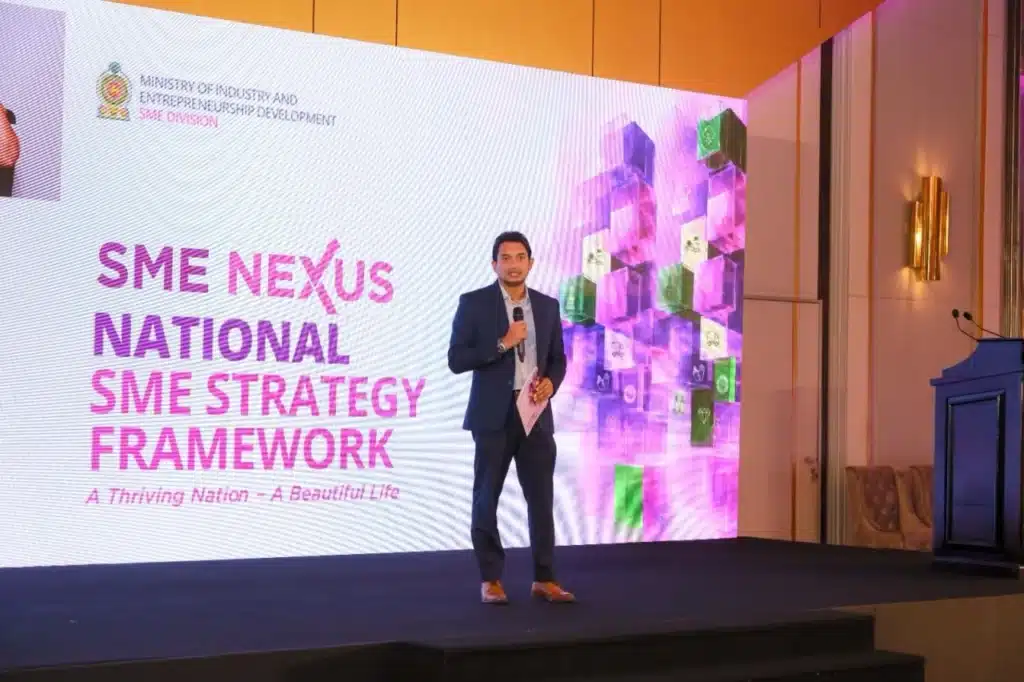
The SME Nexus Sri Lanka 2026 marks a major step forward for the country’s small and medium enterprises. The National SME Strategy Framework 2026 was officially launched on 13 May 2026 by the Ministry of Industry and Entrepreneurship Development under the patronage of Minister Sunil Handunnetthi and Deputy Minister Chathuranga Abeysinghe. This framework aims to empower SMEs, widely recognised as the backbone of Sri Lanka’s economy both locally and globally.
Launch of SME Nexus Sri Lanka 2026
The event on 13 May 2026 brought together government officials, entrepreneurs and ecosystem partners to unveil the first-ever comprehensive national strategy dedicated to SMEs. Deputy Minister Chathuranga Abeysinghe highlighted the framework’s focus on moving beyond day-to-day survival to real business growth. According to the Ministry of Industry and Entrepreneurship Development, the initiative directly addresses long-standing structural barriers that have limited SME potential for many years.
Also in Explained | Sri Lanka Opportunity Fund: A Regulated European Gateway to Sri Lanka’s Growth Story
Why SMEs Matter in Sri Lanka’s Economy
SMEs represent more than 75% of all registered businesses in Sri Lanka. They contribute 52% to the country’s Gross Domestic Product (GDP) and employ 45% of the national workforce. These numbers show clearly how important SMEs are for jobs, income generation and overall economic stability. Yet many SMEs continue to face challenges such as limited access to finance, outdated technology, complex regulations and weak links to bigger markets. The SME Nexus Sri Lanka 2026 framework is designed to change this situation by creating clear pathways for growth.
Vision Behind the SME Nexus Sri Lanka 2026 Framework
The framework is developed in line with the government’s national vision of “A Thriving Nation – A Beautiful Life”. It seeks to guide entrepreneurs from simply sustaining livelihoods to building high-growth, export-oriented enterprises. The core idea is to provide structured support so that SMEs can become more competitive, innovative and connected to global opportunities. This is not just about helping individual businesses – it is about strengthening the entire economy through increased production, exports and job creation.
The 11 Strategic Pillars of SME Nexus Sri Lanka 2026
The framework is built on a clear strategic vision supported by 11 practical pillars. Each pillar targets a specific area that SMEs need to grow successfully. Here are the key focus areas:
1. Technological and Digital Empowerment
This pillar introduces an integrated SME data platform and modern digital business tools. These resources will help entrepreneurs manage their operations more efficiently and make better decisions using up-to-date information.
2. Institutional Integration
All state institutions working on enterprise development will now align under one national objective. This coordinated approach reduces duplication and ensures smoother support for SMEs across different government bodies.
3. Service Delivery Structure
Efficient services will be delivered through “single-window” service centres and the new “SME Connect” call centre. Entrepreneurs will find it easier to get the help they need without visiting multiple offices.
4. Incubation and Startup Support
Business startup procedures and registration processes will be simplified. This pillar focuses on creating organised incubation support so new ideas can turn into successful enterprises more quickly.
5. Market Development and Value Chain Integration
Local products will be connected to Global Value Chains (GVCs). The framework aims to improve productivity, quality and market access so Sri Lankan SMEs can compete both locally and internationally.
6. Business Intelligence and Research
A dedicated Strategy Impact and Business Analytics (SIBA) unit will provide data-driven insights and market research support. This will enable better planning and evidence-based decisions for SMEs and policymakers.
7. Recognition of Ecosystem Partners
Banks, chambers of commerce and public officials who contribute meaningfully will be recognised. This encourages stronger collaboration across the entire SME support system.
8. Relationship Management
Development officers will be trained as “Relationship Officers” to offer direct guidance and ongoing mentorship. This personalised approach goes beyond one-time help and supports long-term business success.
9. Financial Access and Growth Fund
Credit readiness will be improved and a dedicated “Growth Fund” will be created for priority sectors. This will make it easier for promising SMEs to access the financing they need to expand.
10. Entrepreneurship Education and Culture
Entrepreneurial thinking will be promoted at school and university levels. This long-term pillar aims to build a stronger culture of enterprise across the country.
11. Policy and Regulatory Reforms
Laws and regulations that currently hinder growth will be reviewed and reformed. An SME Advisory Committee will help drive these necessary changes.
How the SME Nexus Sri Lanka 2026 Will Benefit Entrepreneurs
Once fully implemented, the framework will give entrepreneurs easier access to business registration, modern technology, specialised financial facilities and free advisory and mentoring services. These supports go beyond traditional assistance and focus on real transformation. SMEs that show potential for high growth and exports will receive targeted help to scale up their operations.
Deputy Minister Chathuranga Abeysinghe emphasised at the launch that the SME Nexus Sri Lanka 2026 is about creating a results-driven national system. The goal is to support entrepreneurs who want to grow their businesses, expand the national economy and increase export earnings.


Importance of These Decisions for Sri Lanka’s Future
The launch of SME Nexus Sri Lanka 2026 comes at an important time. By addressing key challenges such as finance gaps, skills shortages and market access issues, the framework can help turn the large number of SMEs into a powerful engine for economic progress. When SMEs grow successfully, they create more jobs, bring in foreign exchange through exports and contribute to a more balanced and resilient economy.
The framework also recognises the difference between basic livelihood support and true SME development. It shifts focus toward capability building, innovation and global competitiveness. This clear direction is expected to help many businesses move from small-scale operations to higher levels of productivity and impact.
Looking Ahead with SME Nexus Sri Lanka 2026
The Ministry of Industry and Entrepreneurship Development will lead implementation through three main approaches: strengthening institutions, enhancing capabilities and enabling growth while solving problems. This practical structure ensures the 11 pillars work together as a complete system rather than separate efforts.
With these measures in place, Sri Lanka aims to unlock the full potential of its SME sector. The framework provides the tools, coordination and support needed for entrepreneurs to thrive in a competitive environment.
Conclusion
The SME Nexus Sri Lanka 2026 National SME Strategy Framework represents a well-planned and forward-looking initiative by the government. Launched on 13 May 2026, it directly targets the needs of SMEs that form the foundation of the economy. By focusing on the 11 strategic pillars and providing practical solutions, the framework offers real hope for higher growth, better exports and stronger economic development across the country.
This structured approach shows a clear commitment to removing barriers and creating opportunities for Sri Lankan entrepreneurs. As implementation begins, the SME Nexus Sri Lanka 2026 has the potential to deliver meaningful benefits for businesses, workers and the overall economy in the years ahead.
This article is for education and news purposes only and is not intended as investment, financial or market advice.
Also in Explained | CBSL Introduces 70% LTV Ratio for Gold Backed Loans from 25 May 2026