
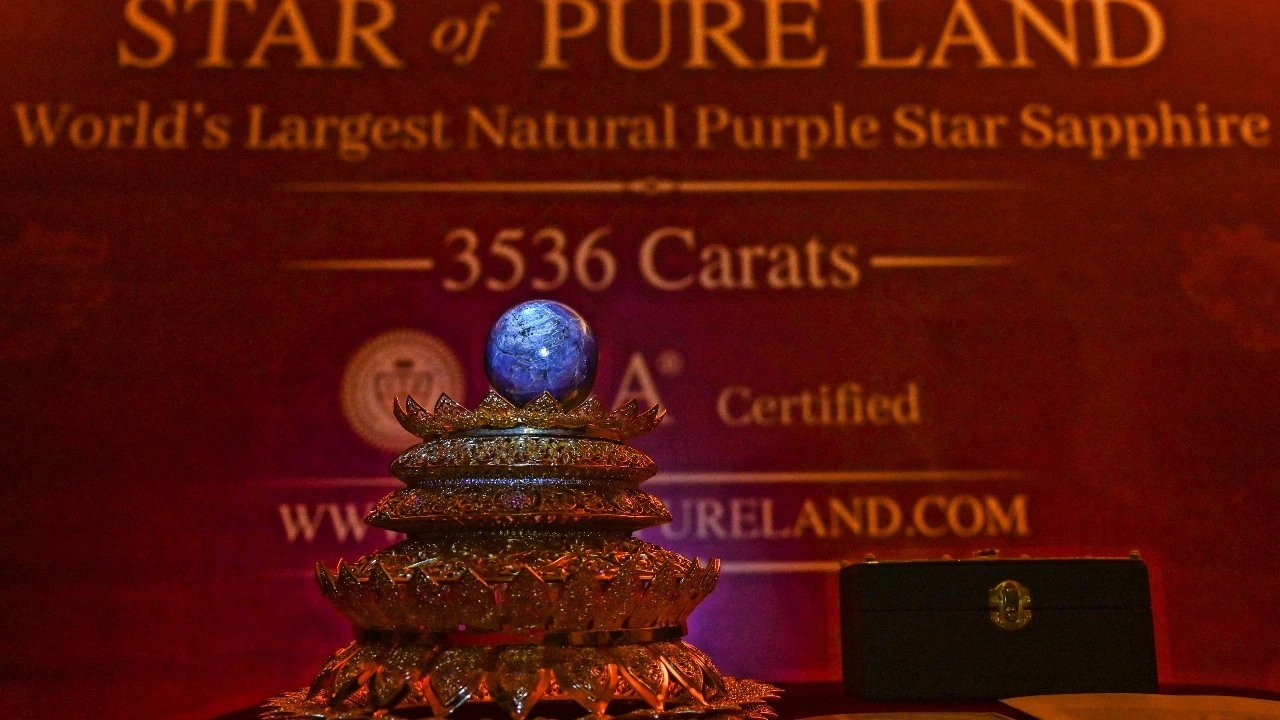
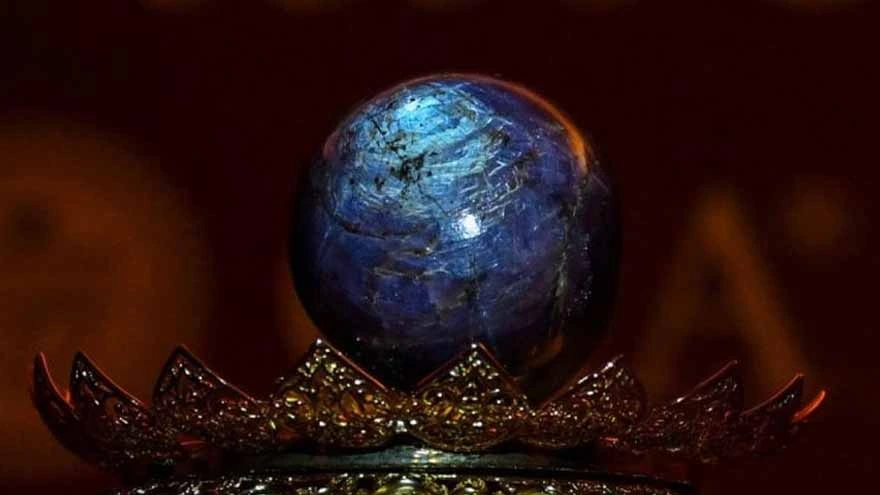
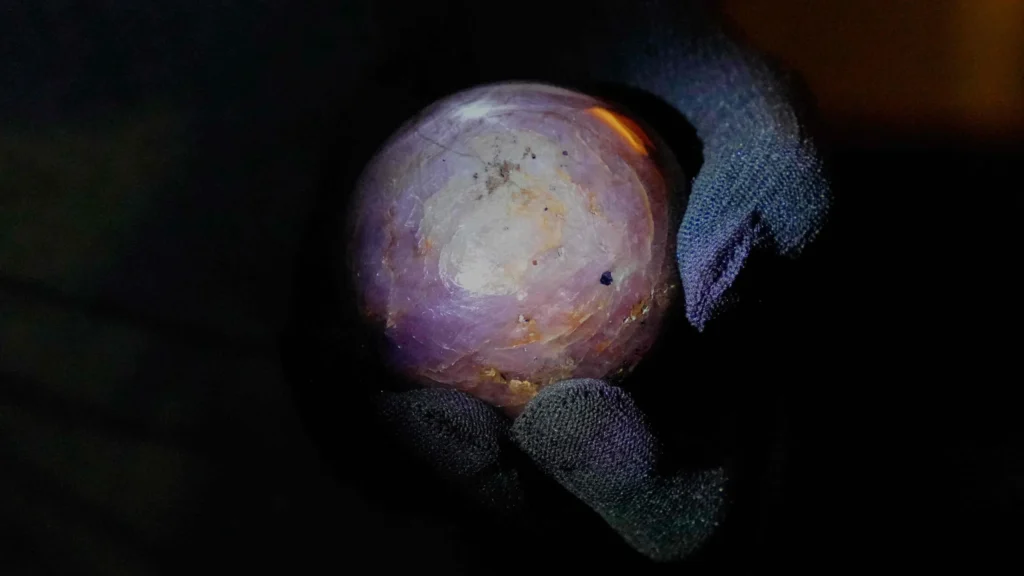
On January 17, 2026, Sri Lanka formally unveiled a remarkable natural gemstone in Colombo: the “Star of Pure Land,” a purple star sapphire weighing 3,563 carats. Experts describe it as the largest documented natural purple star sapphire in the world, distinguished by a sharp, well-defined six-ray asterism, the star-like pattern visible when light reflects off inclusions within the stone. Certified by the prestigious Gemological Institute of America (GIA) as natural and independently verified by the Lanka Gemological Laboratory for its Ceylon origin, the gem was discovered in 2023 in a pit near Ratnapura, the renowned “city of gems” in southern Sri Lanka.
International valuers have estimated its worth between USD 300 million and USD 400 million, reflecting its rarity, size, and optical qualities. The owners, operating as the anonymous “Star of Pure Land Team” for security reasons, have expressed readiness to sell the stone, potentially through international auction houses. This unveiling, held during a ceremony attended by gemologists and industry figures, underscores Sri Lanka’s enduring status as a global leader in high-quality corundum deposits, including sapphires.
Also in Explained | Sri Lanka’s Gem and Jewellery Sector Targets $1 Billion Export Goal
Geological Rarity and Verification of Purple Star Sapphire: A Testament to Sri Lanka’s Gem Heritage
The “Star of Pure Land” exemplifies the exceptional geological conditions that make Sri Lanka a premier source of sapphires. Formed over millions of years through metamorphic processes in the island’s ancient Highland Complex rocks, Ceylon sapphires are prized worldwide for their vivid colors, clarity, and unique velvety sheen. The purple hue combined with pronounced asterism is exceptionally rare, as most star sapphires are blue or black.
Certification plays a crucial role in establishing authenticity and value. The GIA, a globally respected independent authority, confirmed the stone’s natural status, ruling out any synthetic or treated enhancements. Local verification by the Lanka Gemological Laboratory further affirmed its Sri Lankan provenance, aligning with standards upheld by the National Gem and Jewellery Authority (NGJA), the government body regulating the sector. While the NGJA has not issued a specific statement on this gem as of January 18, 2026, its broader mandate ensures ethical mining and trade practices, providing confidence to international buyers.
This rigorous documentation elevates the gem beyond mere spectacle, positioning it as a verifiable asset in the high-end jewelry and collectibles market.
Economic Significance: Boosting Exports and Investor Confidence
Sri Lanka’s gem and jewelry industry, though modest in scale compared to apparel or tea exports, contributes meaningfully to foreign exchange earnings approximately USD 300-500 million annually in recent years. Discoveries like the “Star of Pure Land” amplify this potential by drawing global attention to the sector. High-profile unveilings often spur interest from international buyers, auctioneers, and investors, potentially leading to premium sales that inject substantial revenue.
The timing aligns with Sri Lanka’s post-crisis recovery efforts. As the economy stabilizes with improved fiscal indicators and tourism rebound, such natural treasures reinforce the nation’s brand as a source of rare, ethical gems. Ratnapura and surrounding areas, traditional mining hubs employing thousands in artisanal operations, benefit directly through increased activity and licensing opportunities. Regulated by the NGJA, modern mining practices emphasize sustainability, helping counter past concerns over environmental impact.
For businesses, this event opens avenues in value-added segments: cutting and polishing facilities, bespoke jewelry design, and export-oriented firms can leverage the publicity to attract partnerships. International auctions of similar large Ceylon gems have historically fetched strong prices, with proceeds supporting local economies through taxes and community reinvestment.
Cultural and Tourism Importance: National Roots and Global Appeal
Beyond economics, the sapphire holds deep cultural resonance. Sapphires have adorned Sri Lanka’s ancient royalty featured in crowns and regalia and appear in folklore linking the island’s name “Serendib” (root of “serendipity”) to fortunate discoveries. This latest find reinforces national pride, symbolizing resilience and natural bounty amid recent challenges.
In tourism, gems are a major draw. Visitors flock to Ratnapura for mine tours, gem markets, and museums showcasing Ceylon stones. The “Star of Pure Land” could inspire dedicated exhibitions, similar to past displays of large sapphires, boosting experiential tourism. Wellness and luxury segments, integrating gems with Ayurvedic traditions or high-end jewelry experiences stand to gain, appealing to affluent travelers seeking authentic cultural immersion.
The unveiling also highlights Sri Lanka’s role in ethical gem sourcing. With NGJA oversight promoting traceability and responsible practices, the country positions itself favorably against competitors, attracting buyers prioritizing provenance in an era of conscious consumption.
Looking Ahead: Opportunities and Responsible Stewardship
While the owners prepare for sale, the “Star of Pure Land” serves as a catalyst for sector growth. Potential outcomes include record-breaking auction results or acquisition by museums/institutions, either way elevating Sri Lanka’s global profile. Businesses in hospitality, retail, and export services can capitalize by developing gem-themed offerings; guided tours, certification workshops, or branded collections, that extend visitor engagement.
Challenges remain, including ensuring equitable benefits for mining communities and preventing illicit trade. The NGJA’s framework, supported by government policies, provides a foundation for sustainable development.
In essence, the unveiling of this extraordinary purple star sapphire reaffirms Sri Lanka’s unparalleled gem legacy. It not only promises economic uplift through exports and tourism but also embodies cultural heritage and natural wonder. As the world admires the “Star of Pure Land,” it shines a spotlight on the island’s enduring allure a beacon for investment, pride, and prosperity in 2026 and beyond.
Also in Explained | Unlocking the Potential of Sri Lanka’s Hand-Woven Textile Sector