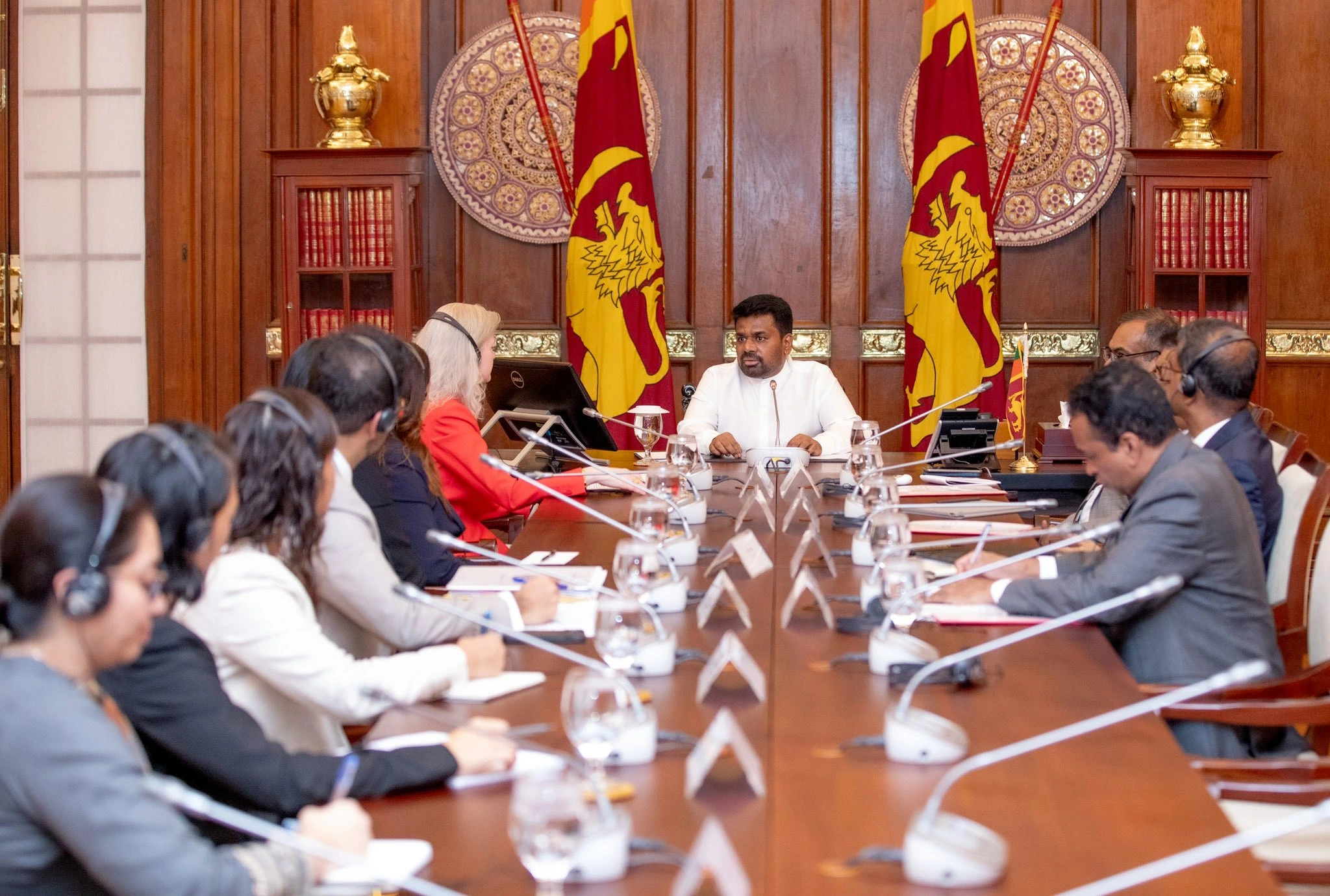
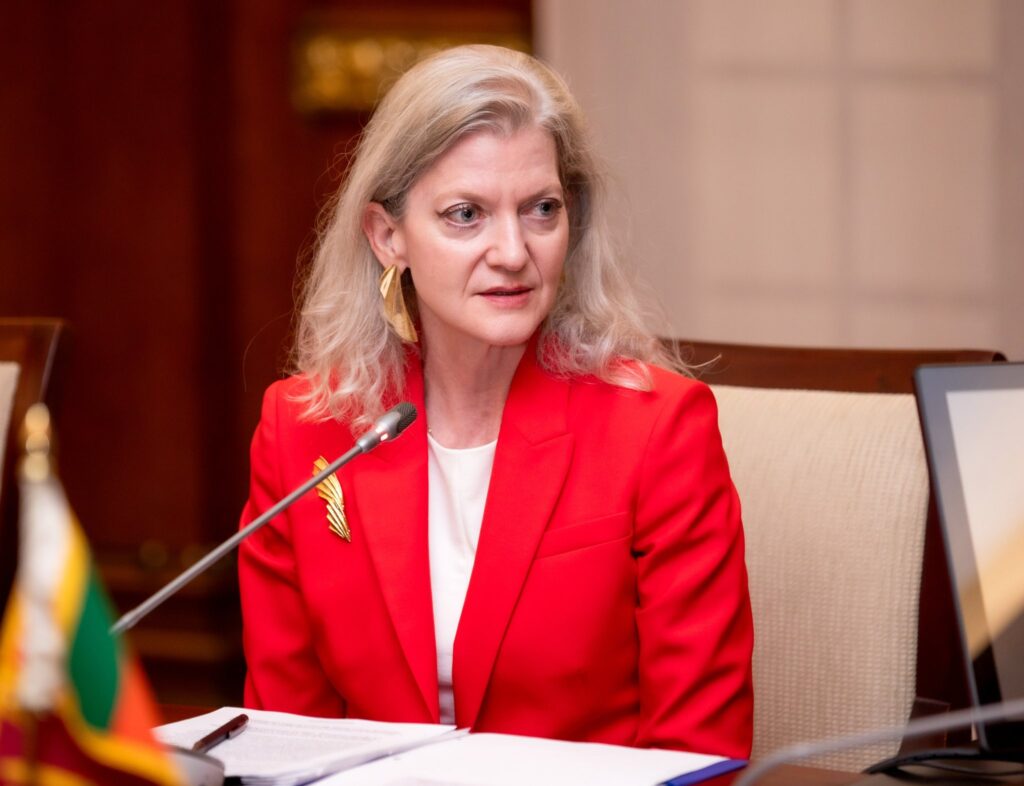
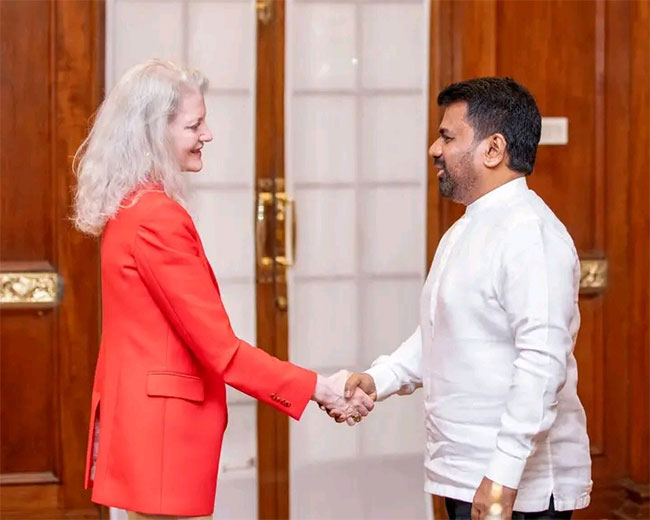
The President’s Media Division announced yesterday that visiting US Under Secretary of State for Political Affairs Allison Hooker conveyed to President Anura Kumara Dissanayake that the United States has drawn its attention to restarting tariff negotiations with Sri Lanka. The meeting comes at a critical juncture for the country, as Sri Lanka grapples with post‑Cyclone Ditwah recovery while facing looming external pressures from global trade policy shifts.
Hooker’s remarks underscored Washington’s readiness to provide support for Sri Lanka’s recovery efforts, while also highlighting opportunities to expand tourism, trade, and maritime cooperation. She further pledged US assistance in combating drug‑related issues, a growing challenge for Sri Lanka’s domestic security and public health.
Also in Explained | Rebuilding After the Cyclone: What Sri Lanka’s Economy Needs Now
Restarting Tariff Negotiations
The most significant takeaway from Hooker’s meeting with President Dissanayake was the US intention to revisit tariff negotiations. For Sri Lanka, this is a crucial development. Tariffs on apparel and rubber exports have long been a sensitive issue, given the country’s reliance on these sectors for foreign exchange earnings and employment.
The Asian Development Bank (ADB) had already warned in October before Cyclone Ditwah struck that Sri Lanka’s recovery trajectory would face pressure in 2026 as new US tariffs begin to bite. The ADB projected that while growth in 2024 and 2025 would hold at 3.9%, supported by manufacturing, construction, and services, the rate would slow to around 3.3% in 2026. The slowdown would be driven by weakening external demand and job losses filtering through the economy.
Rising Tariff Burden
The ADB report noted that US tariff rates have climbed to their highest levels since the 1930s, sharply increasing Sri Lanka’s effective tariff burden. The Institute of Policy Studies (IPS) separately estimated that a 20% reciprocal tariff could cut export earnings by $634 million and threaten nearly 16,000 jobs in the apparel sector.
This projection highlights the vulnerability of Sri Lanka’s export‑oriented industries. Apparel, in particular, is a cornerstone of the country’s economy, employing hundreds of thousands and contributing significantly to foreign exchange reserves. A tariff shock of this magnitude would not only reduce export competitiveness but also ripple through domestic consumption, household incomes, and overall economic stability.
Post‑Ditwah Recovery and US Support
Hooker’s assurance that the US stands ready to support Sri Lanka’s post‑Ditwah recovery is timely. Cyclone Ditwah inflicted severe damage on infrastructure, including railways, bridges, and roads, exposing the fragility of systems that date back to colonial times. Recovery requires not just rebuilding but re‑engineering infrastructure to withstand future climate shocks.
US support could play a role in financing, technology transfer, and capacity building. Hooker’s emphasis on tourism, trade, and maritime operations reflects areas where bilateral cooperation can generate tangible benefits. Tourism, in particular, offers potential for rapid recovery if connectivity, marketing, and safety standards are strengthened. Maritime cooperation aligns with Sri Lanka’s strategic location in the Indo Pacific, where shipping lanes and port operations are critical to global trade.
Combating Drug‑Related Issues
Hooker also pledged US support for Sri Lanka’s initiatives to combat drug‑related issues. This is an area of growing concern, with narcotics trafficking posing risks to public health, law enforcement, and social stability. International cooperation can enhance intelligence sharing, border security, and rehabilitation programs. For Sri Lanka, aligning with US expertise and resources could strengthen its domestic capacity to address this challenge.
Risks to the Economic Outlook
The ADB cautioned that risks to Sri Lanka’s outlook remain elevated. Trade‑policy uncertainty, energy‑price volatility, exposure to Middle East remittances, global demand softness, and domestic weather disruptions all weigh on the recovery trajectory. These risks are compounded by tariff pressures, which directly affect export competitiveness.
For business owners and entrepreneurs, the message is clear: external shocks are not abstract risks but tangible threats to revenue, employment, and investment. Strategic diversification, resilience planning, and engagement with policy reforms are essential to navigate this uncertain environment.
President Dissanayake’s Message to the US
Earlier this week, US‑based Newsweek published an interview with President Dissanayake in which he outlined Sri Lanka’s priorities in engaging with the United States. He emphasized the need for market access, climate financing, and technology partnerships. “What we offer (the US) is a strategically placed, stable, democratic partner in the Indo Pacific,” he said.
This statement reflects Sri Lanka’s positioning as a reliable partner in a region increasingly defined by geopolitical competition. By highlighting stability and democracy, Dissanayake is signaling that Sri Lanka seeks to leverage its political credibility to secure economic and technological cooperation.
Strategic Implications
The convergence of Hooker’s visit, the ADB’s warnings, and Dissanayake’s interview underscores the strategic crossroads at which Sri Lanka finds itself. On one hand, the country faces immediate recovery needs after Cyclone Ditwah. On the other, it must prepare for medium‑term challenges posed by tariffs, global demand softness, and elevated risks.
US engagement offers opportunities, but it also requires careful negotiation. Tariff relief, tourism promotion, maritime cooperation, and drug‑control support are valuable, but they must be aligned with Sri Lanka’s broader development strategy. The challenge for policymakers is to balance short‑term recovery with long‑term competitiveness.
Conclusion
The visit of US Under Secretary of State for Political Affairs Allison Hooker to Sri Lanka highlights both opportunities and challenges. By signaling readiness to restart tariff negotiations and offering support for post‑Ditwah recovery, the United States has opened a window for deeper cooperation. Yet the warnings from the ADB and IPS remind Sri Lanka that external shocks particularly tariffs on apparel and rubber exports could significantly slow growth and threaten jobs.
President Dissanayake’s call for market access, climate financing, and technology partnerships reflects Sri Lanka’s strategic priorities. As a stable, democratic partner in the Indo Pacific, the country seeks to leverage its position to secure economic resilience and long‑term growth.
For Sri Lanka’s business community, entrepreneurs, and professionals, the lesson is to remain vigilant, diversify strategies, and engage with policy reforms. The intersection of recovery, tariffs, and global risks demands not just resilience but foresight. The coming years will test Sri Lanka’s ability to balance immediate needs with strategic ambitions and partnerships with the United States will play a critical role in shaping that outcome.
Also in Explained | Sri Lanka Tourism After the Floods: Recovery, Safety, and Southern Resilience