
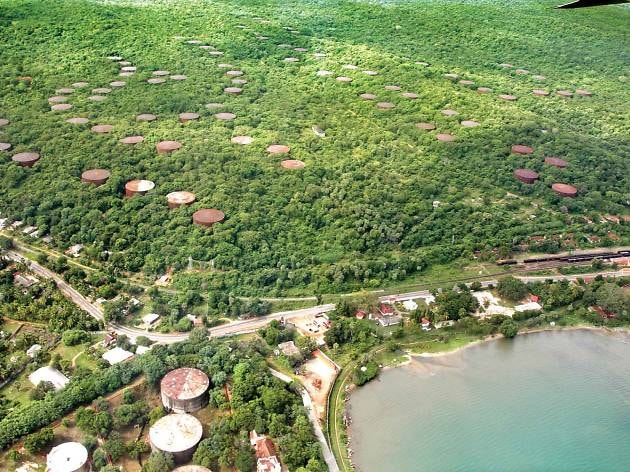
Trincomalee oil storage tanks represent one of Sri Lanka’s most significant yet underutilized colonial-era assets, offering a timely opportunity for energy security and economic advancement. Constructed during British rule as a strategic naval fuel depot, these historic facilities have remained largely dormant for decades. As global energy volatility persists into April 2026, renewed interest in their redevelopment through structured public-private partnerships (PPP) provides a pathway to harness their potential while safeguarding national interests and long-term economic stability.
Also in Explained | Is the Jet Fuel Crisis Grounding Global Aviation Amid Middle East Tensions?
Historical Background of Trincomalee Oil Storage Tanks
The origins of the Trincomalee oil storage tanks trace back to the interwar period when the British Admiralty sought to strengthen its naval presence in the Indian Ocean. Recognizing Trincomalee’s exceptional natural harbor as the second-deepest in the world, British authorities initiated construction in 1924, with the project advancing through the late 1930s. A contract was awarded for the creation of approximately 99 to 101 large steel tanks across the China Bay and Chinnavadi areas, spanning roughly 600 to 1,000 acres.
Each tank, built with one-inch-thick steel plates and in some cases reinforced by one-foot-thick concrete encasements for aerial protection, had an individual capacity of around 10,000 to 12,000 metric tons. Collectively, the farm could store up to 1.2 million metric tons of fuel, enough to sustain British fleet operations for several months. The facility supported Royal Navy and Air Force activities, particularly during World War II, when Trincomalee served as a key logistical base against regional threats. One tank famously sustained damage during a Japanese air raid in 1942, underscoring the site’s wartime significance.
Following Sri Lanka’s independence in 1948 and the eventual withdrawal of British forces in 1956, the tanks fell into gradual disuse. Maintenance challenges, shifting geopolitical priorities, and limited domestic demand led to overgrowth by jungle vegetation, with many structures left idle despite their robust engineering.
Current Status and Developments as of April 2026
As of April 21, 2026, the Trincomalee oil storage tanks remain primarily under the oversight of the Ceylon Petroleum Corporation, with a limited number operational through existing arrangements. Decades of underutilization have left most tanks requiring modernization, though structural integrity from the original British construction has proven remarkably durable.
Recent global energy pressures, including disruptions from Middle East tensions, have elevated the site’s strategic relevance. Sri Lanka currently maintains national fuel reserves sufficient for approximately 25 to 35 days under normal conditions. Government initiatives have allocated substantial funding, around Rs. 32 billion over three years for phased renovations, with work already underway on select tanks. Tenders for repairs, valves, and related infrastructure signal active progress toward restoring operational capacity.
Policy discussions emphasize transforming the facility into a broader energy hub, potentially expanding storage to 60 days or more. This aligns with national efforts to address recurring fuel supply vulnerabilities without imposing undue fiscal strain on public resources.
Strategic and Economic Opportunities for Utilization
The tanks’ location adjacent to Trincomalee port positions them ideally for bunkering services, regional petroleum distribution, and emergency stockpiling. Full reactivation could enhance Sri Lanka’s role as an Indian Ocean energy node, supporting maritime trade, aviation fuel needs, and domestic consumption during supply shocks.
Economically, redevelopment promises multiple benefits: foreign exchange earnings from commercial operations, job creation in engineering and logistics, and technology transfer in modern storage and pipeline systems. By leveraging existing infrastructure rather than building anew, costs remain contained while generating long-term revenue streams through leasing or terminal services. The site’s historical resilience also offers a foundation for sustainable upgrades, including potential integration with renewable energy blending or multi-product handling.
Designing Effective Public-Private Partnerships for the Tanks
Public-private partnerships offer a practical framework to unlock value while distributing investment risks. Models such as build-operate-transfer or joint ventures allow private sector expertise and capital to fund refurbishments, pipeline networks, and modern safety systems. International investors or operators could contribute technical know-how in compliance with global standards, accelerating timelines that might otherwise burden state budgets.
A well-structured PPP tender process emphasizing transparent bidding, clear performance milestones, and revenue-sharing mechanisms ensures competitive participation. For instance, operators might handle day-to-day management for defined periods (such as 20 years) while the state retains overarching ownership and regulatory authority. This approach mirrors successful infrastructure projects elsewhere, where private involvement drives efficiency without compromising public oversight.
Safeguarding National Interests and Economic Stability
Any collaborative model must prioritize safeguards to prevent adverse impacts on sovereignty, the environment, or fiscal health. Contracts should include provisions for majority local decision-making on strategic reserves, mandatory local content in employment and procurement, and rigorous environmental impact assessments to protect surrounding ecosystems and communities.
Revenue-sharing formulas can direct a substantial portion of earnings back to national development, while clauses for crisis prioritization ensure domestic fuel needs are met first. Independent audits and dispute resolution mechanisms further build accountability. By embedding these protections, PPP arrangements mitigate risks of over-reliance on external partners or unintended economic distortions, turning a historical asset into a resilient national advantage.
Benefits and Long-Term Impact on Sri Lanka’s Economy
Successful utilization through PPP could significantly bolster energy security, reducing vulnerability to global price swings and supply interruptions. Enhanced storage capacity would stabilize fuel availability for transport, industry, and households, supporting broader economic growth and investor confidence.
The initiative also aligns with sustainable development goals by encouraging modern, efficient operations that minimize waste and emissions. For local businesses and the Eastern Province, spillover effects include infrastructure upgrades, skills development, and increased port activity. Over time, the project could elevate Sri Lanka’s profile as a reliable regional logistics and energy partner, attracting further investment across related sectors.
A Forward-Looking Message for Sri Lankan Businesses and Policymakers
Sri Lanka stands at a pivotal juncture with the Trincomalee oil storage tanks. By pursuing thoughtfully designed public-private partnerships, the country can revitalize this colonial legacy into a modern economic driver that strengthens energy resilience and generates sustainable value. The focus must remain on balanced collaboration that delivers measurable benefits while upholding national priorities.
Businesses and investors attuned to transparent, well-regulated opportunities will find fertile ground in supporting this transformation. As global energy dynamics evolve, proactive engagement in such strategic PPP initiatives positions Sri Lanka to convert historical infrastructure into future prosperity. With careful planning and inclusive stakeholder involvement, the tanks can contribute meaningfully to a more secure and dynamic national economy.
Also in Explained | What Does Sri Lanka Personal Income Tax Update Mean for Employees and Businesses in 2026/27?