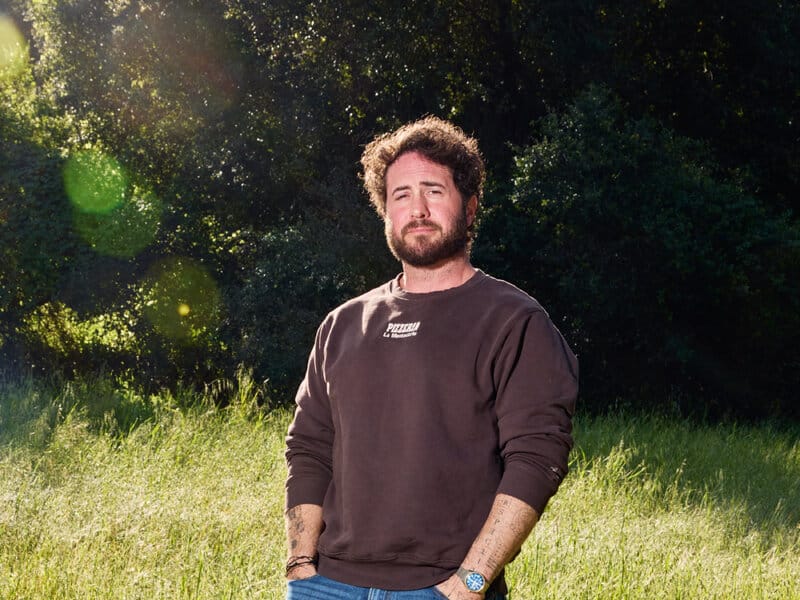
The Medvi Story That’s Rewriting Entrepreneurship in 2026. In the heart of Los Angeles, a young man who once lived in motels and cars turned a $20,000 investment and two months of relentless work into a company on track to generate $1.8 billion in revenue this year. His only full-time employee? His younger brother. The entire operation runs on AI — from writing the code to building the website, creating ads, and handling customer service. This is not science fiction. This is Medvi, the telehealth platform founded by Matthew Gallagher, and its story is one of the most compelling business case studies of 2026.
Verified by The New York Times in an article published on 2 April 2026, the numbers are extraordinary: $401 million in sales in the first full year of operation, $65 million in profit, and more than $3 million flowing in every single day. Medvi operates in the competitive GLP-1 weight-loss drug market (think compounded versions of Ozempic and Wegovy). Yet unlike traditional players such as Hims & Hers — which employs 2,442 people to generate $2.4 billion in revenue at a 5.5% profit margin — Medvi achieves nearly triple the margins with just two people.
This is not hype. It is a living example of what happens when an entrepreneur combines grit, a laptop, and the full power of today’s AI tools.
Also in Explained | Which Skills Are Actually Creating Opportunities in Sri Lanka Right Now?
From Motels and Samurai Swords to a Billion-Dollar Telehealth Empire
Matthew Gallagher’s journey reads like a modern-day rags-to-riches tale. He grew up in unstable circumstances, moving between motels and cars. A laptop gifted by his uncle became his lifeline. As a teenager, he taught himself to code and started selling samurai swords on eBay to make ends meet. He never finished college and moved to Los Angeles with dreams of becoming an actor. Instead, he found himself drawn to building something real.
In late 2024, Gallagher spotted a massive opportunity in the GLP-1 weight-loss drug shortage. Patients were desperate for access. Traditional healthcare was slow, expensive, and bureaucratic. He decided to build a telehealth platform that could connect patients with licensed doctors and compounded medications — all online, fast, and seamless.
He spent exactly $20,000 and two months. AI wrote the code. AI designed and built the website. AI created the advertisements. AI handled customer service inquiries. Gallagher and his brother Elliot did the rest — reviewing prescriptions, overseeing compliance, and making the high-stakes decisions that no machine could yet replicate.
Month one brought 300 customers. Month two added 1,000 more. By the end of 2025, Medvi had generated $401 million in sales. In 2026, the company is on track for $1.8 billion. Net profit last year reached $65 million — a 16.2% margin that leaves traditional healthcare giants in the dust. Zero outside funding. 100% ownership retained by the two brothers.
The New York Times verified every figure. This is not a viral exaggeration. It is documented reality.
The Business Lessons Every Entrepreneur Needs to Hear Right Now
Medvi’s story is more than a headline. It is a blueprint for the new rules of entrepreneurship in the AI era.
1. Extreme Lean Operations Deliver Unmatched Margins
Traditional businesses layer on people, offices, and overhead. Medvi proves that with AI handling repetitive and technical tasks, a company can operate at a scale previously unimaginable. Two people managing $1.8 billion in projected revenue is not just efficient — it is revolutionary.
2. AI Is the Ultimate Equaliser
Gallagher did not come from a privileged background or a top-tier tech incubator. He used freely available and affordable AI tools to compete with billion-dollar corporations. For aspiring entrepreneurs in Sri Lanka or anywhere else, this levels the playing field. A laptop, internet connection, and the right AI prompts can replace entire departments.
3. Speed and Focus Beat Perfection
Medvi launched fast. When the website crashed during one of Gallagher’s hikes, he had to sprint home because there was no team to fix it. They lost 200 customers in that single hour. Yet the speed of launch and iteration allowed them to capture market share before larger competitors could react. In business today, momentum often matters more than perfection.
4. Ownership Is the Ultimate Wealth Multiplier
By refusing to raise venture capital, Gallagher kept 100% of the company. At a potential multi-billion-dollar valuation, that decision is worth hundreds of millions more than any salary or bonus. It is a powerful reminder for founders everywhere: control and equity matter more than early hype.
Why This Story Matters for Every Business Leader in 2026
Medvi is not an isolated miracle. It is the leading edge of a broader transformation. AI is compressing years of development into weeks and replacing layers of middle management. Companies that embrace this shift will achieve unprecedented efficiency. Those that cling to old models risk being left behind.
For Sri Lankan entrepreneurs, the message is especially powerful. In a country rebuilding its economy after crisis, where access to capital can be limited and talent pools competitive, AI offers a genuine path to global competitiveness. A small team in Colombo or Kandy can now build and scale digital services that once required hundreds of employees in Silicon Valley.
The story also carries a caution. Medvi operates in a heavily regulated healthcare space. Compliance, legal oversight, and ethical responsibility remain human responsibilities. AI amplifies human decisions — it does not replace them. Gallagher and his brother still review prescriptions and ensure regulatory standards are met.
The Future Belongs to Those Who Build With AI
Matthew Gallagher’s journey — from motel rooms to a company generating $3 million a day — is proof that the barriers to building something extraordinary have never been lower. Two brothers. One laptop. A $20,000 budget. And the courage to let AI do what it does best.
As we stand in April 2026, this is no longer a futuristic dream. It is happening now. The question for every business leader, founder, and aspiring entrepreneur is simple: Are you still building the old way, or are you ready to write your own Medvi story?
The AI gold rush is here. The only limit is how boldly you choose to use it.
Also in Explained | Can Tesla and xAI’s Macrohard ‘Digital Optimus’ Truly Emulate Entire Companies with AI Agents?