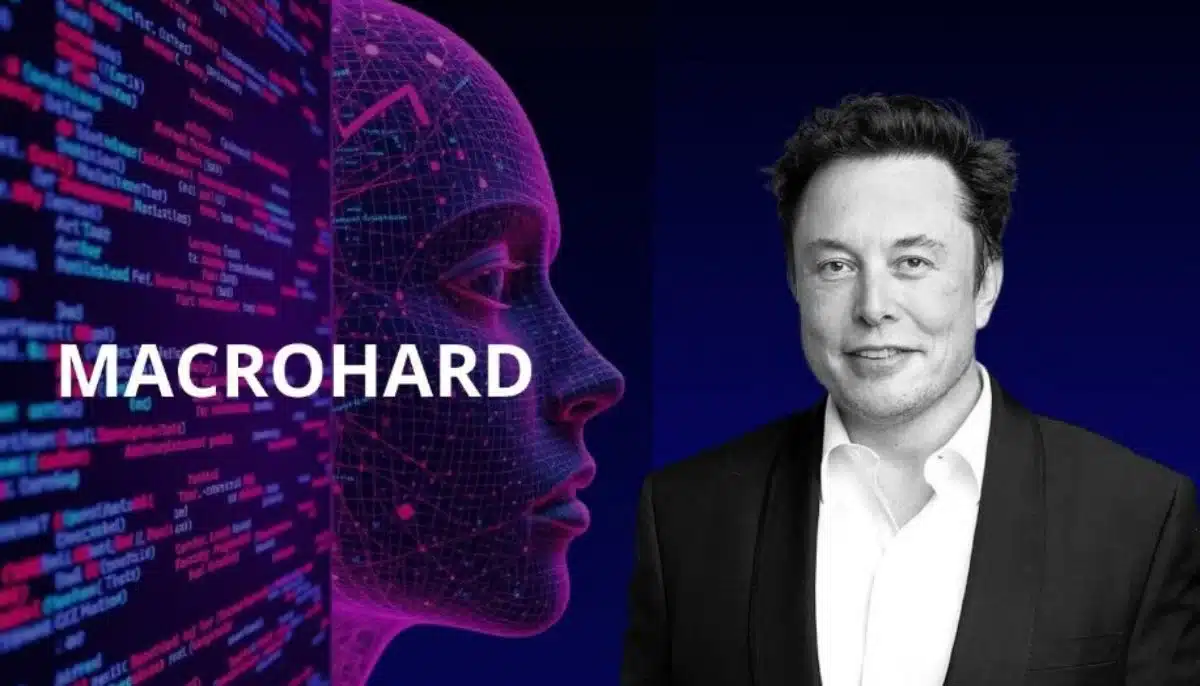
On March 11, 2026, Elon Musk revealed a groundbreaking joint initiative between Tesla and xAI: a project codenamed Macrohard (also referred to as Digital Optimus). This AI system is designed to emulate the full operational functions of software companies by autonomously controlling computers, reading screens, processing keyboard and mouse inputs in real time, and executing complex workflows.
Positioned as part of Tesla’s $2 billion investment agreement with xAI (finalized earlier in 2026), the project pairs xAI’s Grok model as the high-level “System 2” thinker and strategist with a Tesla-developed agent acting as the instinctive “System 1” executor. This hybrid setup runs primarily on Tesla’s low-cost AI4 inference chip (priced at just $650) while making frugal use of xAI’s more expensive NVIDIA hardware, enabling distributed, real-time performance across parked Tesla vehicles acting as a massive edge-compute network.
The ambition is unprecedented: an AI capable of performing any screen-based white-collar task at scale, potentially replicating the output of entire companies. Musk described it as the only true real-time smart AI system currently possible, with no competitors matching this combination of frontier models, real-world data, and edge hardware. But is this visionary leap a game-changing advancement for productivity and automation, or a high-risk overreach with profound societal and competitive implications? This analysis examines the project’s architecture, strategic foundations, advantages, challenges, and what it means for the future of work and tech.
Also in Explained | Is the 2026 AI-Driven Memory Chip Crisis Making Everyday Gadgets Unaffordable?
The Project Details: A Dual-Brain AI Agent Built for Real-World Scale
Macrohard/Digital Optimus builds on earlier concepts first teased by Musk in August 2025, when xAI originally pursued a standalone “purely AI software company” under the Macrohard name. After internal challenges at xAI, including leadership changes and pauses in related data efforts Tesla’s parallel “Digital Optimus” agent work (named after its humanoid robot) has been integrated through the investment framework.
Key technical elements include:
- Grok as Navigator: Acts as the sophisticated reasoning engine with world knowledge, directing high-level strategy like advanced turn-by-turn navigation.
- Digital Optimus as Executor: Processes the last 5 seconds of screen video plus keyboard/mouse actions to perform instinctive, real-time interactions.
- Hybrid Hardware: Runs competitively on Tesla’s affordable AI4 chips (already deployed in millions of vehicles), with parked cars forming a distributed “shadow supercomputer” delivering gigawatts of low-cost compute. NVIDIA resources from xAI are used sparingly for heavier reasoning.
- System 1 + System 2 Analogy: Mirrors human cognition fast, instinctive actions paired with deliberate planning, enabling seamless computer emulation.
This architecture leverages Tesla’s billions of miles of real-world driving data (for robust perception) and xAI’s frontier models, creating a uniquely scalable solution for digital labor.
Why Macrohard Could Revolutionize Enterprise Automation
The project’s design offers compelling strategic and economic advantages.
- Unmatched Cost Efficiency and Scale
By leveraging existing Tesla vehicle fleets as edge nodes, Macrohard achieves massive distributed compute at fractions of traditional data-center costs. The $650 AI4 chip democratizes high-performance agent deployment, potentially delivering billions in savings compared to cloud-heavy alternatives. - Superior Real-Time Performance
The 5-second video + input processing enables truly responsive automation far beyond current agents that struggle with dynamic interfaces. This positions it as the only system capable of reliable, screen-based white-collar emulation today. - Synergistic Tesla-xAI Partnership
Tesla’s $2 billion investment and framework agreement accelerate collaboration, combining Tesla’s hardware execution expertise with xAI’s reasoning power. This vertical integration accelerates development and creates unique moats no single company can replicate. - Transformative Productivity Gains
In principle, Macrohard could emulate entire software firms, handling repetitive digital tasks across industries. Early internal xAI tests (treating agents as employees) already showed seamless integration, hinting at massive efficiency boosts for businesses. - Long-Term Competitive Edge
With no rivals combining fleet-scale edge compute, real-world data, and advanced multimodal agents, Tesla and xAI gain a decisive lead in agentic AI, potentially reshaping software economics and creating new revenue streams through AI-as-a-service.
These strengths make Macrohard a potentially brilliant leap toward practical, scalable AI that augments or replaces routine digital work.
Significant Risks and Challenges Ahead
Despite the excitement, substantial hurdles could limit or complicate its impact.
- Technical and Reliability Hurdles
Real-time screen understanding and precise input actions remain extremely difficult; dynamic websites, CAPTCHAs, and edge cases could cause frequent failures. Achieving human-level reliability across diverse applications may take longer than projected. - Societal and Job Displacement Concerns
The explicit goal of emulating entire companies raises profound questions about white-collar job losses. Widespread adoption could disrupt millions of roles, prompting regulatory scrutiny, ethical debates, and potential backlash against AI-driven automation. - Execution and Integration Risks
Merging xAI’s stalled Macrohard efforts with Tesla’s work introduces coordination challenges across separate organizations. Leadership changes and past pauses at xAI highlight execution risks in delivering on ambitious timelines (Musk has targeted digital human emulation by year-end 2026). - Dependency and Competitive Response
Heavy reliance on Tesla’s vehicle fleet ties performance to automotive factors (e.g., parking availability, vehicle utilization). Meanwhile, Microsoft, Google, and OpenAI are rapidly advancing their own agents, potentially closing the gap with cloud-scale resources. - Regulatory and Security Vulnerabilities
AI agents controlling computers at scale invite cybersecurity risks, data privacy issues, and regulatory hurdles around automated decision-making. Antitrust concerns over Musk’s interconnected companies could also arise.
These challenges underscore why Macrohard, while promising, carries real risks of delays, unintended consequences, and pushback.
A Bold Bet on Agentic AI That Could Redefine Work
Tesla and xAI’s Macrohard (Digital Optimus) project represents a pivotal evolution in AI, moving beyond chatbots to fully autonomous digital workers capable of emulating entire software companies. By fusing Grok’s strategic intelligence with Tesla’s low-cost, real-time execution hardware under their $2 billion investment framework, the initiative leverages unique strengths across Musk’s ecosystem to pursue scalable, edge-native automation.
If successful, it could deliver unprecedented productivity gains and establish a new paradigm for enterprise AI. However, technical complexities, societal impacts, and competitive pressures mean the path forward demands careful navigation.
As development accelerates in 2026, Macrohard stands as a litmus test for whether integrated AI agents can deliver on transformative promises without disproportionate disruption. For businesses and technologists, this joint venture signals the dawn of a new era where AI doesn’t just assist, it operates independently at company scale.
Also in Explained | Is OpenAI’s Hiring of OpenClaw Creator Peter Steinberger a Major Win for AI Agents?