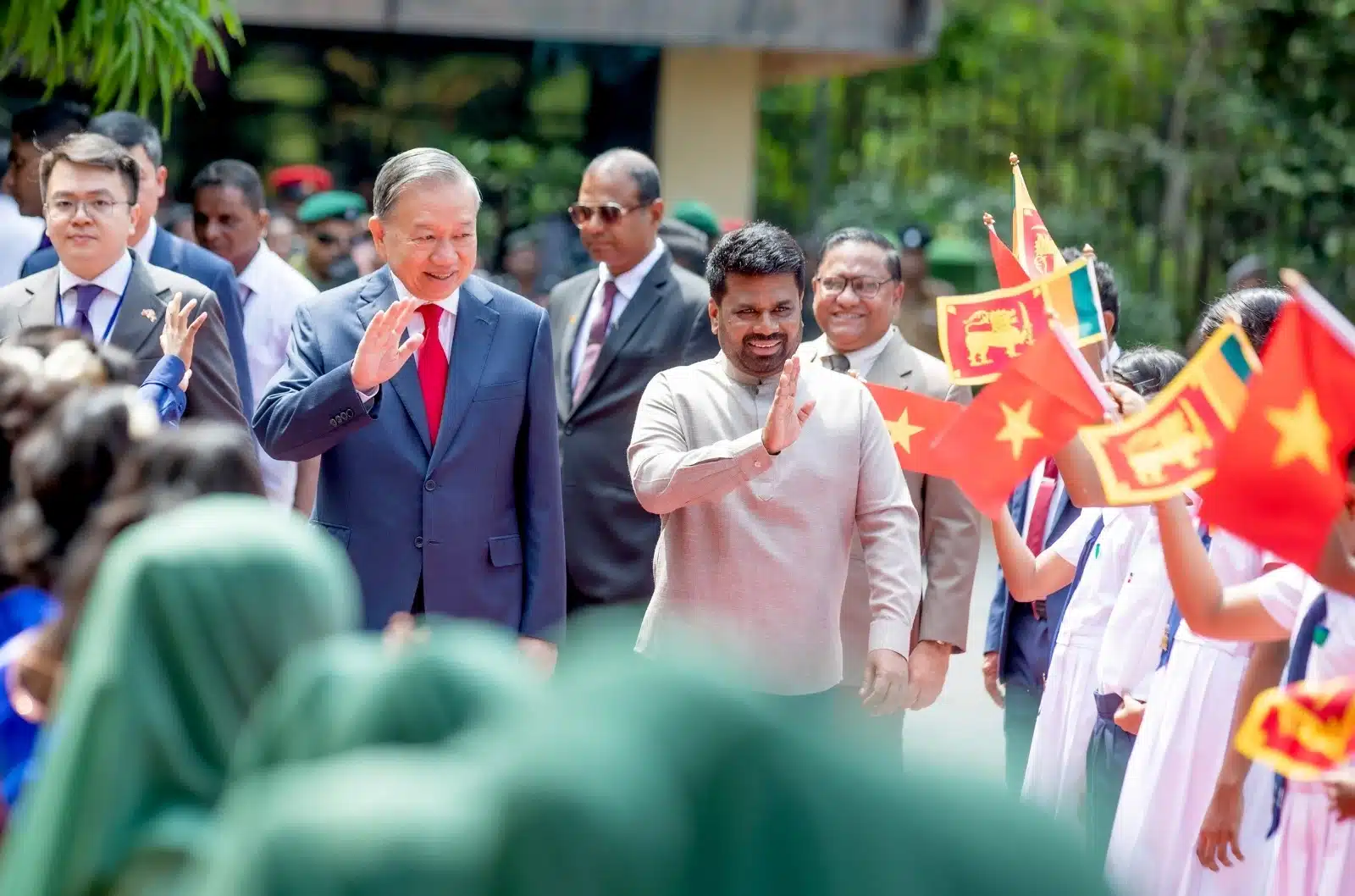
Sri Lanka – Vietnam Ties Open New Trade Doors | Sri Lanka and Vietnam have set an ambitious target to expand their bilateral trade to US$1 billion by 2030, President Anura Kumara Dissanayake announced following high-level bilateral discussions. This landmark agreement, reached during the visit of the Vietnamese President, signals a new phase of economic cooperation between the two fast-growing Asian economies and opens promising opportunities for Sri Lankan businesses and investors.
The announcement comes at a critical time as Sri Lanka works to diversify its export markets, attract quality foreign direct investment (FDI), and build resilience in key sectors. Here is a business-focused analysis of how this enhanced diplomatic and economic relationship can support Sri Lanka’s long-term growth strategy.
Also in Explained | Hambantota Port Set for Major Capacity Boost: $106 Million Crane Deal Signals Renewed Momentum in Sri Lanka’s Maritime Sector
Ambitious Trade Target: From Modest Base to Significant Opportunity
Current bilateral trade between Sri Lanka and Vietnam remains relatively modest but shows strong growth potential. The $1 billion target by 2030 represents a major leap and reflects both countries’ commitment to deeper economic engagement. For Sri Lanka, this provides a strategic avenue to reduce over-reliance on traditional markets and tap into Vietnam’s dynamic economy, which has become one of Southeast Asia’s leading manufacturing and export hubs.
Key Investment Sectors Identified for Vietnamese Investors
President Dissanayake specifically invited Vietnamese businesses to explore opportunities in:
- Renewable Energy – Vietnam has developed significant expertise in solar, wind, and waste-to-energy projects. Collaboration could accelerate Sri Lanka’s green energy transition and help meet growing domestic and export-oriented power needs.
- Logistics and Infrastructure – Vietnamese companies bring strong capabilities in port development, special economic zones, and supply chain management areas that align well with Sri Lanka’s ambitions for Colombo Port City and regional connectivity.
- Tourism – Joint initiatives, including the newly announced direct flights between Colombo and Ho Chi Minh City/Hanoi, are expected to boost two-way tourism flows and support Sri Lanka’s target of 3+ million annual arrivals.
- Manufacturing – Potential for partnerships in apparel, electronics components, and light engineering, enabling technology transfer and integration into regional value chains.
These sectors align closely with Sri Lanka’s investment promotion priorities and could attract meaningful FDI inflows in the coming years.
Immediate Practical Support: Fertiliser Donation
Vietnam’s commitment to donate 100 metric tonnes of Urea and superphosphate fertiliser provides timely relief to Sri Lanka’s agriculture sector. This assistance is particularly valuable amid global fertiliser supply uncertainties caused by recent geopolitical disruptions. It will support the upcoming cultivation seasons and help stabilise input costs for farmers, indirectly benefiting food security and export crops such as tea and rubber.
Direct Flights: Enhancing Connectivity and Business Flows
The official launch of direct flight services between Colombo and major Vietnamese cities (Ho Chi Minh City and Hanoi) this year is a game-changer. Improved air connectivity will:
- Reduce travel time and costs for business delegations and tourists.
- Facilitate faster movement of perishable goods and high-value products.
- Strengthen people-to-people and business-to-business linkages.
Strategic Benefits for Sri Lanka’s Economy and Investment Climate
This deepening relationship with Vietnam offers multiple advantages for Sri Lanka’s economic strategy:
- Market Diversification – Vietnam serves as an important gateway to ASEAN markets, helping Sri Lanka reduce dependence on a few traditional trading partners.
- FDI and Technology Transfer – Vietnamese investors can bring capital, expertise, and best practices in priority sectors, complementing existing investments from China, India, and Western countries.
- Export Growth – Sri Lankan products such as apparel, tea, spices, rubber, and gems could find new demand in the Vietnamese market.
- Supply Chain Resilience – Stronger ties with Vietnam can help mitigate risks from over-concentration in certain sourcing regions, especially for inputs like fertiliser and raw materials.
- Regional Positioning – Enhanced cooperation with a dynamic ASEAN economy strengthens Sri Lanka’s role as an Indian Ocean hub for trade and logistics.
The Road Ahead – Sri Lanka – Vietnam Ties Open New Trade Doors
The Sri Lanka-Vietnam partnership reflects a pragmatic approach to economic diplomacy combining trade targets, investment promotion, immediate practical support, and improved connectivity. For Sri Lankan businesses, this is a call to explore partnerships, joint ventures, and market entry strategies in Vietnam and through Vietnam into broader ASEAN markets.
As both nations work toward the $1 billion trade goal by 2030, the coming years will test the ability of private sector players and government institutions to translate high-level agreements into tangible outcomes on the ground.
This development reinforces Sri Lanka’s broader strategy of forging diversified international alliances to support sustainable economic growth, job creation, and resilience. With proactive engagement from the business community, the Sri Lanka-Vietnam relationship has the potential to become one of the country’s most valuable economic partnerships in the decade ahead.
Also in Explained | Russia Investment in Sri Lanka: Strengthening Economic Ties Through Oil Talks and Energy Security