In our first article two weeks ago we examined how rural tourism can create deeper, more inclusive economic benefits for Sri Lanka. Last week we analysed the serious threat posed by the escalating Middle East conflict to the country’s 2026 tourism targets through disrupted aviation links via Dubai and other Gulf hubs. This week we bring the latest verified updates on the situation facing international visitors currently in Sri Lanka, with a clear focus on the practical steps the government, SLTDA and hospitality sector are taking to support those affected.
As of 9 March 2026, Sri Lanka remains completely safe and stable, untouched by the regional conflict. Yet the ripple effects of airspace closures that began after the 28 February strikes have left thousands of tourists temporarily unable to depart on their scheduled return flights.
Also in Explained | How Is the Middle East Conflict Affecting Sri Lanka’s 2026 Tourism Targets?
The Scale of the Stranded Tourist Situation
Reliable industry and government sources confirm that nearly 10,000 international tourists were stranded across the island as of early March. The majority are high-value visitors from Europe (UK, Germany, France, Russia and Eastern Europe) who rely on seamless one-stop connections through Dubai, Doha and Abu Dhabi. A smaller but notable number of Middle Eastern visitors themselves also face return challenges.
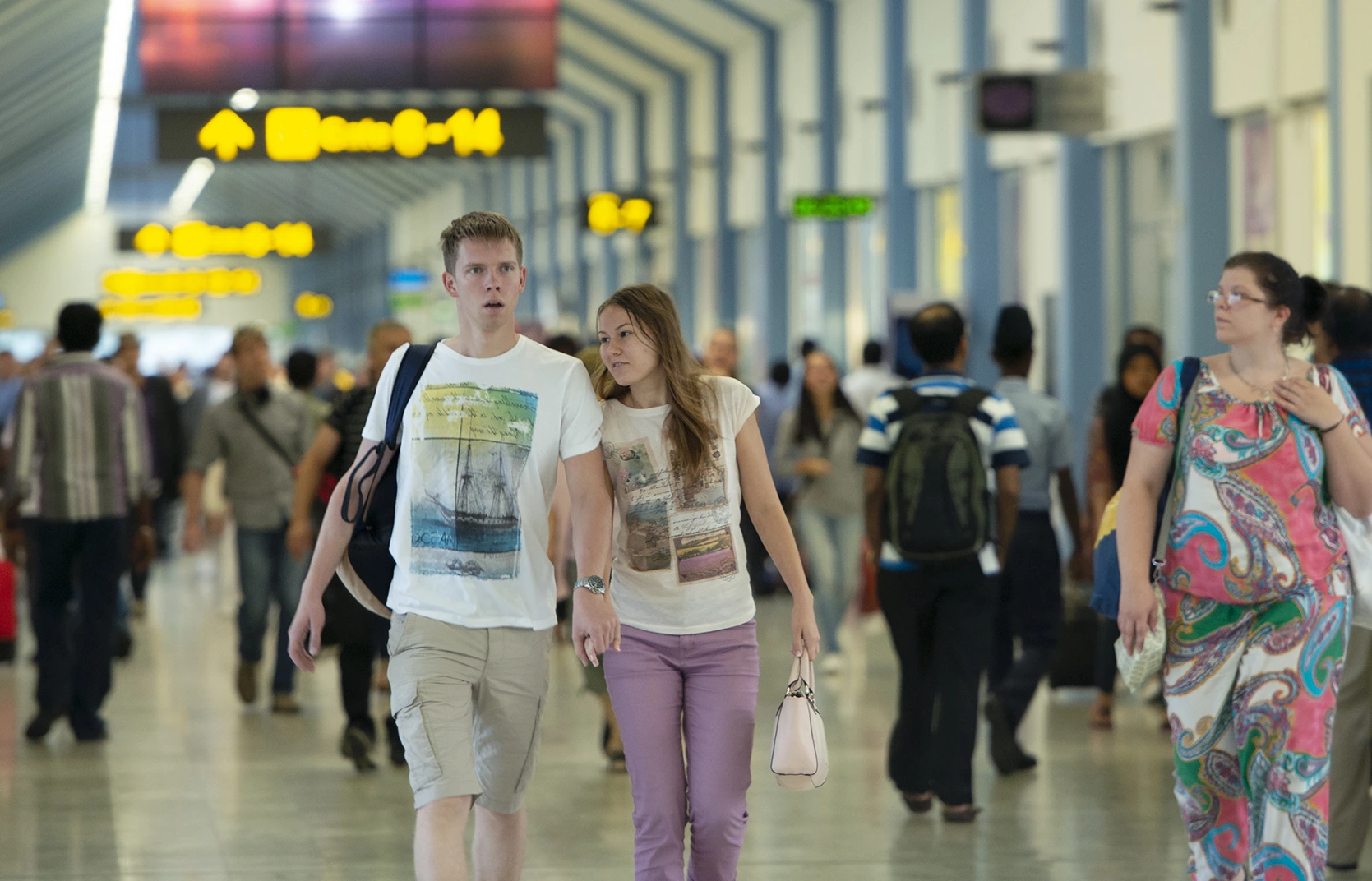
The disruptions have been significant: over 200 flights linked to Sri Lanka were cancelled in the first week, including dozens operated by SriLankan Airlines, Emirates, Qatar Airways, Etihad and Flydubai. Bandaranaike International Airport experienced chaotic scenes on 7 and 8 March, with departure boards showing multiple delays and cancellations on Gulf-bound services. Many passengers found themselves rebooking through alternative routes via Istanbul, Singapore or India, often at higher cost and with longer waits.
Despite this, the year had started strongly. Sri Lanka recorded 277,327 arrivals in January 2026 and a new monthly record of 279,328 visitors in February 2026, a 16.2% increase year-on-year. Cumulative arrivals to early March remain robust at over 579,000, demonstrating underlying resilience before the current disruption.
Sri Lanka’s Swift and Compassionate Government Response
The Government of Sri Lanka, working through the Sri Lanka Tourism Development Authority (SLTDA) and the Department of Immigration and Emigration, has acted decisively to protect visitors and prevent any legal or financial hardship.
The most important measure is the immediate free 14-day visa extension granted to all tourists currently in the country. This automatic relief applies regardless of nationality or original visa expiry date and carries zero administrative fees. The extension ensures no one falls into overstay status while awaiting rebooked flights.
Additional coordinated measures include:
- 24/7 multilingual emergency hotlines (Tourist Emergency Hotline 1912, Airport & Aviation Services 1994, and SriLankan Airlines support line 1979) providing real-time flight updates, rebooking assistance and local guidance.
- Official directives to all licensed hotels, guesthouses and tour operators to implement flexible policies: late check-outs, extended stays at preferential rates, and revised itineraries at no extra cost.
- Close liaison with foreign embassies in Colombo to facilitate consular assistance where required.
These steps have been publicly communicated through SLTDA channels and international diplomatic networks to reassure both visitors and source markets.
Hospitality Sector Initiatives Turning Challenge into Opportunity
Sri Lankan hospitality has responded with characteristic warmth. In a standout gesture, the SLTDA organised free daily brunch and meal services for stranded tourists at the Monara Restaurant of the Sri Lanka Institute of Tourism and Hotel Management (SLITHM) in Colombo. These events not only provide practical support but also create moments of community and reassurance during uncertain days.
Many private operators have gone further, offering complimentary airport transfers, cultural performances, spa sessions and even short guided excursions to nearby attractions. Several Colombo hotels have reported voluntarily upgrading rooms or extending complimentary nights for affected guests.
This response directly echoes the inclusive tourism philosophy discussed in our first article. With extra time on their hands, many stranded Europeans and Russians are now being gently encouraged to discover authentic experiences beyond the usual beach and cultural triangle circuits.
Middle East Focus: Supporting All Affected Travellers
While the primary focus remains on inbound international tourists, Sri Lanka is also monitoring the situation for its own citizens and Middle Eastern visitors. The Ministry of Foreign Affairs has confirmed that Sri Lankans residing or working in the Gulf region are safe and has activated embassy hotlines for any nationals temporarily stranded in Dubai, Abu Dhabi or Doha. For Middle Eastern tourists currently in Sri Lanka, the same 14-day visa extension and support services apply without exception.
This balanced approach underscores Sri Lanka’s position as a responsible global tourism destination that cares for every visitor regardless of origin.
Economic Impact and Short-Term Outlook
Industry analysts estimate that each week of sustained disruption could cost the sector up to US$15 million in lost revenue, given that 30–34% of arrivals traditionally depend on Gulf transit hubs. Early March arrivals have already dipped by approximately 25% against forecasts.
However, the extended stays of stranded tourists are generating additional spending on accommodation, food, transport and experiences partially mitigating immediate losses. Many operators report that guests are using the extra days to explore new areas, including rural homestays and the Pekoe Trail, thereby delivering precisely the deeper local economic impact we advocated in our opening article.
Long-Term Lessons and the Road to Recovery
The current situation reinforces two strategic imperatives for Sri Lankan tourism:
- Accelerated diversification of air routes to reduce over-reliance on any single hub corridor.
- Stronger promotion of low-density, high-value rural and community-based products that can absorb longer stays during disruptions.
As limited flights begin resuming from Dubai and Doha, authorities continue daily monitoring. The clear message from government and industry remains consistent: Sri Lanka is open, safe and ready to welcome visitors with open arms.
By prioritising visitor welfare during this external shock, Sri Lanka is not only protecting its immediate revenue but also strengthening its global brand as a compassionate and resilient destination. This approach will serve the sector well as it works toward the national target of 3 million arrivals in 2026.
Subsequent articles in this series will examine practical route diversification strategies, enhanced digital crisis communication tactics, and targeted investment opportunities to build even greater shock resistance.
Sri Lanka’s handling of the current situation demonstrates that true tourism leadership is measured not only by arrivals and revenue but by the care shown to every guest when global events test the industry.
Also in Explained | What is Rural Tourism and How Can Sri Lanka Improve It for Greater Impact?