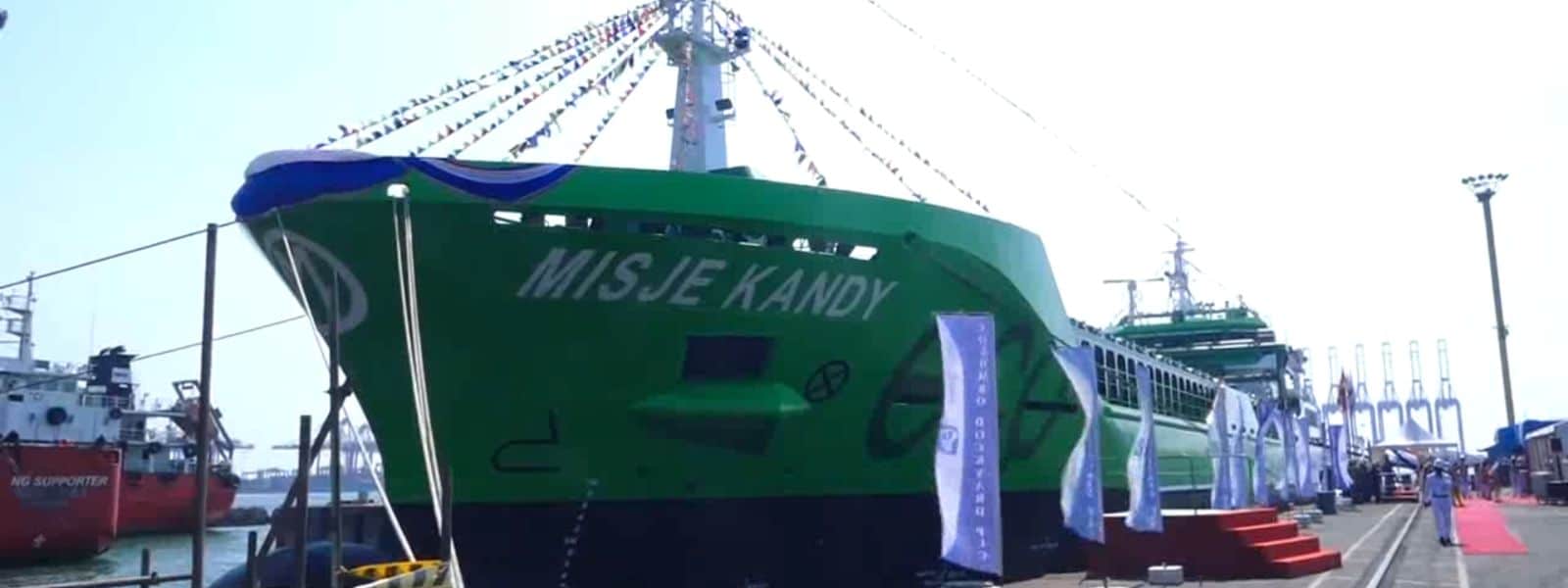
Sri Lanka shipbuilding industry is at a critical turning point, balancing proven export capability with rising structural and ownership challenges. The sector has achieved a quiet but significant milestone with the recent completion and delivery of the final vessel in a ten-ship series of advanced, environmentally compliant bulk carriers. The last ship in the order, named after a historic Sri Lankan capital, was handed over to its Norwegian owner in late March 2026.
All ten vessels were constructed to meet the latest International Maritime Organization (IMO) emission standards that came into force on 1 January 2026, featuring hybrid propulsion systems and energy-efficient designs. This achievement demonstrates the industry’s technical capability to deliver high-quality, export-oriented vessels that satisfy stringent global environmental and safety requirements.
The successful execution of this multi-year project, which began in March 2020 during the height of the global pandemic, marks one of the largest and most technically demanding export contracts ever fulfilled by a Sri Lankan shipyard. It showcases the sector’s ability to maintain production continuity despite economic turbulence and supply-chain disruptions, while reinforcing Sri Lanka’s reputation as a reliable partner for international clients seeking modern, low-emission tonnage.
Yet this milestone arrives against a backdrop of deeper structural challenges. The shipbuilding industry, once firmly anchored in local expertise and long-term foreign technical partnerships, is undergoing a major ownership transition. Influence is steadily shifting toward a new regional player, raising questions about long-term control, technology retention, and the sector’s ability to sustain independent growth. While foreign capital has historically been essential for stability and expansion, the current phase highlights both the opportunities and the risks of continued reliance on external investment.
Historical Evolution of Sri Lanka Shipbuilding Industry: From Ancient Craftsmanship to Modern Export Capability
Sri Lanka’s maritime heritage dates back centuries. By the eighth century, the island was renowned across Asia for constructing some of the largest ocean-going vessels, using locally sourced timber and sophisticated shipbuilding techniques passed down through generations. These early crafts supported extensive trade networks across the Indian Ocean.
During the colonial era, the focus shifted toward repair and maintenance to service European trading routes. After independence, the modern industry was formalised around a key facility in Colombo, initially centred on dry-dock repairs and limited new construction for domestic needs such as navy patrol boats and port barges. For decades, the sector remained modest in scale, employing only a few hundred skilled workers and generating limited export revenue.
A turning point came in the early 1990s when a major foreign partner introduced advanced technology, quality systems, and international training programmes. This collaboration elevated the yard to regional standards, enabling the construction of increasingly complex vessels — including offshore patrol ships, passenger ferries, tugs, and specialised craft — for both local and overseas markets. By the 2000s and 2010s, Sri Lankan shipbuilders had established a track record for precision, on-time delivery, and cost competitiveness, successfully exporting to Europe, Asia, and the Middle East.
Also in Explained | Hambantota Port Set for Major Capacity Boost: $106 Million Crane Deal Signals Renewed Momentum in Sri Lanka’s Maritime Sector
Current Realities: Modest Numbers, Persistent Issues, and the Need for Foreign Capital
Despite these historical strengths, the industry’s overall numbers remain modest and reveal underlying vulnerabilities. In 2025, boat- and shipbuilding exports reached $53.71 million, recording more than 30 percent growth from the previous year. Approximately 2,000 people are employed directly in the sector, with another 10,000 benefiting indirectly through supply chains and support services. While this represents progress, the contribution to national foreign exchange earnings and GDP remains relatively small compared with other maritime-related activities such as port services or logistics.
The sector continues to face multiple structural issues. High energy and raw-material costs, global competition from larger Asian yards, and periodic financial strain have limited organic expansion. Past years saw significant losses at key facilities, underscoring the capital-intensive nature of shipbuilding and the difficulty of achieving scale without substantial external support. Regulatory improvements, including a new framework gazetted at the end of 2024 that sets clear standards for design, safety, and environmental performance, have helped build buyer confidence, but implementation and enforcement still require ongoing investment.
These realities point to a consistent pattern: foreign companies have repeatedly played a stabilising role by injecting capital, transferring technology, and providing access to international markets. Local capabilities in engineering, fabrication, and project management are strong, yet the industry has relied on strategic partnerships to overcome financing gaps, upgrade facilities, and secure larger orders. Without such investment, sustaining operations and competing globally has proven challenging.
Ownership Transition: Strategic Shift and Its Implications
The recent transfer of a significant ownership stake to a new regional public-sector shipbuilder marks a notable change in the industry’s governance. Previously guided by long-term Japanese technical and management expertise, the leading facility is now entering a new phase under different leadership. This transition brings potential benefits — fresh capital, expanded market access, and opportunities for joint projects — but also raises concerns about retaining core skills, intellectual property, and decision-making autonomy within Sri Lanka.
Industry stakeholders are closely watching how the new arrangement will affect future order books, technology development, and workforce continuity. While the successful handover of the ten-vessel series occurred under the outgoing structure, the coming years will test whether the shift strengthens or dilutes local control. Many observers argue that Sri Lanka must proactively safeguard its engineering base and ensure that foreign investment complements rather than displaces domestic capabilities.
Opportunities in a Growing Global Market
The broader outlook for shipbuilding remains promising. The worldwide market for shipbuilding and repair is projected to expand from approximately $182 billion in 2024 to nearly $580 billion by 2035, driven by demand for greener vessels, fleet renewal, and supply-chain diversification. Sri Lanka’s strategic location on major east-west shipping routes, combined with its skilled workforce and improving port infrastructure, positions the sector to capture a larger share if it can address internal constraints.
Recent contracts illustrate this potential. Late in 2025, the same facility secured its largest-ever order for two advanced cable-laying and repair ships for a European client — a move into higher-value, technology-intensive work. Government efforts to promote Sri Lanka as an Indian Ocean marine and offshore hub, including new marinas and the annual Boat and Marine Show, further support ecosystem growth.
The Path Forward: Balancing Foreign Investment with Local Resilience
To realise its full potential, Sri Lanka’s shipbuilding industry must navigate a delicate balance. Targeted incentives for local component manufacturers, expanded training programmes for young engineers, and investment in modern equipment at smaller yards could help build self-reliance. At the same time, attracting responsible foreign capital will remain crucial for stability, scale, and access to global markets.
Policymakers face the task of creating a predictable, investor-friendly environment that encourages technology transfer and joint ventures while safeguarding national interests. The success of the recent ten-ship series proves that Sri Lankan yards can compete on quality and delivery. The challenge now is to translate that capability into sustainable, long-term strength rather than allowing a strategic industry to gradually shift influence elsewhere.
Sri Lanka’s shipbuilding sector stands at a crossroads. It has evolved far beyond its repair-yard origins and has demonstrated it can deliver sophisticated, IMO-compliant vessels for the world market. With thoughtful management of the ongoing ownership transition, continued focus on skills development, and a clear strategy to harness foreign investment without compromising local control, the industry can become a more robust engine of growth, employment, and foreign exchange earnings.
The coming months will reveal whether Sri Lanka seizes this moment to strengthen its maritime industrial base or risks watching a historically significant sector lose momentum. The recent milestone delivery offers hope — and a timely reminder — that with the right mix of local resolve and strategic partnership, the industry can chart a stable and competitive course for the future.
(Disclaimer: This article is for informational purposes only and does not constitute investment or business advice. Industry data and developments are subject to official verification and may evolve.)