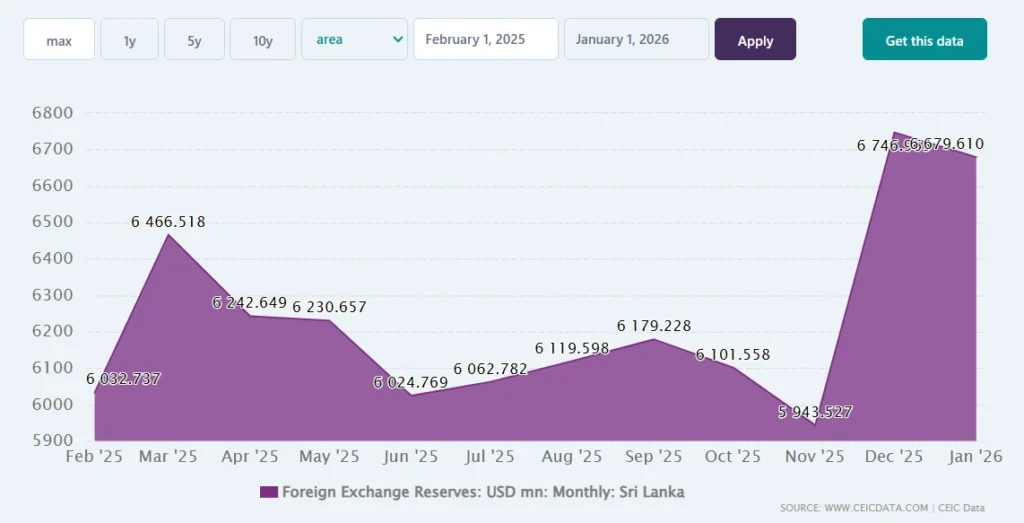
Sri Lanka’s gross official reserves reached a significant milestone by the end of 2025, climbing to approximately USD 6.8 billion. This level marks one of the highest points since the economic crisis, offering vital coverage for imports and external payments. Entering 2026, reserves experienced a minor adjustment, settling at USD 6.68 billion by the end of January. This small decline reflects normal fluctuations in foreign currency flows rather than major concerns.
The Central Bank of Sri Lanka plays a key role in managing these reserves through market interventions, remittances, tourism earnings, and export proceeds. As the country advances in debt restructuring and economic recovery, maintaining healthy reserves remains essential for stability and investor confidence. This article examines the trends from late 2025 into early 2026, the contributing factors, and what this means for the broader economy.
Also in Explained | Sri Lanka’s Digital Nomad Visa – Unlocking Opportunities for Remote Professionals
Strong Buildup Throughout 2025: Key Drivers of Growth
Sri Lanka’s reserves grew steadily during 2025, supported by proactive measures from the Central Bank. Net purchases of foreign exchange from the market exceeded USD 2 billion over the year, helping offset debt service payments and seasonal outflows. Workers’ remittances remained a reliable source, while tourism recovery and higher export earnings added further inflows.
By mid-2025, reserves consistently stayed above USD 6 billion, even after international obligations. This accumulation reflected improved external sector performance, with trade deficits narrowing in several months and current account surpluses emerging periodically. The inclusion of facilities like bilateral swaps enhanced the overall buffer, providing additional security against global uncertainties.
The buildup in the second half of 2025 proved particularly notable. Despite challenges such as elevated global commodity prices and geopolitical tensions affecting trade routes, the Central Bank successfully maintained stability. This effort not only covered immediate needs but also built a foundation for smoother debt repayments under ongoing international support programs.
End-2025 Milestone: Reserves Hit Post-Crisis Peak
By the end of December 2025, gross official reserves stood at around USD 6.8 billion, the strongest year-end position in recent years. This figure equated to approximately 3.8 months of import cover, a comfortable level that supports day-to-day trade requirements and guards against external shocks.
The achievement came amid robust inflows in the final quarter. Tourism contributed significantly during the peak season, while remittances surged ahead of holidays. Export sectors like apparel, tea, and gems showed resilience, benefiting from demand in key markets. Central Bank interventions ensured excess dollars entered reserves rather than fueling volatility in the exchange rate.
This year-end strength signaled progress in economic stabilization. It allowed the Sri Lankan rupee to remain relatively steady, avoiding sharp depreciations seen in prior years. For businesses and households, the higher reserves meant lower risks of import disruptions, helping control inflation on essential goods.
January 2026 Adjustment: A Minor Decline Amid Seasonal Factors
In January 2026, reserves dipped slightly to USD 6.68 billion, a reduction of about USD 0.12 billion from the December peak. This modest change aligns with typical post-holiday patterns, where outflows rise for imports and debt servicing.
January often sees higher spending on fuel, machinery, and consumer goods after the festive period. Additionally, scheduled external payments can temporarily reduce the reserve buffer. However, the decline remained contained, with no signs of pressure on the currency market.
The Central Bank continues to monitor flows closely, ready to intervene if needed. Tourism arrivals stayed strong into the new year, providing offsetting inflows. Overall, the reserves stayed well above critical thresholds, maintaining adequate import coverage at around 3.7 months.
This small adjustment does not alter the positive trajectory. It highlights the importance of diversified inflows to smooth seasonal variations.
Outlook and Importance for Long-Term Stability
Looking ahead, Sri Lanka’s reserves appear poised for gradual growth in 2026, supported by ongoing reforms and external assistance. Successful debt restructuring negotiations, combined with fiscal discipline, will free up resources and attract more foreign investment. Continued focus on export diversification and tourism promotion will further bolster inflows.
The current reserve levels provide a solid safeguard against potential risks, such as global economic slowdowns or natural disasters. They also enhance credibility in international markets, potentially lowering borrowing costs over time.
For everyday impact, stronger reserves contribute to price stability, affordable imports, and confidence in the banking system. As the economy expands, these buffers will play a crucial role in sustaining growth without reverting to past vulnerabilities.
Sri Lanka’s management of foreign exchange reserves demonstrates careful progress. The peak at the end of 2025 and stable position in January 2026 reflect effective policies that prioritize sustainability. With consistent inflows and prudent oversight, the outlook remains encouraging for continued economic recovery.
Also in Explained | Why Is Tourism Driving Real Estate Investment in Sri Lanka?