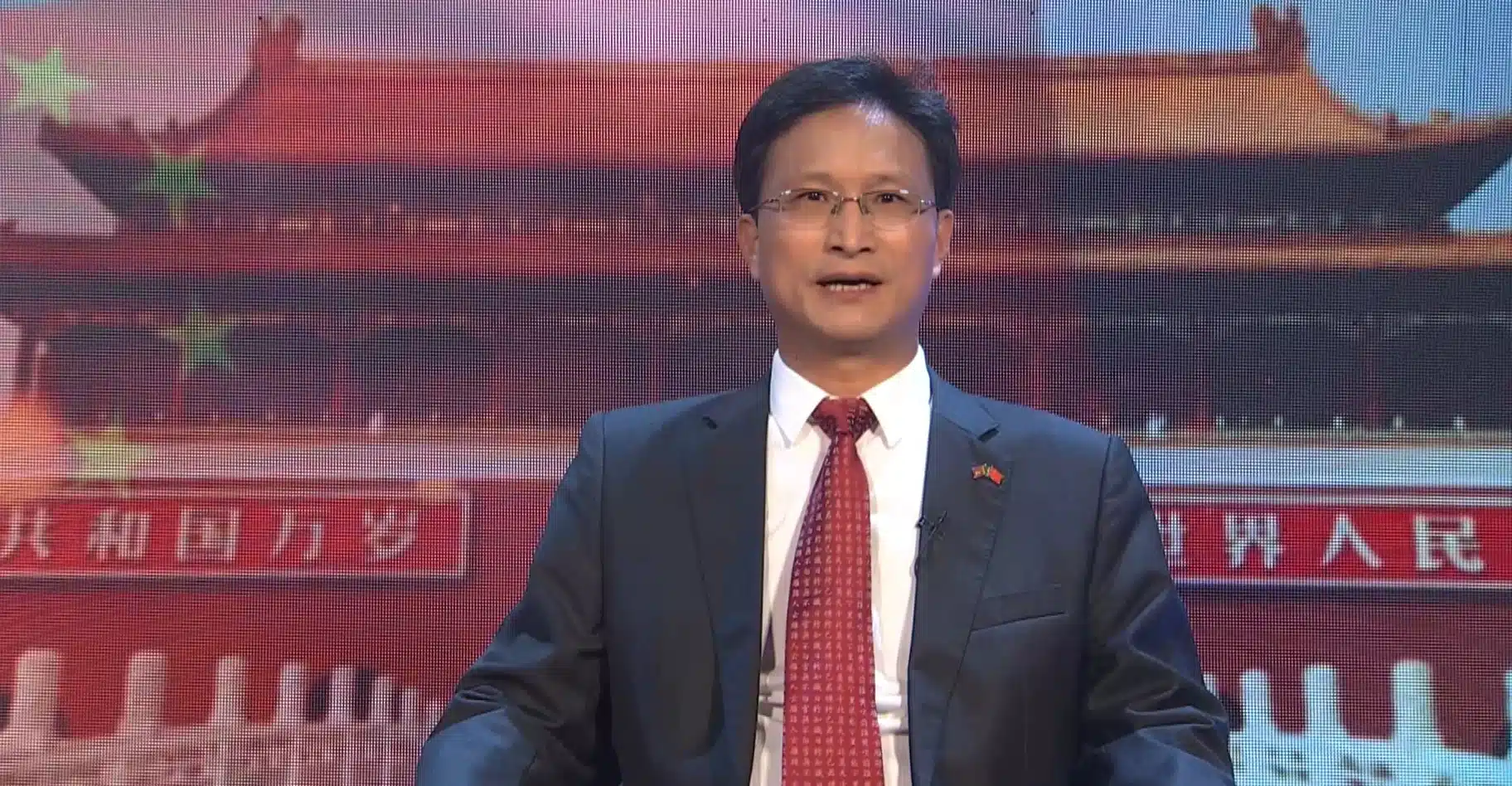
Why Sri Lanka Must Build a Transparent Business Environment to Attract FDI, Says Chinese Ambassador Qi Zhenhong | Qi Zhenhong has called on Sri Lanka to urgently improve its business environment to attract stronger foreign direct investment (FDI), stressing the need for policies that are fair, transparent, open, and stable. Speaking on March 14, 2026, during a dialogue with media and think tanks, the ambassador acknowledged Sri Lanka’s recent economic progress but warned that structural gaps still limit sustained capital inflows. His remarks highlight a critical moment for Sri Lanka as it seeks to convert improving investor confidence into long-term economic growth and higher FDI levels.
Speaking during an interactive dialogue with media and think-tanks on 14 March 2026, Ambassador Qi highlighted both Sri Lanka’s recent economic progress and the persistent structural gaps that continue to limit capital inflows. His remarks come at a time when the country has recorded its strongest FDI performance in years yet still falls short of the levels required for sustained high growth.
“Regarding attracting foreign investment, Sri Lanka has to think about how to create a business environment that is fair, transparent, open, and stable because foreign investors have to deal with all sectors in a specific country that he is going to invest in,” the ambassador stated.
This assessment is not a criticism but a practical roadmap drawn from China’s own development experience, one that Sri Lanka can adapt to accelerate its recovery.
Also in Explained | Sri Lanka Opportunity Fund: A Regulated European Gateway to Sri Lanka’s Growth Story
Sri Lanka’s FDI Performance in Context
Official data from the Board of Investment (BOI) confirms that Sri Lanka attracted USD 1,057 million in FDI in 2025, a 72% increase from the previous year and the first time the annual target of USD 1 billion was exceeded. Manufacturing led the way at 46%, followed by port development (26%), tourism and leisure (11%), and telecommunications.
However, the composition of these inflows reveals caution among investors. Only about 16% represented new equity capital, while the majority consisted of foreign commercial borrowings and expansions by existing enterprises. True greenfield projects those that bring fresh capital, technology and jobs accounted for just 13% of the total. This pattern shows that while existing players are reinvesting, new international entrants remain hesitant.
Sri Lanka’s economy is undeniably stabilising. Tourism revenue and remittances are rising, interest rates and inflation have fallen to single digits, and foreign reserves have been rebuilt. Yet, as Ambassador Qi noted, “there are also some deep-rooted problems that affect Sri Lanka’s economic development, and to address these issues, it takes time.”
The Core Business Environment to Attract FDI Recommendations from the Chinese Envoy
Ambassador Qi offered four practical priorities that directly address investor concerns heard repeatedly in recent years.
- Fair, transparent, open and stable environment
Investors need certainty that rules will not change abruptly and that contracts will be honoured across political cycles. Policy predictability remains one of the top barriers cited in international investment climate surveys. - One-stop service platform
Drawing from Shanghai’s successful model, the ambassador urged the creation of a single digital window where investors can complete all approvals online without repeated visits to multiple agencies. He acknowledged that the Sri Lankan government has recognised this need but emphasised that implementation “still takes time.” - Faster and more efficient approval procedures
Delays in land allocation, environmental clearances and regulatory approvals inflate project costs and deter time-sensitive capital. Streamlining these processes would dramatically improve Sri Lanka’s competitiveness against regional peers. - Shift from agriculture to broader industrial development
While agriculture remains important, Ambassador Qi stressed that long-term prosperity requires a stronger manufacturing and industrial base. “I believe that developing the agricultural industry is not enough,” he said, quoting the Chinese principle that “nothing is stable if you don’t work hard.”
These recommendations align closely with Sri Lanka’s own reform agenda. The government has already signalled plans to table the Investment Protection Law, Public-Private Partnership framework and State-Owned Enterprise reform legislation in the first half of 2026 measures that would directly support the kind of predictability and efficiency the ambassador is advocating.
Why Transparency and Stability Matter More Than Ever
Foreign investors today operate in a world of abundant choices. Capital can flow instantly to markets offering clear rules, fast approvals and competitive costs. Sri Lanka’s strategic location, educated workforce and improving macro fundamentals are genuine strengths, but they are frequently overshadowed by perceptions of bureaucracy, policy reversals and slow decision-making.
Recent investor forums both local and overseas have generated interest and networking opportunities. Yet many participants leave without bankable projects or clear timelines. The gap between high-level promotion and ground-level execution remains the single biggest obstacle to converting interest into actual investment.
Ambassador Qi’s intervention is particularly significant because China remains one of Sri Lanka’s largest bilateral partners and a major source of infrastructure financing. His call for a more investor-friendly environment carries weight both as friendly advice and as a signal of what it will take to attract diversified capital from Europe, the Middle East, Japan, India and beyond.
Opportunities for Sri Lanka to Respond
The ambassador’s remarks provide a clear checklist for immediate action.
- Accelerate the rollout of a fully digital one-stop investment portal with real-time tracking of applications.
- Fast-track the pending investment protection legislation to provide enforceable guarantees on contract sanctity and policy continuity.
- Publish a regularly updated pipeline of 20–30 “shovel-ready” projects with detailed feasibility studies, incentive packages, land status and projected returns.
- Reduce electricity and logistics costs through targeted renewable energy projects and port efficiency improvements areas where Chinese expertise could be leveraged constructively.
- Expand industry-focused incentives beyond traditional sectors to include advanced manufacturing, technology and green industries.
If implemented with urgency and transparency, these steps could transform the current FDI trajectory from incremental recovery to sustained acceleration.
Investor Perspective: A Window of Opportunity
For global investors, Ambassador Qi’s message reinforces that Sri Lanka is moving in the right direction but still requires tangible proof of execution. Those who engage early through structured vehicles such as the recently launched Sri Lanka Opportunity Fund or direct partnerships stand to benefit from attractive valuations and first-mover advantages.
The country’s improving macro stability, combined with strategic trade agreements and a young workforce, offers compelling long-term fundamentals. What is missing is the final layer of operational ease and predictability that turns interest into commitment.
A Constructive Call to Action
The Chinese Ambassador’s intervention is a timely and constructive reminder that Sri Lanka’s economic success will ultimately be determined not by external goodwill alone but by the internal environment it creates for capital.
As the government prepares to table key reform laws in the coming months, Ambassador Qi’s emphasis on fairness, transparency, efficiency and industrial focus provides a practical blueprint. Sri Lanka has the foundations now it must build the structures that make investment decisions straightforward, secure and rewarding.
The next few quarters will reveal whether these recommendations translate into concrete reforms. If they do, the country could finally move beyond the $1 billion FDI milestone toward the $2–3 billion annual inflows needed for transformative growth.
For now, the message from Beijing is clear: Sri Lanka has the potential but the environment must match the ambition.
(Disclaimer: This analysis is for informational purposes only and does not constitute investment advice. Economic policies and FDI figures are subject to official updates and verification.)
Also in Explained | What Strategic Approaches Do Major Companies Use in Sri Lanka’s Real Estate Deals?