
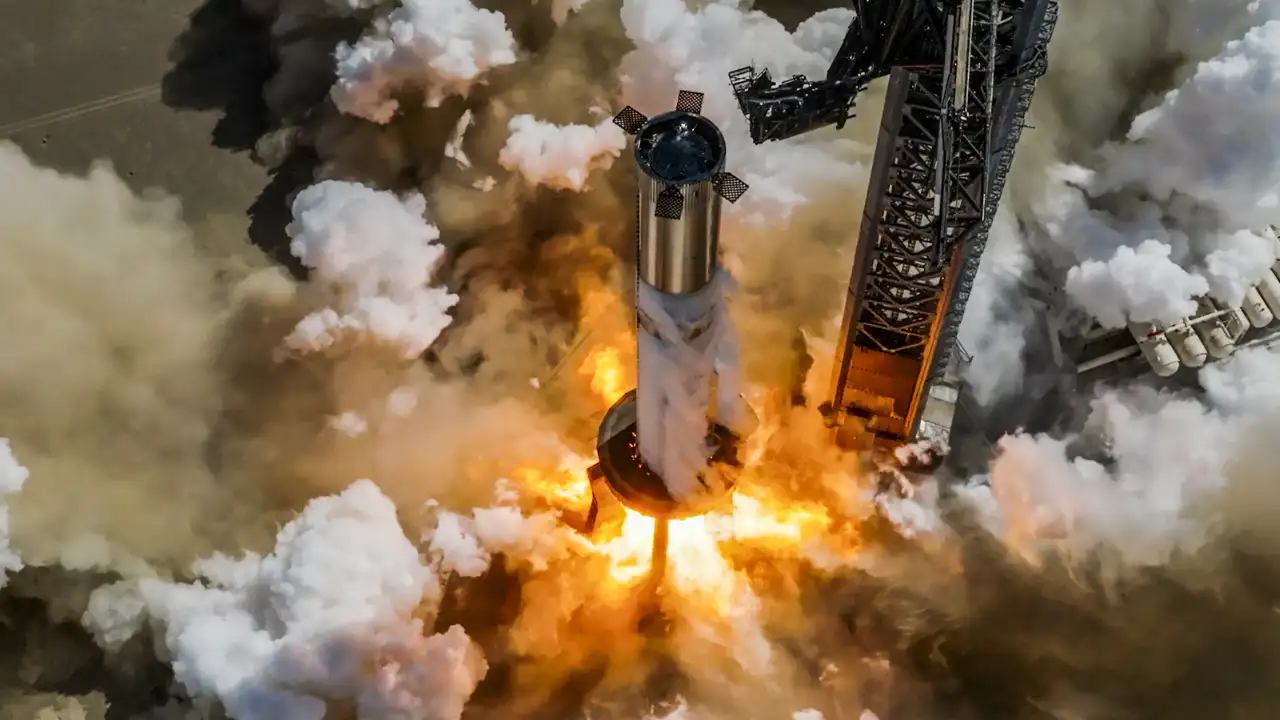
On February 8, 2026, Elon Musk published a comprehensive update on X outlining a significant adjustment in SpaceX’s long-term objectives: the company is now prioritizing the establishment of a self-sustaining, expanding city on the Moon, with Mars development positioned as a subsequent phase. Musk explained that lunar missions offer superior opportunities for rapid iteration launch windows every 10 days and transit times of approximately two days compared to Mars’ 26-month synodic period and six-month journeys.
While the ultimate goal of making humanity multi-planetary remains unchanged, Musk argued that the Moon provides the fastest viable path to an off-world civilization capable of independent growth. Mars efforts will proceed in parallel, with initial city construction targeted within 5–7 years, but lunar development has become the primary focus to achieve a permanent settlement in under a decade.
This strategic reorientation has generated considerable analysis within the aerospace and technology sectors. It reflects a pragmatic refinement of SpaceX’s roadmap rather than a fundamental change in vision. This article examines the stated rationale, underlying technical and business considerations, advantages, potential challenges, and broader implications for the commercial space industry.
Also in Explained | ElevenLabs Hits $11B Valuation with $500M Raise: Why Voice AI Could Redefine How We Interact with Technology
The Explicit Rationale – Iteration Speed and Accelerated Timelines
Musk’s statement provided clear engineering-based justifications for the shift:
- Frequent Launch Opportunities – Lunar missions can be scheduled roughly every 10 days, enabling high-cadence testing and deployment. Mars missions are constrained by orbital alignments occurring only every 26 months.
- Reduced Transit Duration – Travel to the Moon takes days, versus months for Mars, lowering risks to crew and systems while facilitating quicker supply chains.
- Compressed Development Cycle – Rapid iteration on the Moon could yield a self-sustaining city within less than 10 years, compared to 20+ years for Mars under similar constraints.
- Civilizational Resilience – Establishing an off-world backup sooner enhances humanity’s long-term survival prospects.
Musk reiterated that Mars remains a core objective, with early construction phases planned in the near term, but the Moon offers the most efficient initial step toward multi-planetary existence.
Engineering Realism and Programmatic Alignment
Beyond the public explanation, several practical considerations appear to influence this prioritization.
- Starship Maturation Path – Current Starship development (Version 3 prototypes advancing through testing) benefits from nearer-term lunar missions, which require less delta-v than Mars transfers. Demonstrating reliable lunar landings and operations builds critical experience for deeper-space applications.
- NASA Artemis Commitments – SpaceX’s Human Landing System contract under NASA’s Artemis program provides substantial funding and aligns directly with lunar objectives. This partnership ensures revenue stability while advancing shared infrastructure goals.
- In-Situ Resource Utilization Potential – Lunar polar ice and regolith offer accessible materials for propellant production, habitat construction, and life support technologies transferable to Mars but testable sooner on the Moon.
- Capital and Risk Management – Near-term lunar milestones support investor confidence and valuation sustainability, particularly following recent corporate integrations involving AI and space infrastructure.
The approach represents sequenced development: validate systems and processes closer to Earth before committing to the greater challenges of interplanetary distances.
How Lunar Priority Could Strengthen Overall Objectives
This adjusted focus offers several strategic and operational benefits.
- Enhanced Iteration and Reliability – High-frequency missions accelerate learning in closed-loop life support, habitat design, resource extraction, and autonomous operations foundational for any permanent settlement.
- Mitigated Technical Risk – Shorter missions reduce exposure to radiation, microgravity effects, and propulsion demands, allowing incremental confidence-building.
- Revenue and Partnership Opportunities – Alignment with Artemis, potential commercial lunar payloads, and extensions of Starlink infrastructure generate near-term cash flows to support broader ambitions.
- Accelerated Off-World Presence – Achieving self-sufficiency on the Moon within a decade provides earlier insurance against Earth-centric risks than a Mars-first timeline.
- Synergistic Infrastructure Development – Lunar propellant depots and manufacturing capabilities could substantially lower the cost and complexity of subsequent Mars missions.
These elements position the lunar emphasis as an enabler rather than a diversion, potentially expediting the overall multi-planetary transition.
Potential Risks of the Revised Prioritization
The shift also introduces certain complexities and trade-offs.
- Resource Allocation Trade-Offs – Concentrating engineering and financial resources on lunar systems may delay Mars-specific advancements, such as long-duration transit habitats or optimized entry-descent-landing technologies.
- Programmatic Focus Dilution – Balancing concurrent lunar and Mars development alongside ongoing Starlink expansion and other initiatives could strain organizational bandwidth.
- Unique Lunar Environmental Hurdles – Extreme thermal cycles, abrasive regolith, and absence of atmospheric protection present distinct engineering challenges that must be addressed without diverting from longer-term goals.
- Timeline Credibility – Frequent refinements to projected milestones require careful management to maintain stakeholder trust and momentum.
- Dependency on External Partnerships – Heavy reliance on NASA contracts for lunar progress introduces programmatic and funding uncertainties beyond SpaceX’s direct control.
These factors highlight the need for disciplined execution to ensure the lunar phase delivers tangible progress without compromising Mars preparedness.
A Pragmatic Sequencing of Ambitious Goals
Elon Musk’s February 8, 2026, update articulates a refined SpaceX strategy: prioritize rapid development of a self-expanding lunar city as the most efficient route to off-world sustainability, while advancing Mars capabilities in parallel. The decision is grounded in launch cadence advantages, reduced transit risks, and accelerated timelines reflecting engineering pragmatism in service of the enduring vision to extend human presence beyond Earth.
If Starship achieves the necessary reliability for sustained lunar operations in the coming years, this approach could establish a robust lunar infrastructure that directly facilitates Mars settlement. The period from 2026 to 2030 will be critical in demonstrating whether this sequenced strategy delivers faster overall progress toward multi-planetary status.
For the global space industry, SpaceX’s lunar focus reinforces the Moon’s role as both a destination and a proving ground, potentially catalyzing broader international and commercial participation in off-world development.
Also in Explained | Why Did SpaceX Acquire xAI in a $1.25 Trillion Deal and What’s the Real Business Strategy Behind It?