
Sri Lanka’s Securities and Exchange Commission (SEC) has announced plans to introduce a Code of Ethics for capital market influencers, a move aimed at protecting investors from fraudulent schemes that have recently surfaced in the share market. The regulator’s decision comes after identifying unauthorised entities such as Blue Ocean Securities Limited and Gladius South Asia, both accused of misleading investors and conducting activities outside the SEC’s regulatory framework.
Deputy Director General of the SEC, Tushara Jayaratne, explained at a media briefing that these scams highlight the urgent need for guidelines governing the activities of individuals and firms who influence investor behaviour. The initiative reflects a broader effort to strengthen investor protection, enhance transparency, and build confidence in Sri Lanka’s capital markets.
Also in Explained | SEC Turns Scammer’s Pitch into Evidence: Investor Protection and the Rising Threat of Fraudulent Calls
Fraudulent Practices Exposed
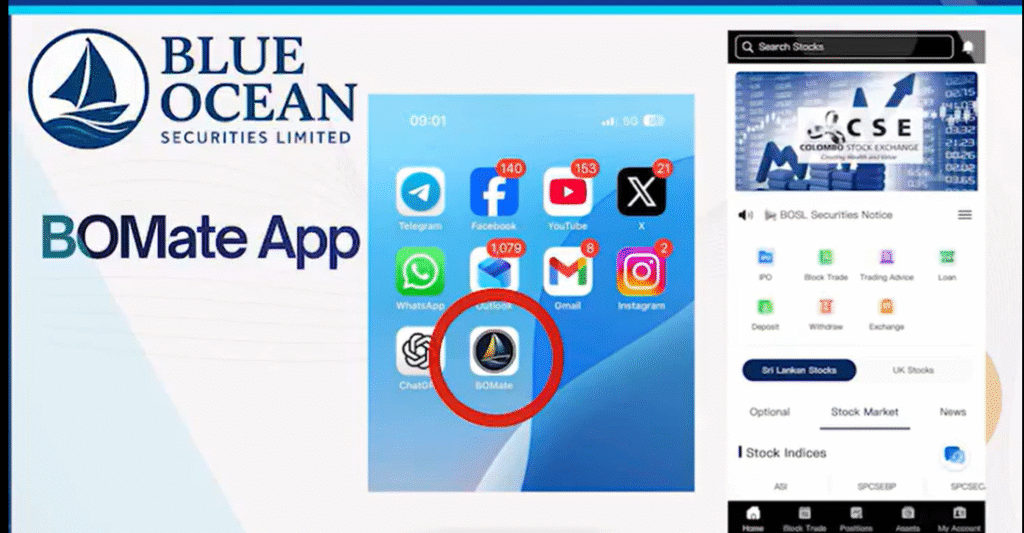
Jayaratne revealed that Blue Ocean Securities had been encouraging investors to trade through a mobile application named BOMate. However, transactions conducted via this app were not connected to the Colombo Stock Exchange’s official trading system, meaning they fell outside the SEC’s surveillance framework. “Through this app, you can’t trade shares. But the money transaction goes through this app and the SEC system does not see these transactions,” Jayaratne explained.
This raises serious concerns about investor protection, as funds routed through unregulated platforms may be diverted elsewhere, leaving investors vulnerable to losses.
Meanwhile, Blue Ocean Securities was accused of using the CSE’s logo fraudulently to promote its business and of encouraging investors to place funds in foreign markets rather than the local stock exchange. Such practices not only mislead investors but also undermine confidence in Sri Lanka’s regulated capital market.
Regulatory Action
The SEC has lodged complaints against both entities with the Criminal Investigation Department (CID) and the Financial Intelligence Unit (FIU) of the Central Bank. These steps underscore the regulator’s commitment to pursuing legal remedies against unauthorised operators and protecting the integrity of the market.
Jayaratne stressed that while scams exist, the Sri Lankan share market remains broadly free and fair. “Our market is somewhat free and fair. From the perspective of investors, you also have a responsibility to be careful when investing in the market,” he said.
Code of Ethics for Influencers
The proposed Code of Ethics will serve as a framework for registered investment advisers and capital market influencers. By establishing clear guidelines, the SEC aims to ensure that advice and promotional activities are conducted responsibly, transparently, and in line with investor protection standards.
This initiative is part of a broader set of 12 capital market development projects adopted by the SEC to increase investor participation and strengthen market efficiency. The regulator believes that ethical standards will help reduce misinformation, prevent manipulation, and foster trust among both retail and institutional investors.
Investor Confidence and Market Growth
Sri Lanka’s capital market has long struggled with low participation. Less than 1% of the population holds a Central Depository System (CDS) account, limiting liquidity and market resilience. Fraudulent schemes further discourage new entrants, particularly young professionals and entrepreneurs who may be exploring investment opportunities for the first time.
By introducing a Code of Ethics and cracking down on unauthorised operators, the SEC hopes to reassure investors that the market is safe, regulated, and transparent. This confidence is essential for expanding participation and achieving the regulator’s goal of increasing CDS account penetration to 5% of the population in the coming years.
Implications for Business Owners and Entrepreneurs
For Sri Lanka’s business community, the SEC’s announcement carries important lessons. Entrepreneurs and established corporates often rely on capital markets for fundraising, expansion, and investment. Scams that undermine investor trust can directly impact their ability to mobilise capital.
The Code of Ethics will not only protect individual investors but also strengthen the credibility of the market as a whole. A transparent, well‑regulated environment benefits businesses by ensuring that capital flows are legitimate, investor confidence is sustained, and fundraising channels remain robust.
Balancing Regulation and Opportunity
The SEC’s approach reflects a balance between tightening regulation and encouraging growth. While fraudulent operators must be eliminated, the regulator is also focused on expanding opportunities through new instruments, improved governance, and broader participation.
The introduction of ethical guidelines for influencers is a step toward modernising Sri Lanka’s capital market. In an era where social media and digital platforms amplify financial advice, ensuring that influencers operate responsibly is critical.
Conclusion
The SEC’s plan to introduce a Code of Ethics for capital market influencers marks a significant step in strengthening investor protection and market integrity. By exposing fraudulent practices at Blue Ocean Securities and Gladius South Asia, and by pursuing legal action through the CID and FIU, the regulator has demonstrated its commitment to safeguarding the public.
For investors, the message is clear: transact only through authorised channels, verify credentials, and remain vigilant. For businesses and entrepreneurs, the initiative promises a more transparent and trustworthy capital market, essential for long‑term growth and resilience.
As Sri Lanka rebuilds after Cyclone Ditwah and seeks to mobilise capital for recovery, ensuring ethical conduct in the market is not just a regulatory necessity, it is a foundation for sustainable economic development.
Also in Explained | Bank of Ceylon’s Rs. 20 Billion Sustainability Bonds: What It Means for Sri Lanka’s Capital Market