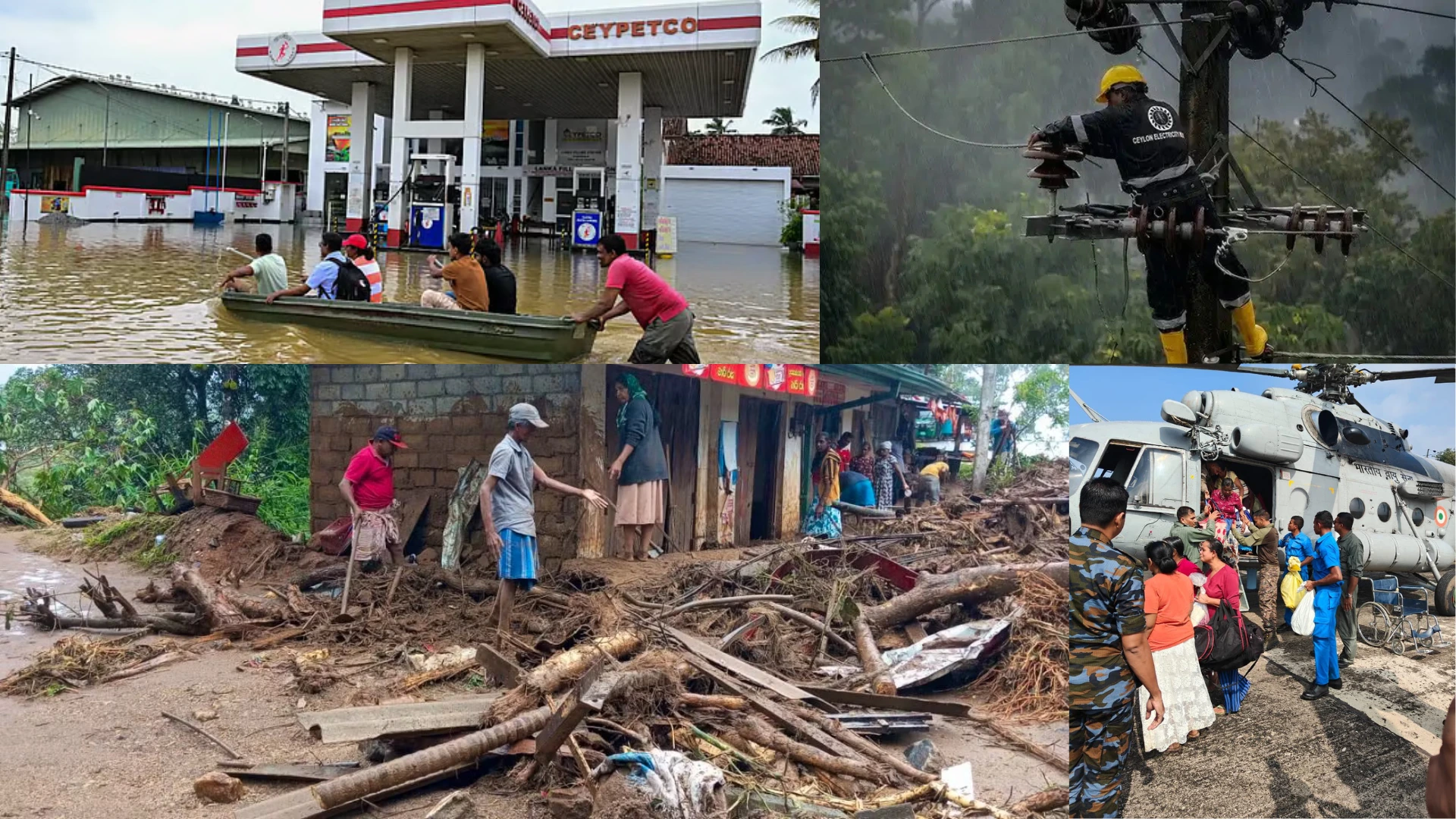
Sri Lanka’s industrial sector has faced repeated shocks over the past few years, but Cyclone Ditwah marked one of the most disruptive events for large-scale manufacturing and production in recent memory. The scale of damage to factories, supply chains, logistics networks, and workforce continuity forced the Government to move beyond short-term relief and adopt a structured recovery framework. The latest high-level review led by the Ministry of Industry and Entrepreneurship Development signals a decisive shift in how Sri Lanka plans to revive and future-proof its large-scale industries.
At the centre of this effort is a coordinated public–private partnership model that brings together the Government and some of the country’s most influential corporates. This approach recognises a simple reality: rebuilding industrial capacity at scale cannot be achieved by the State alone. It requires capital, technical expertise, operational efficiency, and logistics strength, areas where established corporates already excel.
Also in Explained | Rebuilding After the Cyclone: What Sri Lanka’s Economy Needs Now
A Data-Driven Recovery Framework
One of the most significant changes in the post-cyclone response is the introduction of a formal data collection mechanism to map the real impact across the industrial ecosystem. As of now, the Ministry has recorded 16,476 inquiries from affected enterprises. While micro and small businesses form the bulk of these figures, the inclusion of 521 large-scale enterprises is particularly important for macroeconomic recovery.
Large-scale industries anchor employment, exports, and supply chains. When a single factory shuts down, the ripple effects travel far beyond the balance sheet impacting SMEs, transport providers, raw material suppliers, and even regional economies. By identifying affected large-scale enterprises early, the Government can prioritise interventions that generate the highest economic multiplier effect.
Industry Recovery Foster Program (IRFP): Immediate Stabilisation
The Industry Recovery Foster Program (IRFP) is designed as a rapid-response mechanism. Its primary objective is to help affected medium- and large-scale enterprises restart operations as quickly as possible. Rather than focusing solely on financial relief, the program emphasises technical and management support often the missing link in disaster recovery.
For large-scale manufacturers, recovery is rarely just about rebuilding physical infrastructure. Machinery calibration, production line optimisation, supply chain realignment, workforce redeployment, and compliance restoration all require specialised expertise. Under IRFP, institutions with strong production, engineering, and logistics capabilities will be prioritised, ensuring that recovery efforts are both efficient and scalable.
This focus reflects a pragmatic policy choice: reviving industries that can quickly regain production momentum helps stabilise employment, export earnings, and domestic supply chains within a shorter timeframe.
Industry Development Foster Program (IDFP): Building Long-Term Resilience
While IRFP addresses immediate recovery needs, the Industry Development Foster Program (IDFP) looks beyond restoration to long-term industrial strengthening. Cyclone Ditwah exposed vulnerabilities in industrial zoning, infrastructure resilience, logistics dependencies, and disaster preparedness. IDFP is expected to integrate these lessons into future industrial development strategies.
For large-scale industries, this means support that goes beyond returning to “business as usual.” The program is likely to encourage investments in resilient infrastructure, diversified logistics routes, improved inventory management systems, and stronger local supplier networks. Over time, this could reduce the sector’s exposure to climate-related disruptions and global supply chain shocks.
The Role of Top Corporates in National Recovery
The participation of leading corporates such as John Keells Holdings, MAS Holdings, Brandix Lanka, Aitken Spence, Tokyo Cement, Unilever Sri Lanka, Nestlé Lanka, Hemas Holdings, Cargills, and others marks a critical shift in how industrial recovery is being approached.
These companies bring more than capital to the table. They offer proven operational systems, engineering depth, global supply chain experience, and crisis management capabilities. Their involvement under a public-private partnership framework allows knowledge transfer to smaller players while accelerating large-scale recovery initiatives.
Importantly, this collaboration also signals confidence to investors, lenders, and international partners. When top-tier corporates commit resources and expertise to a national recovery effort, it reinforces trust in the stability and direction of the industrial sector.
Safeguarding Jobs and Production Continuity
One of the Government’s stated priorities is safeguarding employment. Large-scale industries employ thousands directly and support many more indirectly. Prolonged shutdowns risk permanent job losses, skills erosion, and workforce migration all of which weaken long-term industrial competitiveness.
By targeting enterprises with strong production and logistics capabilities, the recovery framework aims to stabilise employment clusters quickly. Restarting large factories also reactivates downstream and upstream businesses, from transport operators to packaging suppliers, creating a broader recovery effect across the economy.
A Time-Bound, Accountable Structure
The recovery framework is expected to be fully operational within 30 days, with a dedicated operational committee commencing work next week. This time-bound structure is crucial. Delays in post-disaster recovery often lead to permanent capacity loss, as businesses exhaust reserves or relocate operations.
Clear deadlines such as the call for affected businesses to submit details before 2 p.m. on the 16th, introduce accountability and urgency. They also help the Ministry prioritise resources based on verified data rather than estimates.
What This Means for Sri Lanka’s Industrial Future
Cyclone Ditwah has forced Sri Lanka to rethink how it manages industrial risk, recovery, and resilience. The current approach marks a departure from ad-hoc relief towards structured industrial policy execution. If implemented effectively, it could serve as a blueprint for responding to future crises whether climate-related, economic, or geopolitical.
For large-scale industries, the message is clear: recovery support will favour those that demonstrate operational strength, technical capability, and readiness to rebuild sustainably. For the broader economy, the initiative represents an opportunity not just to restore lost capacity, but to modernise and strengthen Sri Lanka’s industrial backbone.
As the recovery programs roll out, their success will depend on execution, transparency, and sustained collaboration between the Government and the private sector. What is certain, however, is that Sri Lanka’s path to industrial revival is no longer fragmented, it is coordinated, data-driven, and increasingly future-focused.
Call to Action:
Large-scale enterprises affected by Cyclone Ditwah should ensure their details are submitted via www.industry.gov.lk or by contacting 071 266 6660 before the deadline to be included in the national recovery framework. Early participation will be key to accessing technical and management support as Sri Lanka rebuilds its industrial strength.
Also in Explained | US Under Secretary Allison Hooker Meets President Dissanayake: Tariffs, Recovery, and Sri Lanka’s Strategic Future