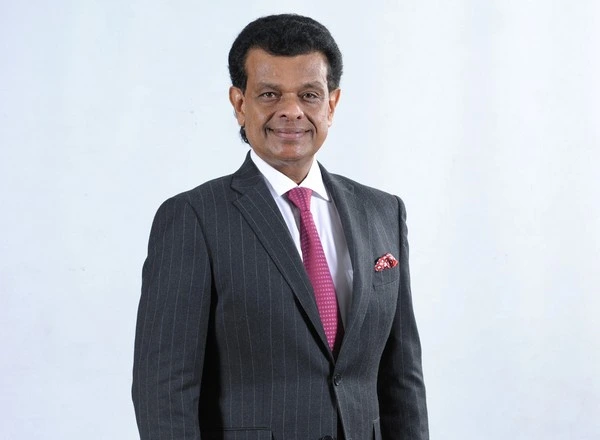
In a significant move to harness Sri Lanka’s strategic geographic advantage, President Anura Kumara Dissanayake has appointed Dr. Mahinda Parakrama Dissanayake as Adviser to the President on Maritime, Ports and Logistics, effective immediately. The appointment, accepted on an honorary basis, underscores the government’s commitment to transforming Sri Lanka into a premier regional logistics hub. Dr. Dissanayake, a seasoned maritime expert with decades of leadership in both public and private sectors, brings unparalleled experience at a pivotal time when the nation’s export sector is posting record earnings and eyeing ambitious growth in 2026.
Currently serving as Deputy Chairman and Managing Director of Aitken Spence PLC, one of Sri Lanka’s leading conglomerates with a strong footprint in maritime, logistics, and cargo; Dr. Dissanayake has long been recognised as an internationally respected professional in shipping and ports. His appointment aligns perfectly with national objectives to leverage the country’s prime location in the Indian Ocean, enhancing transshipment capabilities and facilitating smoother export flows.
Also in Explained | Sri Lanka Central Bank’s 2026 Policy Agenda: Boosting Business Confidence and Market Stability
Dr. Parakrama Dissanayake – A Distinguished Career in Maritime Leadership
Dr. Dissanayake’s credentials are impeccable, marked by groundbreaking achievements that have elevated Sri Lanka’s profile in global shipping. He made history as the first non-British International President of the Institute of Chartered Shipbrokers (UK) from 2016 to 2018, a prestigious institution founded in 1911. This milestone not only highlighted his personal expertise but also showcased Sri Lankan talent on the world stage. He has also led the Chartered Institute of Logistics and Transport (Sri Lanka) and the Institute of Chartered Shipbrokers (Sri Lanka), contributing to professional standards and education in the sector.
His public service record is equally impressive. Dr. Dissanayake served twice as Chairman of the Sri Lanka Ports Authority (SLPA), a role where he drove operational efficiencies and strategic developments. He was also Secretary to the Ministry of Ports, Shipping and Southern Development, influencing policy at the highest levels. Under his leadership, key entities like the state-owned Jaya Container Terminal, Sri Lanka Port Management and Consultancy Services, and Hambantota International Port Services Ltd. saw advancements in infrastructure and management.
In the private sector, as former Chairman/CEO of Aitken Spence Maritime, Logistics & Cargo, and a Main Board Director of Aitken Spence PLC, he spearheaded expansions in integrated logistics solutions. He has served on boards of major terminals, including South Asia Gateway Terminals Ltd. (SAGT) and Colombo International Container Terminals Ltd. (CICT), playing a pivotal role in modernising operations at the Port of Colombo.
Internationally, Dr. Dissanayake has been an expert on shipping for the UN/UNCTAD Panel, advising on global trade and port policies. His academic prowess includes Chartered Shipbroker (UK) and Chartered Fellow of Logistics and Transport (UK) qualifications, postgraduate degrees in business and marketing, and executive education from Harvard Business School, Oxford, and Cambridge. He has held visiting professorships in maritime studies and received multiple national and international awards for his contributions to shipping and logistics.
These achievements position Dr. Dissanayake as one of Sri Lanka’s foremost authorities in the field, blending hands-on operational experience with strategic vision.
Sri Lanka’s Export Boom and the Critical Role of Maritime Infrastructure
Sri Lanka’s export sector has demonstrated remarkable resilience and growth in recent years, emerging as a key driver of foreign exchange earnings and economic recovery. In 2025, merchandise exports reached record levels, with earnings exceeding US$15.8 billion by year-end projections, marking a significant upward trajectory. From January to November 2025, exports were on track to hit around US$17-17.5 billion, driven by strong performances in apparel and textiles (over US$4.4 billion in the first ten months), tea, rubber, gems, and emerging sectors like food and beverages.
The Export Development Board (EDB) reported consistent year-on-year increases, with merchandise exports growing 6.53% in the first ten months of 2025 alone. Services exports also contributed, adding billions through tourism and IT-related inflows. Overall, 2025 saw Sri Lanka surpass previous highs, with the Port of Colombo playing a central role by handling a historic 8.29 million TEUs (Twenty-foot Equivalent Units), a 6% increase from 2024 and the highest volume ever.
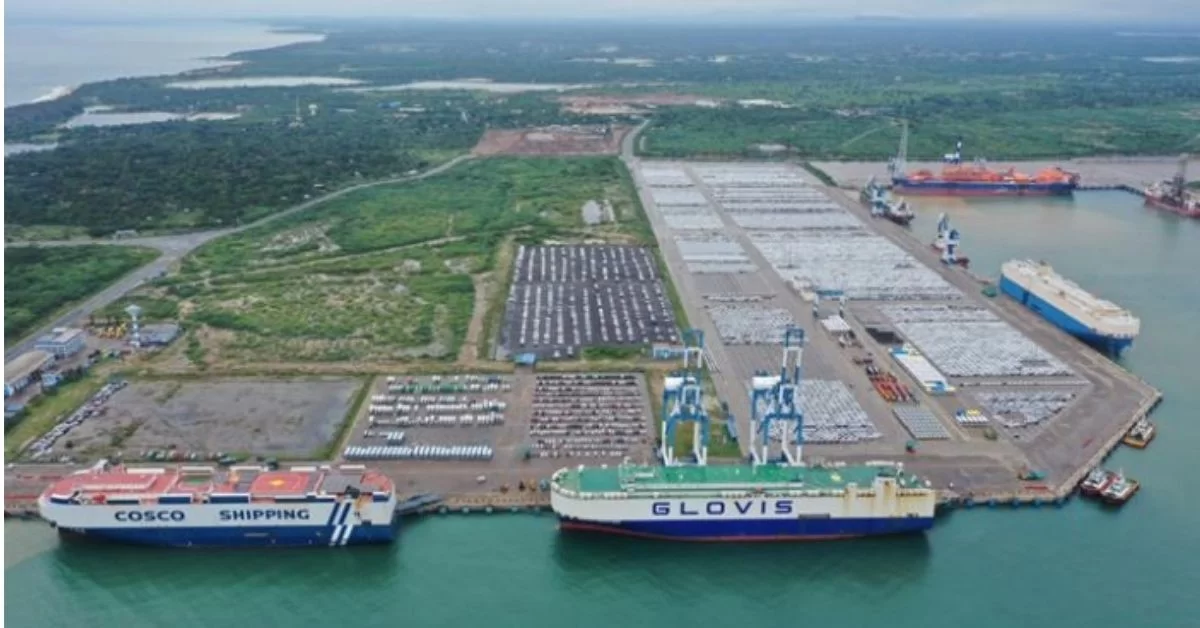
A substantial portion of this success stems from maritime and ports infrastructure. Nearly all merchandise exports; apparel, tea, coconut products, and more are shipped via sea routes, primarily through the Port of Colombo, one of South Asia’s busiest transshipment hubs. Transshipment volumes alone reached over 5.52 million TEUs in 2025, generating significant revenue for the Sri Lanka Ports Authority (SLPA), which reported a 66% profit surge in the first half of the year.
This maritime dependency highlights why efficient ports and logistics are vital: delays or inefficiencies can erode competitiveness in global markets. With exports contributing crucially to GDP and foreign reserves, especially post the 2022 economic challenges enhancing maritime capabilities directly translates to higher export revenues.
Unlocking Export Potential in 2026: The Strategic Advantage of Expert Leadership
Looking ahead to 2026, the government and EDB have set an ambitious target of US$20 billion in exports, comprising around US$15-16 billion in merchandise and US$4.3 billion in services. Achieving this will require focused strategies in logistics efficiency, port capacity expansion, and supply chain optimisation areas where Dr. Dissanayake’s expertise could prove transformative.
His appointment comes at an opportune moment. The Port of Colombo’s record 2025 performance positions it to handle even higher volumes, but sustaining growth demands innovations in transshipment, digitalisation, and regional connectivity. Dr. Dissanayake’s prior roles in developing terminals like CICT and SAGT, combined with his international insights from UNCTAD and the Institute of Chartered Shipbrokers, equip him to advise on policies that reduce bottlenecks, attract foreign investment, and integrate Sri Lanka deeper into global supply chains.
For businesses, this could mean lower logistics costs, faster turnaround times, and enhanced competitiveness for exporters in key sectors like apparel (which alone accounts for nearly half of merchandise exports) and emerging areas such as electronics and value-added agriculture. By prioritising maritime reforms, the government can capitalise on Sri Lanka’s location along major East-West shipping routes, boosting both direct exports and transshipment revenues.
An experienced leader like Dr. Dissanayake is essential here. His track record in public-private partnerships, evident from his dual roles at Aitken Spence and SLPA ensures balanced, pragmatic advice that aligns government goals with industry needs. In 2026, with global trade recovering and demand for efficient hubs rising, Sri Lanka stands to gain a substantial advantage in export development through targeted maritime and shipping enhancements.
President Dissanayake’s gratitude for Dr. Dissanayake accepting this honorary role reflects recognition of his selfless contribution to national progress. As Sri Lanka aims higher in the global logistics landscape, this appointment signals a proactive approach to turning geographic advantage into economic prosperity.
In conclusion, Dr. Parakrama Dissanayake’s wealth of achievements and visionary leadership make him the ideal adviser to steer Sri Lanka’s maritime sector forward. With exports already a cornerstone of the economy and poised for further records in 2026, his guidance could unlock new heights in trade, investment, and sustainable growth.
Also in Explained | CBSL’s 2026 Financial Sector Reforms: Enhancing Banking Strength and Market Innovation