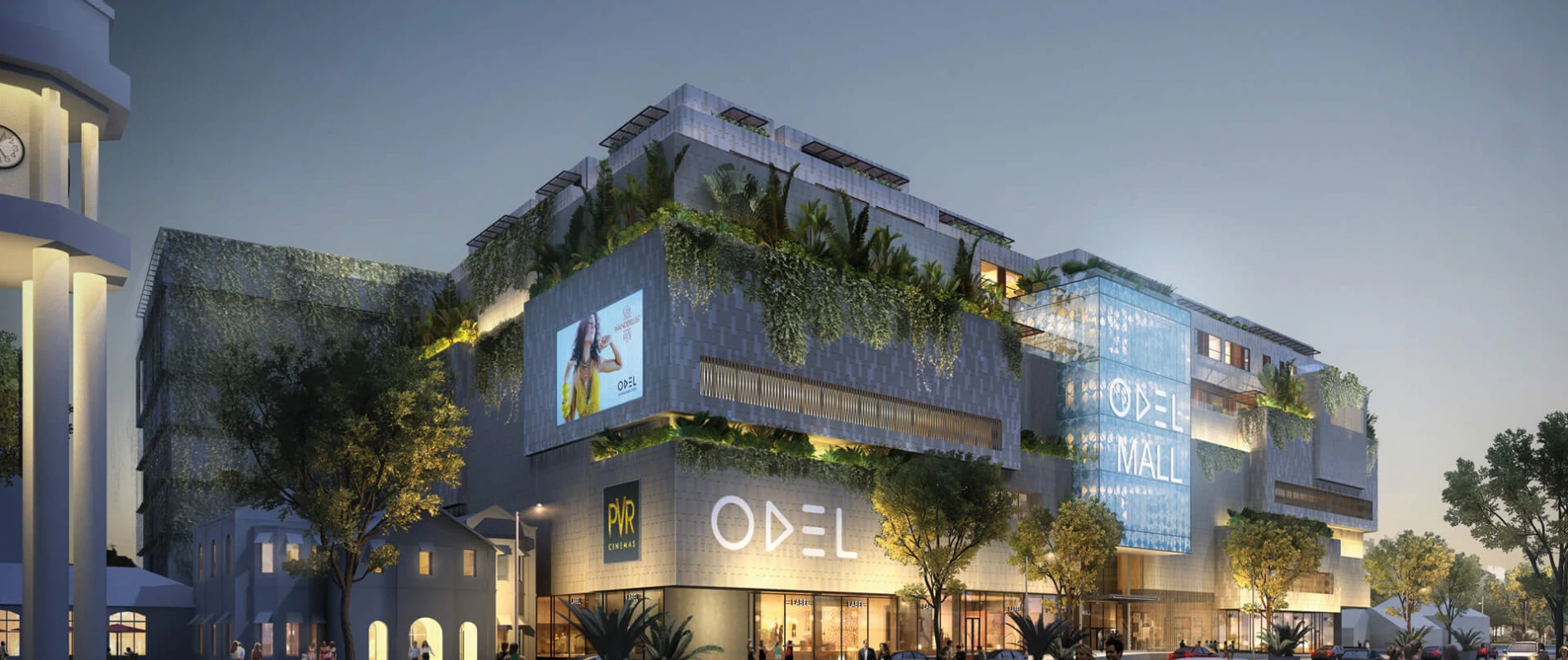
Based on reports from the Daily Mirror (Link), we developed this analysis to examine how Odel’s Ward Place project has shifted from luxury apartments to office space, reflecting the intersection of macroeconomic realities, sectoral changes, and internal financial pressures.
Realignment of the Project’s Revenue Model
The original luxury apartment proposition was premised on market conditions that existed before Sri Lanka’s economic downturn, when demand for high‑end residential property was rising, developers could rely on pre‑sales, and credit conditions were comparatively stable. Today, however, residential demand has weakened due to shrinking disposable incomes, high interest rates, reduced foreign investor appetite, and shifting migration trends. Purchasers of premium residential units have become more risk‑averse, particularly when it comes to multi‑year unfinished projects, and apartment pre‑sales no longer provide meaningful upfront cash to fund construction.
Office space, in contrast, offers earlier monetisation through deposits and advances on long‑term leases, lower finishing costs per square foot compared to luxury apartments, shorter fit‑out timelines, and a more predictable annuity‑style cash flow stream. This pivot effectively moves the project to a lower‑risk, cash‑realising model, which is crucial given Odel’s urgent working‑capital deficit.
Funding Pressures Dictating Design Rationalisation
At present, Odel sits on a capital work‑in‑progress base of approximately Rs. 17.8 billion for the mall. Completing the original specification would have required a longer construction timeline, higher finishing standards, expanded sourcing of imported materials, and a delayed start on cash recovery. By redesigning, the company immediately reduces the funding requirement by shifting to office build‑out standards, which are significantly lower than residential finishing expectations. It also unlocks earlier cash inflows via pre‑commitments, lowers inventory risk because office space can be sold or leased in phases, and improves bank confidence for refinancing negotiations.
The decision to raise Rs. 4.5 billion with renewed external equity partnership signals that the group acknowledges internal cash generation alone cannot carry the project to completion.
Also in Explained | Netflix’s $72 Billion Warner Bros. Deal: Legacy, Power, and the Future of Global Media
Impact of Corporate Financial Stress on Project Priorities
Odel’s broader financial situation has created the critical context for this restructuring. Total accumulated losses exceed Rs. 12.7 billion, while the liquidity shortfall is severe, with current liabilities exceeding current assets by Rs. 15.2 billion. Auditors have raised a material uncertainty on going‑concern status, and interest‑bearing borrowings exceed Rs. 20.7 billion. The Mall project itself is entangled in a syndicated facility of approximately Rs. 8.2 billion, and banks are unwilling to extend terms unless they see a viable route to commercialisation.
The pivot improves bankability by introducing shorter cash realisation cycles, stronger pre‑sale potential, and a narrowing of construction risk. The “positive response” from the lending consortium is a financial symptom of a more credible execution plan.
Changing Retail Landscape as a Strategic Driver
Sri Lanka’s retail environment has reset expectations. Post‑economic crisis, consumer discretionary spending is lower, price‑sensitive segments are driving volume, traditional department‑store formats have weakened, and footfall‑based retail returns are less stable than they were before 2020. Odel has responded with the closure of 17 underperforming outlets, the introduction of discount‑driven “Brands Outlet Stores,” and dynamic footfall‑justified marketing.
Mall spaces must now serve as experience‑led destinations rather than merely sales‑led environments. Office leasing, by contrast, is more predictable than retail‑led rent‑sharing structures, making it a safer bet in the current climate.
Completed Mall as a Catalyst for Group Restructuring
The Ward Place property remains a flagship strategic asset. Completion of the mall is intended to be a valuation stabiliser, a collateral enhancer for refinancing, and a reputational stabiliser for Softlogic’s retail segment. A partially finished asset ties up capital while serving no economic purpose, and Odel needed a realistic end‑of‑project pathway. Shifting the project scope delivers one.
External Market Dynamics Directly Altered Outcome
Several external market dynamics directly shaped the outcome. Luxury‑tier residential units now face slower absorption, while office absorption and pre‑leasing even at moderate rates offer stronger certainty. Residential units require premium fixtures, imported materials, and interior complexity, whereas office fit‑outs are modular and cost‑predictable.
The lending environment has also changed. Banks now evaluate large commercial projects based on cash‑conversion timelines, debt‑servicing coverage ratios, and realistic exit strategies. The revised design scores higher in all three. Meanwhile, Softlogic’s pursuit of equity partners signals that the group intends to delink future risk concentration in retail. Strategic investors will only consider involvement if a commercially viable model emerges, and the project redesign creates that entry point.
Conclusion
Odel Mall is no longer a flagship lifestyle property anchored in premium residential aspiration. It has been repositioned into a capital‑pragmatic, revenue‑predictable office‑plus‑retail model. This pivot is grounded not in preference but in necessity. The transformation reflects risk compression, shorter funding cycles, stabilisation of debt servicing, higher bankability, and a response to depleted cash reserves.
It is a strategic correction forced by the intersection of changing macroeconomic realities, sector‑wide shifts in retail appetite, and Odel’s internal liquidity constraints. The next milestone is execution: meeting revised construction schedules, securing pre‑leasing commitments, and sustaining operational revenue growth. Only then can the project fulfil its original intention acting not as a capital strain, but as the cash‑generating asset that supports Odel’s long‑term continuity.
Also check the latest articles | Lanka Biz News