In the previous article, we examined the key regulations guiding foreign investors in Sri Lanka’s real estate market, including restrictions on land ownership, opportunities in condominiums, and incentives in special economic zones. These frameworks have enabled significant foreign capital inflows into large-scale developments, particularly those aligned with tourism, urban renewal, and economic diversification. As the market gains momentum in early 2026, several ambitious projects stand out for their scale, international backing, and potential to transform the landscape.
These initiatives often feature mixed-use designs incorporating residential, commercial, hospitality, and leisure elements, attracting diverse global investors. Drawing on recent official updates and investment announcements up to mid-February 2026, this article highlights prominent examples, focusing on their scope, progress, and contributions without delving into specific entity names. The emphasis remains on verified trends, illustrating how foreign direct investment (FDI) is channeling into strategic zones amid improving economic stability.
Also in Explained | What Are the Key Regulations for Foreign Investors in Sri Lanka’s Real Estate Market?
The Flagship Waterfront Reclamation and Special Economic Zone
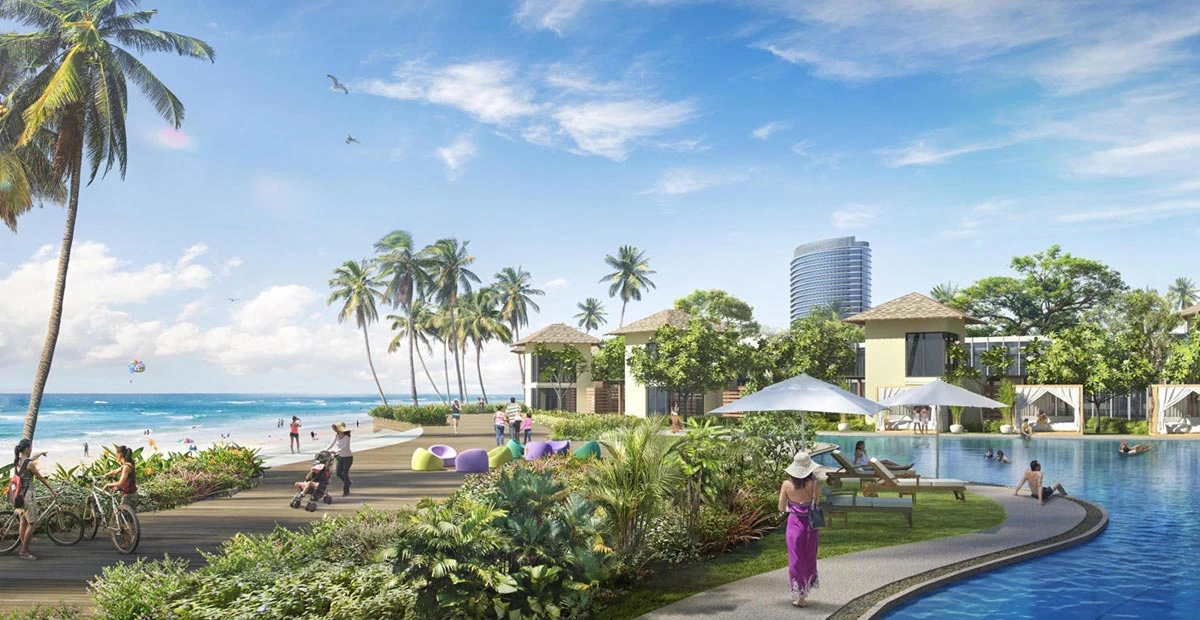
The most prominent project attracting substantial foreign capital is a large-scale waterfront special economic zone on reclaimed land adjacent to Colombo’s port. This multi-billion-dollar initiative, developed as a foreign-currency designated area, encompasses approximately 269 hectares and envisions a mix of financial hubs, residential towers, retail spaces, marinas, and entertainment facilities.
Initial reclamation and infrastructure were supported by major FDI commitments from Asia, laying the foundation for subsequent phases. By early 2026, the project has progressed significantly: regulatory processes for advanced development stages are complete, and public infrastructure commissioning occurred in late 2025. A key milestone in early 2026 was the commencement of construction on the first large-scale private residential development within the zone, marking the shift from planning to active building phases.
Recent commitments include approximately US$300 million in fresh FDI pledged for Phase II, focusing on expanding utilities, roads, and supporting facilities to enable more investor participation. Additionally, investments worth US$1.2 billion, already approved, are slated to commence construction through 2026, with another US$732 million in proposals awaiting final approval. The zone has a substantial investment pipeline, reflecting growing confidence.
Investor interest continues to grow internationally, with ongoing promotional efforts highlighting opportunities in residential, commercial, and leisure components. This diversification positions the zone as a catalyst for FDI, benefiting from streamlined regulations, tax incentives, and 100% foreign ownership allowances for businesses.
The project’s integrated design enhances its appeal, blending lifestyle amenities that support tourism spillover while creating long-term economic value through job creation and foreign exchange earnings.
Integrated Mixed-Use and Tourism-Linked Developments
Beyond the flagship zone, other large-scale mixed-use projects have drawn foreign capital, particularly those incorporating hospitality and leisure to capitalize on tourism resurgence.
Several developments in Colombo and coastal regions feature international funding or partnerships, focusing on high-rise residential towers combined with hotels, retail, and office spaces. These often resume or accelerate post-economic stabilization, adding premium inventory to the market. For instance, urban mixed-use complexes with branded hospitality elements have attracted investments by offering dual residential and tourist accommodation options.
In tourism hotspots, integrated resort-style projects along the southern and eastern coasts have secured foreign commitments for expansions or new builds. These include serviced residences and villa communities designed for vacation ownership and rental yields, supported by global standards in amenities and management. BOI-approved initiatives in these areas benefit from enhanced incentives, facilitating FDI in hospitality-linked real estate.
While specific figures vary, collective approvals under strategic investment programs highlight growing inflows into tourism infrastructure. These developments often emphasize sustainability and connectivity, aligning with national goals to boost visitor spending and extend stays. Their mixed-use nature creates synergies, where commercial and leisure components support residential viability.
Economic Impact and Ongoing Commitments
The influx of foreign capital into these major projects underscores Sri Lanka’s improving investment climate in 2026. Cumulative FDI realizations have risen, with real estate benefiting from policy reforms, debt restructuring progress, and tourism recovery, evidenced by strong arrivals continuing into early 2026.
Contributions include infrastructure upgrades, employment generation during construction and operations, and enhanced urban appeal that indirectly boosts surrounding property values. For investors, these projects offer exposure to emerging growth areas, with repatriation rights and incentives mitigating risks.
However, a balanced view recognizes challenges: timelines can extend due to regulatory or external factors, and success depends on sustained macroeconomic stability. Large-scale nature requires substantial capital, directing participation toward institutional or high-net-worth players.
Nevertheless, commitments announced in early 2026, such as the Phase II FDI pledge and approved billion-dollar pipelines signal robust momentum. These projects not only attract capital but also position Sri Lanka as a regional hub for mixed-use innovation.
In summary, major real estate initiatives in Sri Lanka, led by the waterfront special economic zone and supported by integrated tourism developments, have successfully drawn significant foreign capital. With billions in committed and pending investments as of mid-February 2026, they exemplify the sector’s potential while adhering to regulatory frameworks that balance opportunity with national priorities.
Disclaimer: This article is based on various public sources, including Central Bank of Sri Lanka reports, Sri Lanka Tourism Development Authority statistics, and market analyses, for educational purposes only. Data reflects trends up to early 2026 and may change. For direct investment decisions or specific market inquiries, please visit official government sites such as cbsl.gov.lk or sltda.gov.lk to verify and consult relevant sections.
For personalized advice, consult a local lawyer or the Board of Investment (BOI), as rules can have project-specific nuances.