The artificial intelligence market is experiencing unprecedented competition as multiple platforms vie for dominance, with implications for enterprise technology strategy, digital transformation initiatives, and investment priorities across global markets.
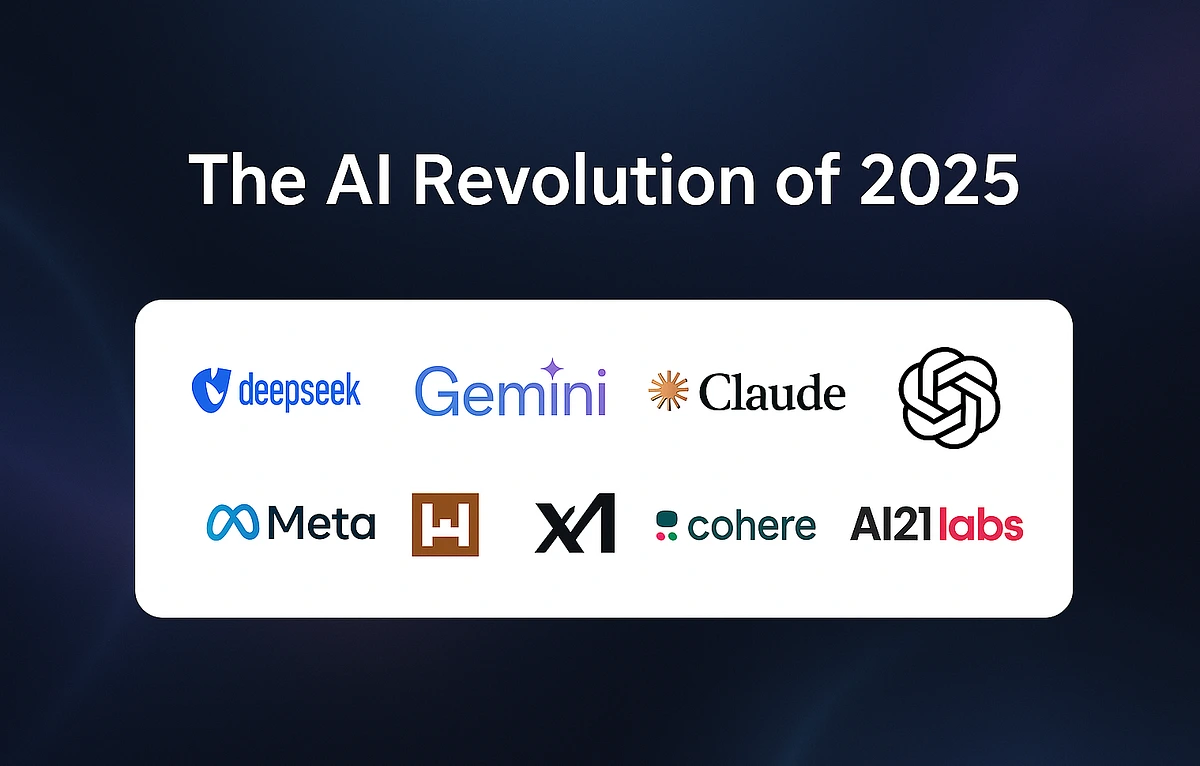
As organizations accelerate digital transformation efforts, the AI landscape has evolved from a two-horse race between OpenAI’s ChatGPT and Google’s Gemini into a multi-platform battleground. Emerging challengers like xAI’s Grok, Anthropic’s Claude, and Perplexity are capturing significant market share, fundamentally altering enterprise AI adoption strategies and forcing established players to innovate faster than ever.
The Competitive Landscape: Beyond the Giants
According to Financial Times analysis of Sensor Tower data, Google’s Gemini application achieved more downloads in November 2025, up from 67.8 million in October representing a month-over-month increase that positions it within striking distance of ChatGPT’s download volumes.
However, the most surprising development comes from xAI’s Grok, which according to Similarweb data, recorded the highest monthly traffic growth in November 2025 at +14.74% narrowly edging out Gemini’s +14.36% and leaving other competitors in negative territory. ChatGPT experienced a -5.21% decline, Claude fell -8.47%, and Perplexity dropped -13.64%, signaling a significant market shift.
ChatGPT maintains its position as market leader in active user engagement, with OpenAI CEO Sam Altman reporting over 800 million weekly active users as of October 2025. However, the combination of Gemini’s download surge and Grok’s traffic dominance signals a potential market share redistribution that technology decision-makers must monitor closely.
Also in Explained | Google’s Bold Leap: Building Data Centers in Space to Power the Future of AI
Grok’s Disruptive Entry: The Elon Musk Factor
Elon Musk’s xAI launched Grok with characteristic aggression, leveraging X (formerly Twitter) integration to reach over 500 million users instantly. With Grok 4.20 arriving in approximately three weeks and Grok 5 planned for early 2026, Musk is executing his signature playbook: rapid iteration, controversial positioning, and ecosystem leverage.
Grok’s November growth rate of +14.74% represents more than statistical significance, it demonstrates how platform integration and network effects can accelerate AI adoption. By embedding Grok directly into X Premium subscriptions and the broader X ecosystem, Musk has created distribution advantages comparable to Google’s Android integration, but with greater viral potential through social media dynamics.
Strategic differentiators driving Grok’s momentum:
- Real-time information access: Direct integration with X’s live data stream provides current information advantages over training-cutoff-limited competitors
- Controversial positioning: Marketing Grok as “maximum truth-seeking” and less politically correct attracts users frustrated with perceived limitations in other AI platforms
- Ecosystem bundling: X Premium subscribers receive Grok access as part of subscription packages, reducing acquisition costs to near-zero
- Rapid development cycles: Announcing Grok 4.20 and 5 within months demonstrates Musk’s characteristic velocity approach
For enterprise decision-makers, Grok represents a different value proposition: real-time social intelligence, brand monitoring capabilities, and integration with social media workflows use cases distinct from general-purpose AI assistance.
Google’s Strategic Positioning: Enterprise Integration at Scale
Alphabet CEO Sundar Pichai announced on November 18, 2025, that Gemini now serves over 650 million monthly users, a metric encompassing both direct application usage and integration through Google’s enterprise product ecosystem. Despite Grok’s higher growth rate, Gemini’s absolute numbers and enterprise penetration remain formidable.
The enterprise adoption data reveals significant traction: over 70% of Google Cloud customers have integrated AI capabilities into operational workflows, with 13 million developers building applications on Google’s AI platform. For businesses exploring AI implementation, this ecosystem maturity offers reduced integration complexity and established support infrastructure.
Gemini 3’s November 2025 release emphasizes multimodal capabilities, simultaneous processing of text, image, and video inputs alongside enhanced reasoning and coding capabilities, addressing enterprise use cases including document intelligence, software development acceleration, data analysis, and customer service automation.
OpenAI’s Defensive Posture: The “Code Red” Reality
Despite maintaining user leadership, OpenAI is responding with urgency to multi-front competitive pressure. Reports from The Wall Street Journal and The Information indicate CEO Sam Altman issued an internal “code red” directive, reallocating resources from non-essential projects to accelerate ChatGPT development.
This manifests in compressed release cycles: GPT-5.1 launched in November 2025, with GPT-5.2 potentially releasing as early as December 9, 2025. The unusual rapidity suggests OpenAI recognizes that market leadership isn’t guaranteed, particularly as Grok captures mindshare and Gemini narrows the capability gap.
Altman’s public response to Gemini 3, congratulating Google via X with a post generating 53,000 engagements maintains diplomatic appearances while internal communications emphasize the need to “improve to keep pace with rivals.” The -5.21% traffic decline in November represents OpenAI’s first significant market contraction, making the competitive threat tangible rather than theoretical.
The Broader Competitive Ecosystem
- Anthropic’s Claude, despite experiencing -8.47% traffic growth in November, maintains strong enterprise adoption through partnerships with major corporations and emphasis on constitutional AI and safety mechanisms. Claude’s positioning appeals to regulated industries prioritizing risk management and explainability.
- Perplexity AI, with its -13.64% November decline, faces challenges differentiating its search-focused approach as larger platforms incorporate real-time information capabilities. However, its approximately 20-30 million user base demonstrates sustainable demand for specialized AI applications.
- DeepSeek and regional players from China and other markets demonstrate AI development globalizing beyond Silicon Valley. These platforms offer potential cost advantages and localized capabilities for Asia-Pacific businesses, addressing data sovereignty concerns particularly relevant for regulated industries.
Investment Implications and Market Dynamics
The scale of investment in AI infrastructure is unprecedented. Google’s AI-related capital expenditure for 2025 approaches $93 billion, primarily allocated to custom chip development (Tensor Processing Units), data center expansion, and research personnel. OpenAI has raised significant capital at valuations exceeding $150 billion. Musk’s xAI reportedly raised $6 billion in Series B funding at a $24 billion valuation.
- These investment levels raise critical questions:
- Pricing sustainability: Current aggressive pricing and free-tier offerings may not reflect long-term cost structures. Organizations should evaluate total cost of ownership projections and anticipate pricing adjustments as platforms mature.
- Vendor consolidation risks: Despite current competition, market economics may favor consolidation. The extreme capital requirements create natural barriers to entry, potentially reducing competitive options over 3-5 year horizons.
- Platform lock-in: As organizations build workflows around specific AI platforms, migration costs increase substantially. Multi-platform strategies or open-source alternatives provide risk mitigation.
Strategic Recommendations for Technology Leaders
Based on current market dynamics, business leaders should consider:
- Multi-platform evaluation: Rather than committing exclusively to one provider, pilot use cases across ChatGPT, Gemini, Grok, and potentially Claude or regional alternatives to evaluate performance, cost, and integration complexity for specific requirements.
- Use case specialization: Different platforms demonstrate distinct strengths. Consider Grok for real-time social intelligence, Gemini for multimodal enterprise workflows, ChatGPT for conversational interfaces, and Claude for risk-sensitive applications.
- Infrastructure flexibility: Design AI integrations with abstraction layers enabling platform switching as competitive dynamics shift or pricing structures change.
- Ecosystem considerations: Evaluate how AI platforms integrate with existing technology stacks. Organizations heavily invested in Google Workspace may find Gemini integration seamless, while X-heavy marketing teams might prioritize Grok access.
- Cost modeling: Develop detailed total cost of ownership models incorporating licensing, integration, training, and ongoing operational costs across different platforms and deployment models.
Market Outlook: A Multi-Platform Future
The November 2025 traffic data suggests the AI market is entering a mature competitive phase resembling cloud computing (AWS vs Azure vs Google Cloud) or mobile operating systems (iOS vs Android). Multiple viable platforms will likely coexist with differentiated strengths rather than winner-take-all consolidation.
Grok’s emergence as a growth leader demonstrates that innovation, distribution advantages, and distinctive positioning can disrupt even well-established markets. Musk’s track record of rapid iteration and willingness to challenge orthodoxy makes xAI a formidable long-term competitor, particularly as Grok 4.20 and 5 introduce advanced capabilities.
For enterprise technology leaders, this competition creates both opportunity and complexity. The technology is increasingly powerful and accessible, but vendor evaluation requires careful analysis of technical capabilities, pricing sustainability, integration requirements, and strategic alignment with organizational needs.
Organizations developing thoughtful AI strategies balancing innovation with risk management, experimentation with governance, and platform capabilities with vendor dynamics will be best positioned to capture value from these transformative technologies while managing implementation and operational risks effectively.
The AI platform wars are intensifying, and the next 12-18 months will likely determine which players achieve sustainable market positions versus becoming cautionary tales of excessive capital deployment without defensible market positions.
Key Takeaways
- Grok achieved highest traffic growth (+14.74%) in November 2025, with Gemini close behind (+14.36%)
- ChatGPT experienced first significant decline (-5.21%), suggesting market share redistribution
- Musk’s ecosystem integration strategy provides Grok with distribution advantages comparable to Google’s
- Multiple platforms demonstrate distinct strengths across use cases, favoring multi-platform strategies
- Investment levels exceeding $100B annually raise questions about long-term pricing and market consolidation
- Enterprise leaders should evaluate specialized platforms rather than defaulting to market leaders
Also in Explained | Meta’s Metaverse Division has Racked Up Losses Exceeding $70 Billion & Zuckerberg’s Pivot to AI Wearables