
Imagine servers orbiting Earth, basking in constant sunlight, and running the world’s most powerful AI without ever paying an electricity bill or using a single drop of water for cooling. What was once pure science fiction is now Google’s official roadmap and it’s closer than you think.
Why Earth Can’t Keep Up with AI’s Energy Hunger
Artificial intelligence is exploding. From ChatGPT-style bots to self-driving cars and medical diagnostics, every breakthrough needs enormous computing power. The catch? That power comes from data centers that are already pushing our planet to the limit.
Traditional data centers guzzle electricity, require millions of liters of water for cooling, and take up valuable land. By 2030, experts predict they could consume 8-10% of global electricity more than many entire countries use today. Earth-based solar farms help, but they only work when the sun is shining and the sky is clear. That’s simply not enough for the AI revolution that’s already underway.
Also in Explained | Meta’s Metaverse Division has Racked Up Losses Exceeding $70 Billion & Zuckerberg’s Pivot to AI Wearables
Google’s “Project Suncatcher”: The 2027 Launch Plan
Google is moving fast. Their ambitious initiative, internally dubbed Project Suncatcher, has a clear timeline that starts in just two years.
In 2027, the company will send the first small racks of servers into low-Earth orbit as prototypes. These test units will be launched in partnership with Planet Labs, a leader in satellite technology. The goal is to prove that servers can survive space radiation, stay cool in vacuum, and run entirely on non-stop solar energy.
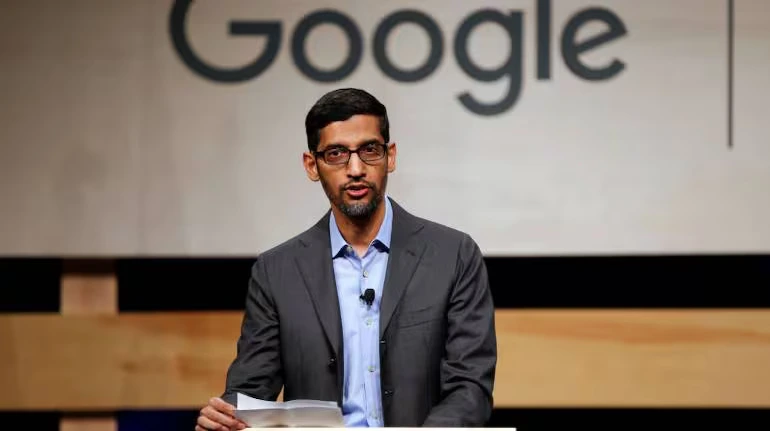
Sundar Pichai has been crystal clear: “We want to put these data centers closer to the Sun.” He believes that within a decade, building data centers in space will feel as normal as building them on the ground does today.
How Space Data Centers Actually Work
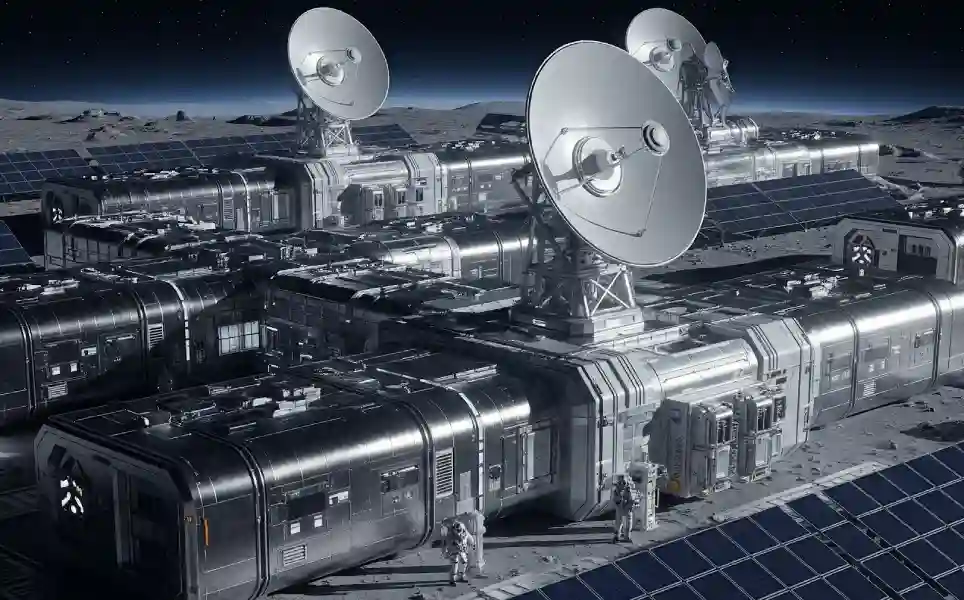
The concept is surprisingly straightforward. Satellites equipped with huge solar panels collect sunlight 24 hours a day no clouds, no night. The servers inside process heavy AI workloads, and because space is a perfect vacuum, heat simply radiates away without fans or water. Results are sent back to Earth using high-speed laser communication, the same technology already powering Starlink and other modern satellite networks.
These orbital centers are ideal for tasks that don’t need instant responses like training massive AI models, running simulations, or processing huge datasets while everyday real-time apps stay on the ground.
The Massive Benefits Everyone Can Feel
- Unlimited clean energy with zero carbon emissions
- No water needed for cooling a game-changer for the environment
- No land required, freeing Earth for homes, farms, and forests
- Lower long-term costs that could make AI tools cheaper for businesses and consumers
- Helps fight climate change while letting AI grow without limits
Who Else Is Racing to Space?
Google started the conversation, but the rest of Big Tech is sprinting to catch up. Jeff Bezos and Blue Origin are openly planning gigawatt-scale data centers in orbit within 10–20 years. Microsoft is in talks with SpaceX to put parts of Azure into space. Even startups are testing cryptocurrency mining hardware aboard the International Space Station today. This is turning into a full-blown space race except the prize is the future of cloud computing.

The Big Challenges Ahead
Nothing this revolutionary comes easy. Launch costs are still high (though rapidly falling thanks to reusable rockets), cosmic radiation can damage electronics, and adding even a 100-millisecond delay won’t work for every application. Space is also getting crowded, so governments will impose strict rules on debris and orbital slots. Despite the hurdles, history shows that when tech giants commit to a moonshot think cloud computing, smartphones, or self-driving cars, they usually find a way.
What This Means for Sri Lanka and the Rest of the World
For local businesses, cheaper and greener AI in the coming decade could level the playing field. For everyday people, it means more powerful apps and services powered sustainably. And for the planet, it’s a rare win-win: letting technology explode while easing pressure on Earth’s resources.
Final Thoughts
In 2027, when Google launches those first orbital servers, we’ll witness the true start of a new era. The AI that answers your questions, edits your videos, or diagnoses diseases might soon be running on sunlight, thousands of kilometers above your head.
The stars aren’t the limit anymore, they’re the power plant. And the best part? We’re all invited to watch it happen.
Also in Explained | Jeff Bezos Launches Project Prometheus: A $6.2 Billion Bet on AI-Powered Hardware Revolution