In the high-stakes world of artificial intelligence, where billion-dollar bets and boardroom betrayals rival a tech thriller, Elon Musk has once again dropped a bombshell.
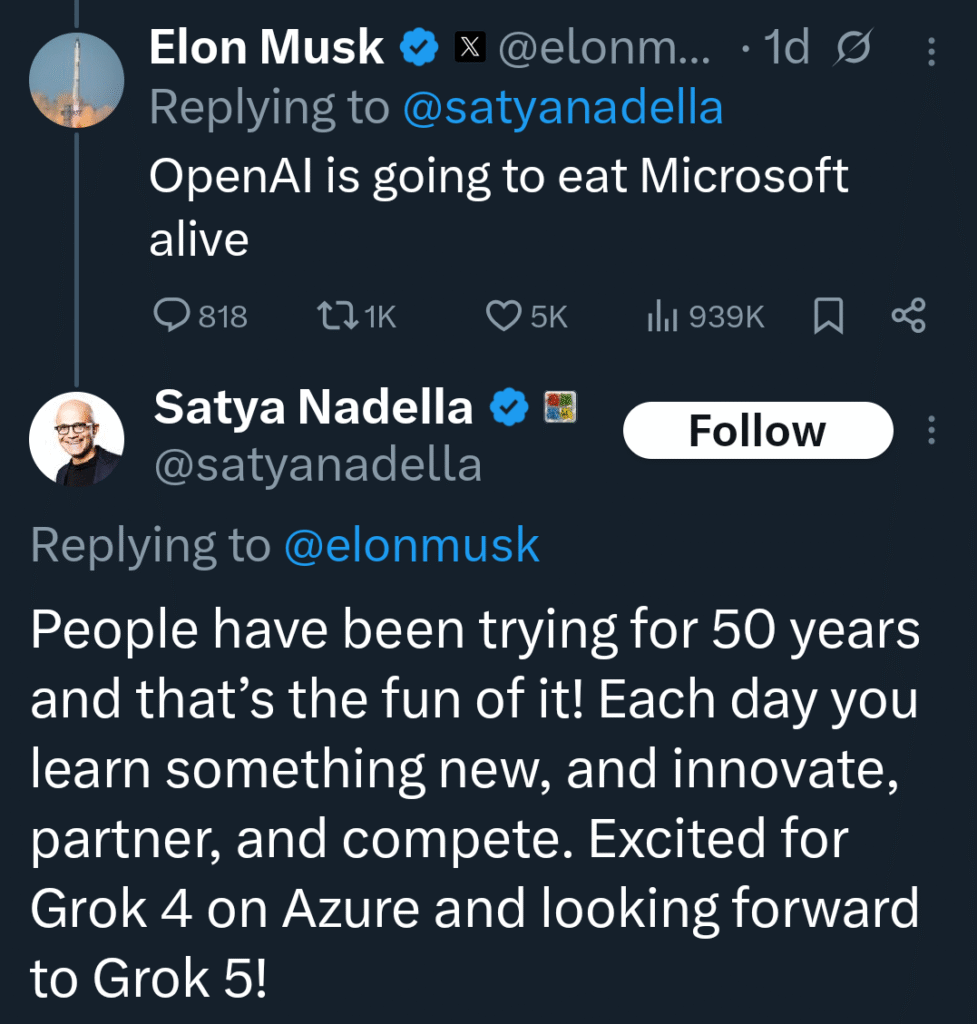
The Tesla and SpaceX CEO recently issued a stark warning about Microsoft’s deep ties with OpenAI, calling it a potentially disastrous move for the software giant. This echoes his earlier forecast that OpenAI could ultimately overshadow Microsoft.
As tensions escalate in the AI arms race, the fallout could reshape global tech landscapes, including opportunities and pitfalls for emerging markets like Sri Lanka. In this deep dive, we explore the drama, the stakes, and why Sri Lankan businesses should pay close attention.
The Backstory: From Partnership to Powder Keg
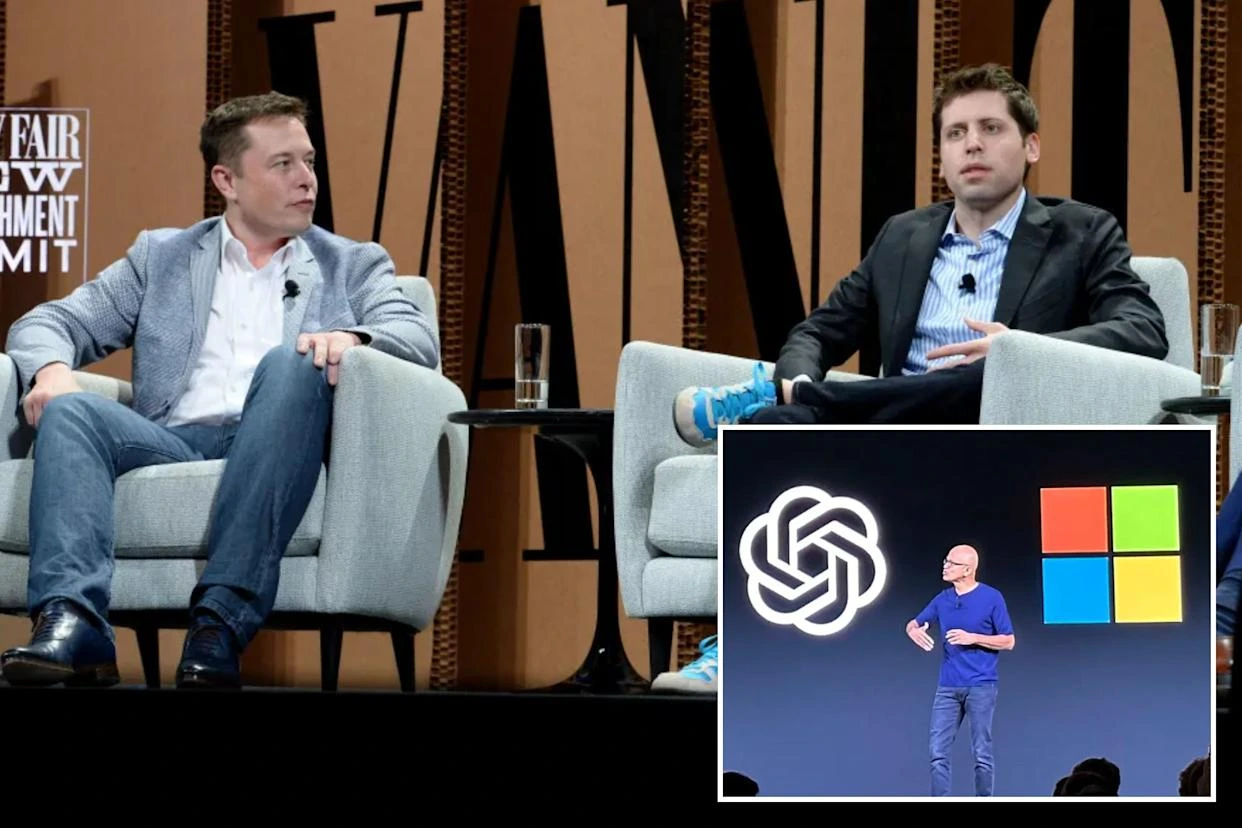
To understand the intensity of Musk’s critique, rewind to 2015. OpenAI was born as a non-profit brainchild of Musk, Sam Altman (now OpenAI’s CEO), and other Silicon Valley luminaries, with a noble mission: advance AI for humanity’s benefit, not profit.
Musk was an early funder and board member, pouring resources into what he saw as a safeguard against unchecked AI development by profit-hungry giants.
The Microsoft Partnership Evolution
Fast-forward to 2019: Musk exits the board, citing conflicts with Tesla’s AI work. OpenAI, meanwhile, pivots to a for-profit model, securing a landmark $1 billion investment from Microsoft in 2019 – eventually ballooning to over $13 billion by 2023.
The duo’s symbiosis seemed unbreakable: Microsoft’s Azure cloud powers OpenAI’s models like GPT-4, while ChatGPT and Copilot integrations supercharge Microsoft’s productivity suite, from Office to Teams.
Emerging Tensions in AI Development
But cracks appeared. Musk sued OpenAI in 2024, accusing it of abandoning its non-profit roots for greed, a case he dropped amid escalating rivalry. xAI, Musk’s counterpunch, launched Grok as an “anti-woke” alternative, positioning itself as a truth-seeking AI unbound by corporate agendas.
By mid-2025, whispers of OpenAI’s independence grew louder, fueled by Altman’s ambitious roadmap.
The latest escalation came when Altman discussed building tools to replace traditional software like documents, presentations, email, and collaboration platforms – core areas where Microsoft holds dominance. Musk responded by highlighting the direct competition this poses to Microsoft, later labeling the ongoing support as a grave error.
This isn’t sour grapes; it’s strategic calculus. OpenAI’s pivot signals a full-frontal assault on Microsoft’s $50 billion annual Office revenue stream.
Imagine AI agents autonomously drafting reports, scheduling meetings, and even negotiating deals – not as add-ons, but as a seamless ecosystem. Microsoft’s Copilot, once a crown jewel, now risks obsolescence if OpenAI builds its own stack.
Why “Suicidal”? The Economics of AI Betrayal
Musk’s warning cuts deep because the math doesn’t lie. Microsoft has bet the farm on OpenAI, embedding its tech across Bing, Windows, and enterprise tools.
Yet, as OpenAI scales – valued at $157 billion in October 2025 – it’s no longer a pliant partner. Altman’s vision of “trusted agents that handle work and only escalate when needed” directly cannibalizes Microsoft’s moat: email (Outlook), collaboration (Teams/Slack rival), and documents (Word/PowerPoint).
Market Disruption Predictions
Analysts at Gartner predict AI-native suites could disrupt 40% of legacy productivity markets by 2028, with incumbents like Microsoft facing “existential reconfiguration.” For Microsoft, the irony stings: they’ve subsidized their own disruptor.
If OpenAI launches a standalone platform, Microsoft’s exclusive access to models like GPT-5 could evaporate, leaving Azure as a mere utility while rivals like Google (with Gemini) and Amazon (Bedrock) circle.
The xAI Alternative
Musk, ever the provocateur, frames this as poetic justice. Having co-founded OpenAI, he knows its DNA: relentless innovation over corporate loyalty. His xAI, meanwhile, courts developers with open-source Grok models, emphasizing transparency – a jab at OpenAI’s closed ecosystem.
The online discourse erupted with memes mocking Microsoft’s “Frankenstein” creation, underscoring a broader truth: in AI, today’s ally is tomorrow’s assassin.
Global Ripples: An Arms Race with No Prisoners
This feud isn’t isolated; it’s symptomatic of AI’s zero-sum game. By November 2025, global AI investments hit $200 billion annually, per McKinsey, with the U.S. dominating 60% of the market.
Europe’s GDPR shackles innovation, while China’s state-backed models like Ernie challenge Western hegemony.
Regulatory Implications
Musk’s barbs amplify calls for antitrust scrutiny: Should Microsoft divest its OpenAI stake? Regulators in the EU and FTC are watching, potentially forcing a breakup that floods the market with talent and IP.
Investment Landscape Changes
For investors, it’s a high-wire act. Microsoft’s stock dipped 2% following the recent exchanges, while OpenAI’s rumored IPO valuation soars. xAI, valued at $24 billion, benefits from the chaos, poaching talent disillusioned by OpenAI’s internal upheavals (recall the 2023 Altman ouster saga).
Yet, amid the drama, innovation accelerates. Altman’s “AI-native” suite could democratize productivity, slashing administrative drudgery for knowledge workers worldwide.
Tools that “escalate only when needed” promise 30-50% efficiency gains, per Deloitte, transforming industries from finance to healthcare.
Sri Lanka’s Stake: Navigating the AI Tide
For Sri Lanka, a nation eyeing tech as its post-crisis economic lifeline, this Musk-Microsoft-OpenAI triangle is more than Silicon Valley soap opera – it’s a blueprint for survival. With GDP growth rebounding to 3.5% in 2025 amid tourism and exports, AI adoption could add $1.5 billion to the economy by 2030, according to ICTA estimates.
National AI Strategy Implementation
Government momentum helps. The National AI Strategy, unveiled in May 2025 at Scale Up Sri Lanka, draws from Singapore’s playbook, prioritizing SME upskilling and ethical AI.
Incentives like tax breaks for R&D have spurred 69 AI startups, from hSenid’s chatbots boosting e-commerce conversions to RagenTech’s IoT-AI hybrids for manufacturing.
AI Applications in Key Sectors
In tourism, a $10 billion sector, AI could personalize experiences – think dynamic pricing via tools rivaling Altman’s suite – countering global disruptions like those from Musk’s warnings.
Challenges and Opportunities
But pitfalls loom. Data sovereignty is paramount; Sri Lankan firms must prioritize local providers to avoid Microsoft’s-style dependencies. Moreover, the skills gap persists: While AI creates 5,000 jobs in data science by 2026, per SLASSCOM, only 20% of graduates are AI-ready.
Musk’s feud offers lessons: Diversify partnerships, invest in homegrown IP, and embrace open models like Grok for cost-effective scaling. For exporters in apparel or gems, AI-native tools could automate supply chains, edging out competitors in India or Vietnam.
Charting a Smarter Path Forward
Elon Musk’s stark warning isn’t hyperbole – it’s a wake-up call in an AI era where alliances fracture faster than code compiles. For Microsoft, the path ahead demands bold pivots: deeper Azure entrenchment or an OpenAI exit to reclaim autonomy. OpenAI, buoyed by Altman’s charisma, must prove its suite lives up to the hype without alienating investors.
Strategic Implications for Sri Lanka
In Sri Lanka, the imperative is clear: Leverage this global churn for local gain. As the AI Asia Summit convenes, let it catalyze commitments – from policy to pilots – turning Musk’s cautionary tale into our competitive edge.
Businesses ignoring AI risk Microsoft’s fate; those adapting, like Zeawis trailblazers, will thrive.
The Path to AI Innovation
The future isn’t dystopian; it’s opportunistic. Sri Lanka can forge an AI ecosystem that’s innovative, inclusive, and unbreakable. In the words of Altman himself, it’s “within reach.” Will we grasp it?