
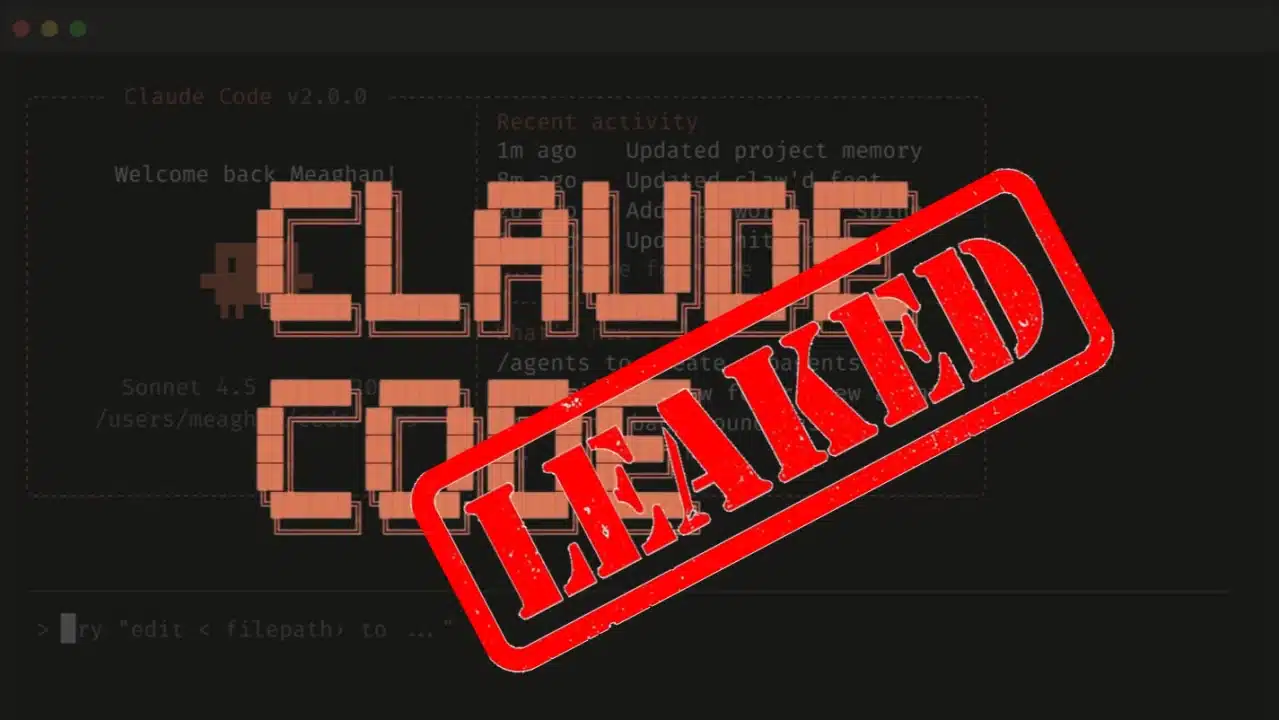
Claude Code Source Code Leak? – On March 31, 2026, Anthropic accidentally exposed the full source code of its flagship AI coding assistant, Claude Code, through a routine npm package update. The leak involved version 2.1.88 of the @anthropic-ai/claude-code package, which inadvertently bundled a 59.8 MB JavaScript source map file (cli.js.map). This single debugging artifact allowed anyone to reconstruct nearly 2,000 TypeScript files and more than 512,000 lines of unobfuscated code.
Security researcher Chaofan Shou discovered the exposed zip archive on Anthropic’s own cloud storage within minutes and shared it publicly. By the time Anthropic responded, the code had been mirrored across GitHub, forked tens of thousands of times, ported to Python and Rust, and permanently archived on decentralized platforms. Anthropic quickly confirmed the incident and removed the package, stating it was “a release packaging issue caused by human error, not a security breach.” No customer data, credentials, or model weights were exposed.
This marks the second major accidental disclosure by Anthropic in under a week, following the unintended public release of internal files detailing its upcoming “Mythos” model. The event has sparked intense debate: Is this a serious setback for proprietary AI development, or an unintended catalyst for transparency in the agentic AI space? This analysis examines the verified details, underlying causes, advantages and drawbacks, and broader implications for the AI industry.
Also in Explained | Can Tesla and xAI’s Macrohard ‘Digital Optimus’ Truly Emulate Entire Companies with AI Agents?
The Incident: A Simple Packaging Mistake with Massive Reach
The root cause was straightforward and operational. During the build and release process for Claude Code’s npm package, a source map file normally used only for internal debugging was not excluded. This file mapped the minified production code back to the complete, readable TypeScript source tree. The package was pushed to the public registry, making the archive accessible via Anthropic’s cloud storage.
Anthropic’s spokesperson emphasized: “No sensitive customer data or credentials were involved or exposed. This was a release packaging issue caused by human error, not a security breach. We’re rolling out measures to prevent this from happening again.” Engineer Boris Cherny, part of the Claude Code team, publicly acknowledged it as a process and culture issue rather than an individual fault.
Within hours, the community had analyzed the codebase extensively. Exposed elements included the CLI’s agent architecture, memory and planning systems, internal feature flags (44 in total), and references to unreleased capabilities. Notable findings from verified community dissections include:
- An “Undercover Mode” designed to prevent the AI from leaking internal secrets.
- Anti-distillation techniques that inject fake tools to mislead copycat models.
- A Tamagotchi-style virtual pet that reacts to user coding sessions.
- A background daemon codenamed “KAIROS” for always-on agentic workflows.
Importantly, core proprietary assets—model weights, training data, or user information, remained untouched.
Unexpected Transparency and Community Acceleration
While embarrassing for Anthropic, the leak carries several constructive outcomes for the wider AI ecosystem.
- Accelerated Innovation Through Open Insight
Developers gained unprecedented visibility into how a leading agentic coding tool orchestrates tasks, handles context, and integrates with developer environments. Clean-room rewrites in Python and Rust appeared rapidly, with one repository achieving tens of thousands of stars in hours—demonstrating the speed of collaborative improvement when code becomes public. - Pressure for Better Engineering Practices
The incident highlights common pitfalls in modern release pipelines (missing .npmignore entries, unexcluded debug artifacts). It serves as a high-profile case study, encouraging other AI companies to strengthen build processes and supply-chain security. - Broader Ecosystem Benefits
Insights into memory architecture, planning/review flows, and anti-leak safeguards can inform open-source alternatives and help smaller teams build more robust agents. The rapid porting efforts expand accessibility beyond Anthropic’s ecosystem. - Validation of Agentic AI Maturity
The sophistication revealed in the orchestration layer underscores how far agentic tools have progressed, potentially boosting investor and user confidence in practical AI coding assistants. - Democratic Knowledge Sharing
In an industry often criticized for closed development, this accidental openness aligns with calls for greater transparency, fostering discussion on responsible AI deployment.
These positives suggest the leak, while unintended, could ultimately advance collective progress in agentic AI.
Security, Reputation, and Competitive Risks
The downsides are significant and immediate for Anthropic and the broader proprietary AI sector.
- Intellectual Property Exposure
Revealing internal architecture, unreleased features, and implementation details hands competitors and open-source projects a detailed blueprint. While model weights were safe, the client-side logic is strategically valuable. - Supply-Chain and Security Vulnerabilities
The rapid mirroring and creation of typosquatting npm packages (e.g., suspicious variants targeting those compiling the leaked code) highlight real risks of follow-on attacks. This amplifies concerns about AI supply-chain security. - Reputational and Trust Damage
Occurring just days after the “Mythos” model documents leak, this second lapse raises questions about operational maturity at a company valued in the tens of billions and preparing for potential public markets. It contrasts sharply with Anthropic’s emphasis on safety and responsibility. - Competitive Disadvantage
Rivals (OpenAI, Google, xAI) gain indirect insights without equivalent exposure. The irony of “Undercover Mode” being revealed in a leak has fueled widespread commentary on process gaps. - Regulatory and Market Scrutiny
Repeated accidental disclosures could invite greater oversight, especially as AI tools handle sensitive developer workflows and enterprises demand higher assurance levels.
These factors underscore why such incidents, even when non-malicious, carry tangible costs.
Claude Code Source Code Leak: A Wake-Up Call for AI Development Discipline
Anthropic’s March 31, 2026, leak of Claude Code’s source code triggered by a preventable release packaging error exposed over 512,000 lines of internal TypeScript but left core model assets secure. Anthropic’s swift acknowledgment and commitment to preventive measures reflect accountability, yet the event marks the second high-profile slip in days, spotlighting the challenges of scaling sophisticated AI products securely.
For the AI industry, the episode delivers a dual message: agentic tools like Claude Code represent genuine engineering breakthroughs worthy of scrutiny, but maintaining proprietary edges requires rigorous process discipline in an era of rapid iteration and public registries. The community’s lightning-fast analysis and porting efforts demonstrate both the power of open collaboration and the permanence of digital leaks.
As Anthropic rolls out fixes and the ecosystem digests the insights, this incident may ultimately strengthen industry-wide practices around release hygiene and supply-chain resilience. In the competitive race to build ever-more-capable coding agents, transparency whether intentional or accidental remains a double-edged sword that accelerates progress while demanding heightened vigilance.
For developers, businesses, and AI observers worldwide, the Claude Code leak serves as a timely reminder: in 2026’s high-stakes AI landscape, even small human errors can have outsized consequences.
Also in Explained | Which Skills Are Actually Creating Opportunities in Sri Lanka Right Now?