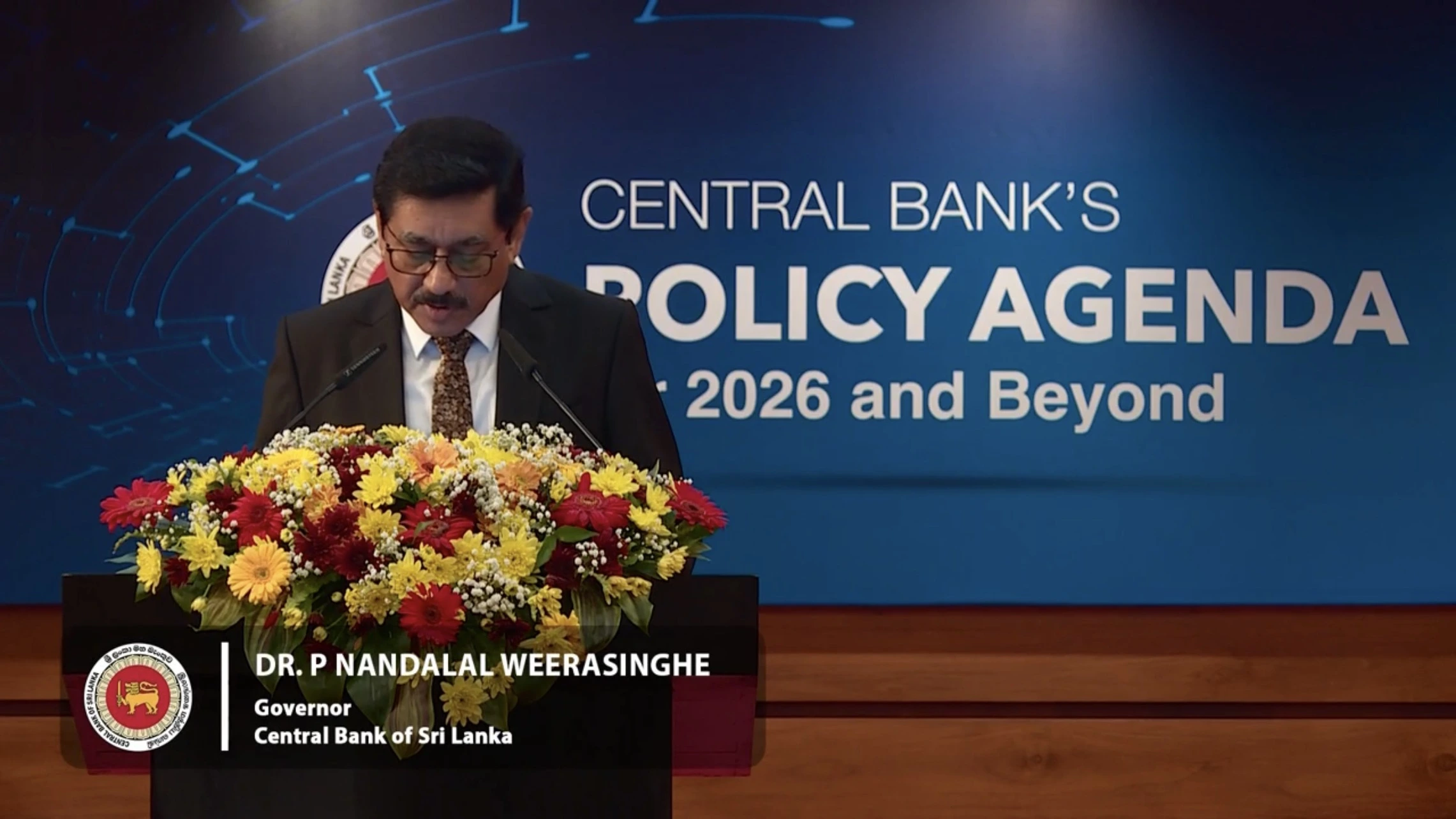
On January 8, 2026, the Central Bank of Sri Lanka (CBSL) presented its Policy Agenda for 2026 and Beyond, placing strong focus on financial system stability as a foundation for banking sector resilience and market development in a post-recovery landscape.
Building Systemic Resilience Through Macroprudential and Capital Measures
The financial system exhibited robust performance in 2025, with banking and finance companies recording improved asset quality, operational efficiency, profitability, and capital adequacy well above regulatory thresholds. Targeted interventions included revised criteria for Domestic Systemically Important Banks (D-SIBs) and updated Loan-to-Value (LTV) ratios, alongside enhanced analytical tools for interconnectedness and contagion risks.
Looking ahead, the CBSL will establish coordinated data-sharing arrangements with other regulators to broaden macroprudential surveillance across the financial sector, including entities outside direct CBSL oversight. This will enable comprehensive assessment of spillover risks and development of tailored prudential standards. A key priority is implementing the Countercyclical Capital Buffer (CCyB) framework to accumulate capital during stable periods for use in stress scenarios, strengthening the sector’s ability to withstand cyclical downturns and external shocks.
Integrating Climate Risks and Sustainable Finance Practices
Cyclone Ditwah underscored growing climate vulnerabilities, prompting immediate relief measures such as moratoria and targeted support for affected borrowers. The Sustainable Finance Roadmap 2.0, launched in 2025, will expand in 2026 with the Sri Lanka Green Finance Taxonomy incorporating social dimensions to guide sustainable lending. These steps encourage banks to proactively manage climate-related exposures while aligning with national sustainability goals, creating opportunities for green financing and resilient investment portfolios.
Supervisory Upgrades, Consolidation, and Digital Payment Advancements
Regulatory frameworks for licensed banks will undergo comprehensive review, covering loan classification standards and risk management requirements in line with Basel Core Principles and international best practices. The non-bank financial sector’s legal framework is also slated for updates, supported by expanded use of data-driven supervisory tools for early risk detection. Offshore banking will continue under appropriate oversight to attract foreign capital.
The Master Plan for consolidation of banks and finance companies advances into Phase II monitoring, promoting scale, technological investment, and capacity to fund large-scale projects while enhancing efficiency and competition. Resolution frameworks will be completed in 2026 per global standards for orderly handling of distressed institutions. The Sri Lanka Deposit Insurance Scheme (SLDIS) will strengthen its fund base and public awareness efforts, reinforcing depositor confidence.
The National Payment System Roadmap 2025–2027 drives digitalization, with planned 2026 legal reforms and greater international linkages to improve cross-border efficiency and trade finance accessibility.
These reforms collectively position Sri Lanka’s financial sector for sustained stability, innovation, and contribution to broader economic growth.
Sources: Data was obtained from the Central Bank of Sri Lanka (CBSL)
Also in Explained | Sri Lanka Central Bank’s 2026 Policy Agenda: Boosting Business Confidence and Market Stability