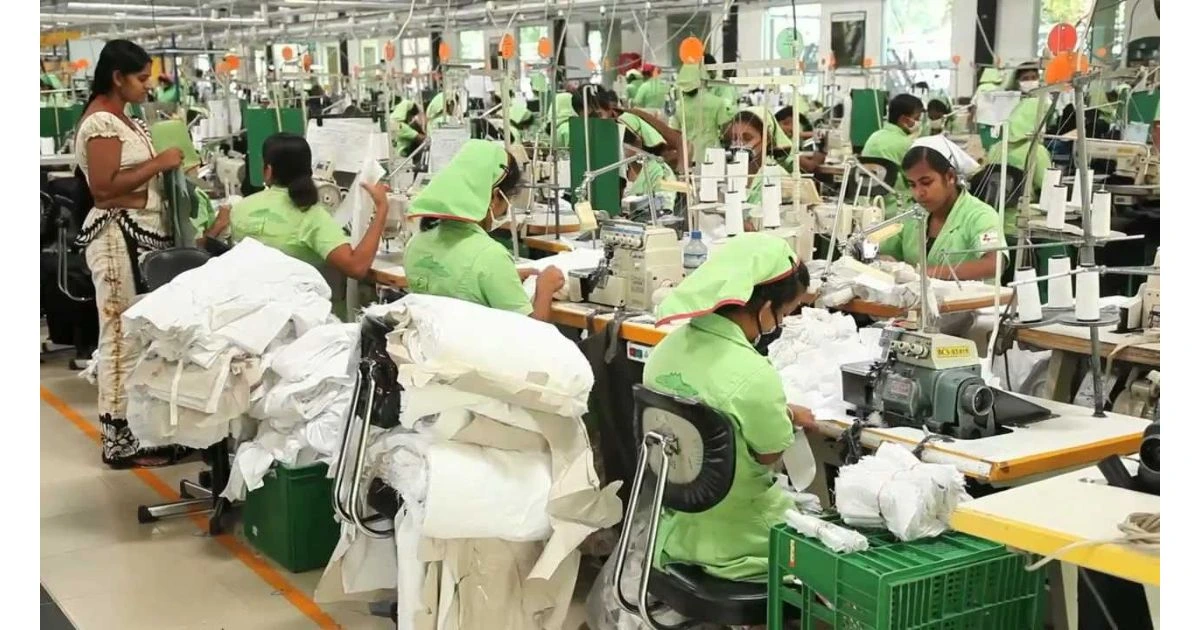
What apparel export decline tells us about global demand shifts is that Sri Lanka’s largest export category is now signalling broader changes in international consumer behaviour and market conditions. In February 2026, Sri Lanka’s apparel and textile exports fell sharply by 11.46% year-on-year to US$ 361.2 million, according to Joint Apparel Association Forum (JAAF) data. The contraction was broad-based: shipments to the European Union dropped 19.48%, the United States declined 3.53%, the United Kingdom fell 5.67%, and other markets contracted 18.54%.
Cumulatively for January–February 2026, apparel exports were down 6.91%. While overall merchandise exports still posted modest growth of 1.32% in February, the apparel sector which traditionally accounts for over 40% of merchandise exports is showing clear softness. This is not a Sri Lanka-specific crisis but a reflection of softening global demand, inventory corrections in Western markets, and heightened price sensitivity among consumers facing higher living costs. For brands, suppliers, and policymakers, the February figures offer an early warning that demand patterns are shifting and that adaptation is now essential to protect market share and future growth.
February 2026 Data: The Scale and Breadth of the Apparel Export Decline
The February decline stands out because it reversed the modest recovery seen in late 2025 and occurred even as Sri Lanka’s total exports grew 4.22% to US$ 1,401.78 million. Apparel’s 11.46% drop was driven by weakness across all major destinations, with the steepest fall in the EU, Sri Lanka’s second-largest market. January had already shown a smaller contraction of 2.82% to US$ 447.25 million, making the two-month cumulative decline of 6.91% a consistent trend rather than a one-off event.
This softness mirrors developments in other apparel-producing countries. Regional peers such as Bangladesh also reported sharp drops to the EU, indicating a wider market correction rather than isolated competitive loss. Global buyers appear to be destocking after post-pandemic inventory build-ups, while elevated interest rates and living costs in Europe and North America have made consumers more cautious. For Sri Lankan exporters, the decline is particularly notable because it comes despite relatively stable production costs and improved domestic policy support. The data therefore points to external demand weakness as the primary driver, offering a clear window into how global economic conditions are reshaping apparel trade flows.
Also in Explained | How Sri Lanka Customs Beating Revenue Targets Could Impact Trade Efficiency
What the Decline Reveals About Evolving Global Demand Patterns
The February figures illuminate several structural shifts in global apparel demand. First, consumers in key Western markets are prioritising value and essentials over discretionary fashion purchases, leading to slower order placement and greater emphasis on price competitiveness. Second, there is a noticeable move toward nearshoring and diversification of sourcing away from traditional Asian hubs, driven by concerns over supply-chain resilience and sustainability requirements. Third, inventory cycles have shortened, with retailers ordering smaller, more frequent batches rather than large seasonal commitments, a trend that disadvantages suppliers with longer lead times or higher minimum-order quantities.
Sri Lanka’s apparel sector, long positioned on quality, ethical manufacturing, and mid-to-premium positioning, is feeling the impact of this demand recalibration. The sharper EU contraction suggests that European buyers, facing energy costs and inflation pressures, are trimming orders or shifting toward lower-cost alternatives. At the same time, the relatively milder US decline indicates that the American market remains somewhat more resilient, possibly due to stronger consumer confidence in certain segments.
These patterns signal a broader transition in global apparel trade: from volume-driven growth to more fragmented, value-sensitive, and sustainability-focused demand. For Sri Lankan suppliers, this means the old model of steady, large-volume orders from a handful of markets is giving way to a more volatile and competitive landscape where adaptability and differentiation become critical.
Implications for Sri Lanka’s Apparel Industry and Supply-Chain Resilience
The apparel export decline carries direct implications for factories, workers, and the broader economy. With apparel still the single largest merchandise export category, sustained weakness could slow job creation, reduce foreign-exchange earnings, and affect ancillary sectors such as textiles, logistics, and packaging. Many factories are already operating with leaner order books, leading to shorter production runs and pressure on margins. SMEs, which form a significant part of the supply chain, are particularly vulnerable because they lack the scale to absorb demand fluctuations or invest heavily in diversification.
On the positive side, the decline is occurring against a backdrop of overall export resilience services and other merchandise categories continue to grow. This suggests Sri Lanka’s economy is less dependent on apparel than in previous decades, providing a buffer. However, the sector’s importance to employment (over 300,000 direct jobs) means that prolonged softness could have social and regional impacts, especially in export-processing zones outside Colombo. The data therefore underscores the need for the industry to accelerate its transition toward higher-value products, technical textiles, sustainable manufacturing, and new markets in Asia and the Middle East. Without proactive adaptation, the February decline risks becoming a structural rather than cyclical challenge.
Strategic Adaptation: How Brands and Suppliers Can Respond to Demand Shifts
Sri Lanka’s apparel sector does not need to accept decline as inevitable. Brands and suppliers can respond by focusing on three practical pillars: product upgrading, market diversification, and operational agility. First, move up the value chain by investing in technical fabrics, activewear, smart garments, and sustainable collections that command premium pricing and face less price competition. Second, expand beyond traditional EU and US markets into growing destinations in Asia, the Middle East, and Africa, leveraging new trade agreements and e-commerce channels. Third, enhance supply-chain flexibility through shorter lead times, digital order tracking, and closer collaboration with buyers on demand forecasting.
Government and industry bodies such as JAAF and the EDB can support this shift with targeted incentives for technology adoption, skills training in design and sustainability, and streamlined trade facilitation. Companies that treat the current demand softness as a catalyst for innovation rather than a temporary setback will be best positioned to regain momentum when global conditions improve. The February 2026 decline is a market signal, not a verdict. By reading it correctly and acting decisively, Sri Lankan apparel brands and suppliers can transform short-term pressure into long-term competitive advantage.
The information on this site has been included in good faith for general informational purposes only. It is not intended to amount to advice on which you should rely, and we give no representation, warranty or guarantee, whether express or implied as to its accuracy or completeness. You must obtain professional or specialist advice before taking, or refraining from, any action on the basis of the content on our site.