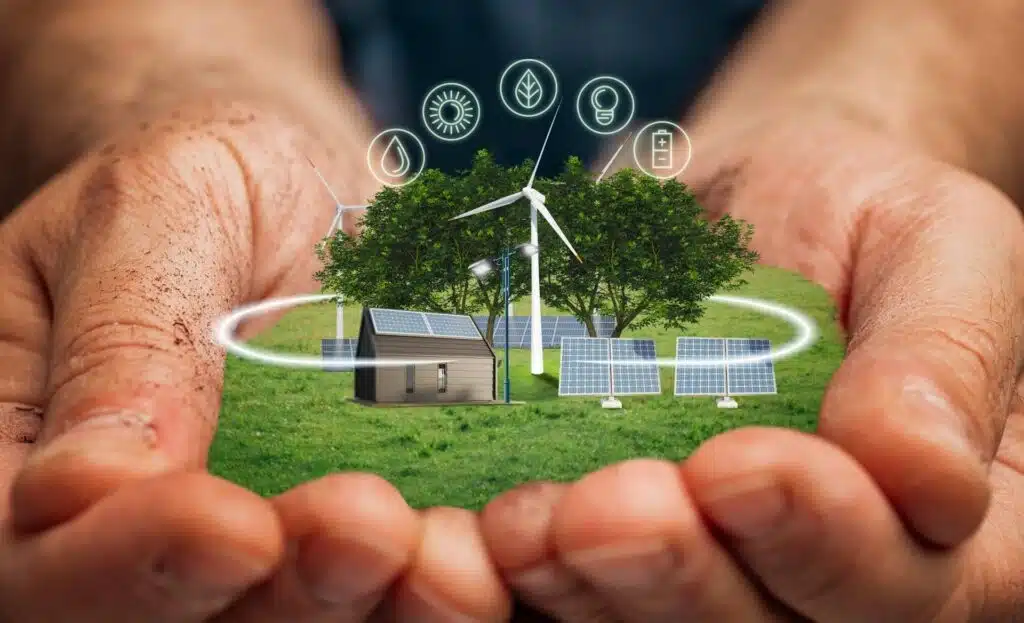
How solar, renewables, and energy diversification can cut business costs in Sri Lanka is no longer a theoretical discussion, it is a practical, high-return strategy for forward-thinking companies facing repeated tariff hikes and volatile fuel prices. With electricity tariffs rising again in April 2026 (industrial users facing an 8.7% increase), businesses that invest in solar and other renewables are achieving significant long-term savings, improved energy security, and greater resilience against global shocks.
Sri Lanka’s ambitious target of 70% renewable electricity by 2030 is creating a supportive policy environment, while falling solar costs and net-metering/net-plus schemes make adoption increasingly attractive. For businesses, shifting to renewables is not just about sustainability, it is a smart cost-reduction and risk-mitigation move that directly improves profitability and competitiveness.
Also in Explained | Why Was Sri Lanka’s CEB Split Into Six Companies?
Rising Electricity Costs Making Renewables an Urgent Business Imperative
Recent tariff adjustments have made energy one of the fastest-rising operational expenses for Sri Lankan businesses. In April 2026, industries saw an average 8.7% increase in electricity tariffs, while hotels faced 9.9% higher rates. These hikes follow multiple fuel price surges and reflect the country’s continued dependence on imported fossil fuels for thermal power. For energy-intensive sectors such as manufacturing, hospitality, food processing, and commercial operations, electricity can account for 15–30% of total operating costs.
Solar and renewable solutions offer a powerful countermeasure. Rooftop solar systems with net metering allow businesses to generate their own power during daytime peak operations and export excess units to the grid. Many companies are already reporting payback periods of 3–5 years, followed by virtually free electricity for the remaining 20+ year lifespan of the panels. Large-scale projects, such as the upcoming 100 MW Siyambalanduwa solar park backed by IFC and WindForce, signal that utility-scale renewables will further drive down system-wide costs. Businesses that act now can lock in lower effective energy rates while hedging against future tariff volatility and global fuel price spikes.
Proven Cost Savings and Operational Benefits Through Renewables
Sri Lankan businesses adopting solar and renewables are seeing clear financial and operational advantages. Rooftop solar installations enable companies to offset a significant portion of daytime consumption, especially in sectors with high daytime loads such as factories, supermarkets, hotels, and office buildings. Under current net-metering and net-plus schemes, excess generation earns credits or direct payments, turning rooftops into revenue-generating assets.
Key benefits include:
- Direct bill reduction: Many commercial users report 40–70% lower electricity bills after solar installation.
- Protection against tariff hikes: Fixed solar generation shields businesses from future CEB price increases.
- Improved cash flow and ROI: With declining solar panel prices and available financing, internal rates of return often exceed 20–25%.
- Enhanced reliability: Hybrid systems with battery storage provide backup during outages and peak pricing periods.
- Sustainability credentials: Companies using renewables strengthen their ESG profile, helping attract international buyers and investors who prioritise green supply chains.
The recent push toward 70% renewables by 2030, supported by international financing from the World Bank, IFC, and the International Solar Alliance, is creating more favourable conditions for private sector participation. Businesses that diversify their energy mix today position themselves ahead of competitors still fully reliant on the national grid.
Strategic Pathways for Businesses to Adopt Renewables and Diversify Energy Sources
Sri Lankan companies can pursue several practical routes to harness solar and renewables:
- Rooftop Solar and Net Metering/Net Plus: Ideal for most commercial and industrial users. Systems can be sized to match daytime consumption, with excess exported to the grid.
- Hybrid Systems with Battery Storage: Provide resilience against outages and allow arbitrage between peak and off-peak tariffs.
- Corporate Power Purchase Agreements (PPAs): Larger businesses can enter long-term agreements with renewable developers for cleaner, often cheaper electricity.
- Energy Efficiency Upgrades: Combining solar with LED lighting, efficient machinery, and smart energy management systems multiplies savings.
Government and international support including green financing facilities and technical assistance is making these investments more accessible. Businesses should conduct energy audits, model different system sizes, and explore financing options from banks and development partners to minimise upfront capital requirements.
Building Long-Term Resilience Through Energy Diversification
Energy diversification through solar and renewables is rapidly shifting from a “nice-to-have” to a core business strategy in Sri Lanka. As tariff pressures continue and global energy markets remain volatile, companies that reduce dependence on the national grid gain a clear competitive advantage through lower and more predictable costs, greater operational resilience, and stronger sustainability credentials.
The path forward is clear: businesses that embrace renewables today will enjoy lower operating expenses, better risk management, and enhanced market positioning tomorrow. With national targets aligned and technology costs continuing to fall, Sri Lanka stands at a pivotal moment where energy sustainability directly translates into business profitability and national economic strength.
The time for action is now. Forward-thinking companies are already turning rooftops into power plants and securing their energy future proving that solar, renewables, and diversification are among the smartest investments Sri Lankan businesses can make in 2026 and beyond.
Also in Explained | How Rising Electricity and Energy Tariffs Affect Businesses and Household Budgets