
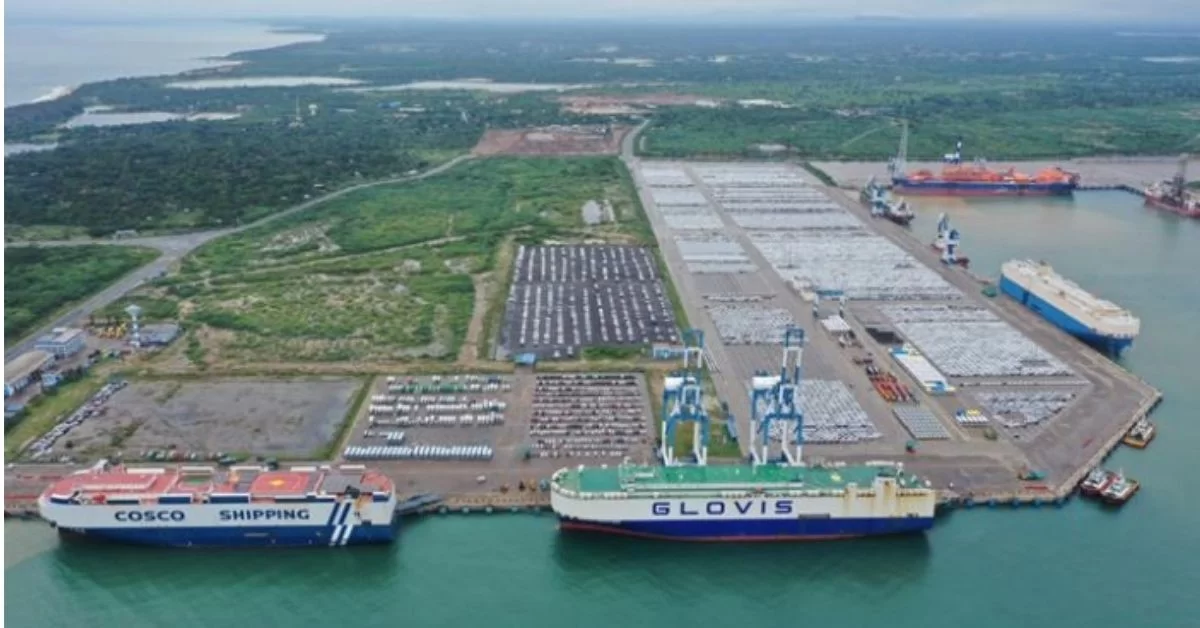
Sri Lanka’s Hambantota Port has taken a significant step toward becoming a more competitive regional hub with the signing of a $108 million agreement for the procurement of advanced quay cranes and rubber-tyred gantry cranes. Hambantota International Port Group (HIPG) finalised the deal with China’s Shanghai Zhenhua Heavy Industries, one of the world’s leading manufacturers of port equipment. The new cranes are expected to dramatically increase cargo-handling capacity, improve operational efficiency and position the port as a more attractive destination for international shipping lines and investors.
The agreement, confirmed by government media sources, comes at a pivotal moment for Sri Lanka’s maritime strategy. After years of underutilisation and public debate, Hambantota Port is showing clear signs of operational revival, supported by strategic infrastructure upgrades and growing transshipment demand in the Indian Ocean.
Also in Explained | Banks Have Liquidity, But Are SMEs Really Getting Easier Access to Finance?
Details of the Equipment Upgrade
The $108 million investment covers the supply and installation of modern quay cranes and rubber-tyred gantry cranes. These high-capacity machines will allow the port to handle larger vessels more quickly and safely, reducing turnaround times and increasing the number of containers processed per day.
Port authorities anticipate that the new equipment will significantly enhance both container and general cargo operations. Faster loading and unloading will improve logistics efficiency, lower costs for shipping operators and make Hambantota a more competitive alternative to other regional ports. The upgrade is part of a broader modernisation programme aimed at transforming Hambantota into a full-fledged international logistics and industrial centre.
Hambantota’s Strategic Role in Sri Lanka’s Economy
Located on the southern coast along one of the world’s busiest shipping lanes, Hambantota Port was developed with the vision of becoming a major transshipment and bunkering hub. Its deep-water facilities and proximity to key East-West trade routes give it natural advantages that many other ports in the region lack.
While the port faced early challenges in attracting sufficient cargo volumes, recent trends show encouraging progress. Increased vessel calls, improved hinterland connectivity through new expressways and the addition of industrial zones around the port have started to create a virtuous cycle of growth. The crane deal is expected to accelerate this momentum by removing a key capacity bottleneck.
For Sri Lanka’s economy, a more efficient Hambantota Port translates into several tangible benefits:
- Higher foreign exchange earnings from port services and related logistics.
- Job creation in port operations, maintenance, warehousing and ancillary industries.
- Greater attractiveness for foreign direct investment in manufacturing, warehousing and value-added processing within the adjacent industrial park.
Broader Implications for Maritime Sector and FDI
This upgrade fits into Sri Lanka’s wider push to strengthen its position as a maritime and logistics hub in the Indian Ocean. Colombo Port remains the country’s primary gateway, but Hambantota’s development reduces over-reliance on a single facility and provides much-needed redundancy and expansion capacity.
The involvement of Shanghai Zhenhua Heavy Industries also underscores continued Chinese engagement in Sri Lanka’s infrastructure sector. While the port has been a subject of international discussion in the past, the current focus on operational upgrades and efficiency improvements signals a pragmatic, business-oriented approach aimed at delivering measurable returns.
For foreign investors, the crane investment sends a positive signal that Sri Lanka is committed to modernising key assets and removing operational constraints. Enhanced port capacity can attract shipping lines seeking reliable, high-volume facilities, which in turn draws manufacturing and distribution companies looking for efficient supply-chain access.
Analysts note that successful implementation of this upgrade could help Hambantota capture a larger share of growing transshipment traffic in the region, especially as global supply chains continue to diversify away from concentrated routes.
Challenges and the Path to Sustainable Growth
While the equipment deal is a welcome development, realising its full potential will require coordinated efforts on several fronts:
- Seamless integration of the new cranes with existing terminal systems and digital port management platforms.
- Continued investment in hinterland infrastructure, including road and rail links, to ensure smooth movement of cargo.
- Marketing and partnership initiatives to secure long-term commitments from international shipping lines and cargo owners.
- Transparent governance and operational efficiency to maintain investor confidence.
The government has emphasised that these upgrades are part of a larger strategy to make Sri Lanka’s ports more competitive and investor-friendly. Complementary reforms in customs procedures, logistics regulations and public-private partnership frameworks are expected to support the port’s growth trajectory.
Outlook: A Catalyst for Maritime Revival
The $108 million crane procurement represents a concrete investment in Sri Lanka’s future as a maritime nation. By enhancing cargo-handling capabilities at Hambantota, the project directly addresses one of the key limitations that has held back the port’s potential and opens the door for increased international trade and investment.
For businesses in the logistics, manufacturing and export sectors, the upgrade promises faster, more reliable services and potentially lower costs. For the broader economy, it contributes to foreign exchange earnings, employment generation and regional development in the south.
As Hambantota International Port moves forward with this modernisation drive, the focus will now shift to execution and results. If the new cranes deliver the anticipated gains in capacity and efficiency, the port could emerge as a stronger pillar of Sri Lanka’s economic recovery and a magnet for further private capital in the maritime sector.
This development reinforces the message that Sri Lanka is actively rebuilding and upgrading its strategic assets. With continued policy support and operational excellence, Hambantota Port has the potential to play a far more prominent role in the country’s growth story in the years ahead.
(Disclaimer: This article is for informational purposes only and does not constitute investment or business advice. Project details and timelines are subject to official confirmation and may evolve.)
Also in Explained | Sri Lanka Fuel Pass QR System: Challenges in Registration Highlight the Road Ahead for Digital Sri Lanka