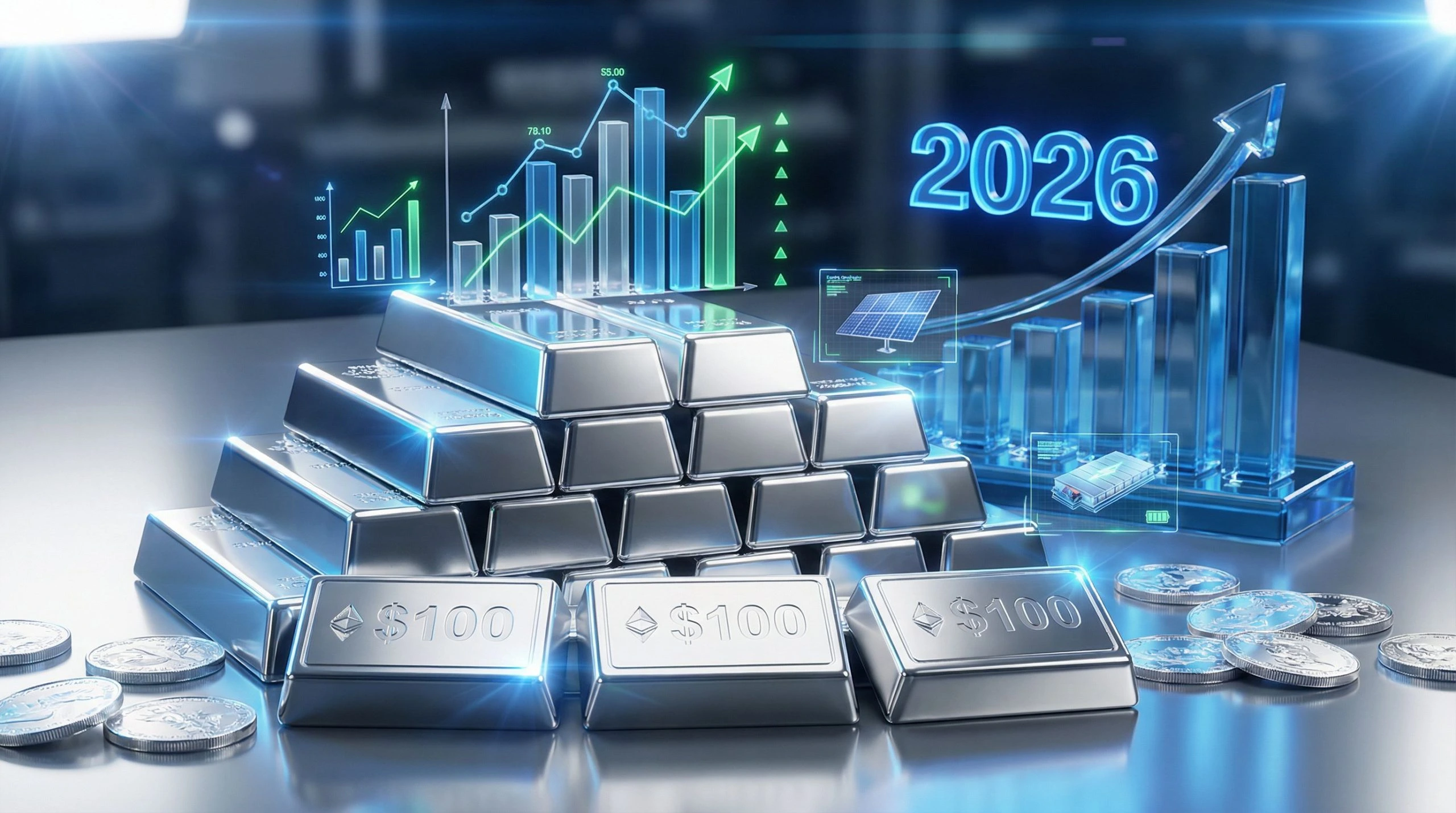
On January 26, 2026, silver prices broke through the $112 per ounce level for the first time ever, reaching an intraday high of $112.1881 during active trading. This milestone, announced in real-time market updates around 15:18 GMT, extends an extraordinary rally that has seen silver rise 57% in January alone and double (+100%) since December 19, 2025 just 38 days prior. Prices later stabilized around $111.80, but the breakout underscores unprecedented momentum in the precious metal.
This rapid ascent has captivated global markets, raising critical questions: What is driving such explosive gains in silver, and what does this mean for investors, industries, and economies like Sri Lanka’s?
Also in Explained | Why Has Gold Surged Past $5,100 per Ounce in 2026?
Silver’s dual nature as both a safe-haven precious metal and a vital industrial commodity makes it particularly responsive in turbulent times. More than half of annual silver demand comes from sectors like solar energy, electronics, electric vehicles, batteries, and medical applications, while the remainder supports investment and jewelry. The current surge combines intensifying monetary hedging with structural supply tightness and surging physical demand.
Key catalysts trace back to heightened geopolitical and trade uncertainties under U.S. President Donald Trump’s second-term policies. Aggressive tariff threats, particularly those targeting critical minerals in disputes involving European nations and strategic resources like Greenland, have stoked fears of supply chain disruptions and broader trade conflicts. Although no measures have been enacted to “close” U.S. markets, the rhetoric has prompted a sharp risk-off response, with investors fleeing equities and seeking protection in hard assets.
This flight to safety has been turbocharged by physical market dynamics
Reports of rapid inflows into U.S. vaults ahead of potential duties have tightened deliverable supplies, while ongoing de-dollarization trends encourage central banks and institutions to bolster precious metals holdings. The metal’s smaller market size amplifies volatility, turning strong buying pressure into parabolic moves.
Industrial demand provides another powerful tailwind. The global acceleration in renewable energy has made silver indispensable for solar panels, where its superior conductivity is unmatched. Combined with growth in EVs, 5G networks, and consumer electronics, this has created persistent market deficits. Mining production has failed to expand meaningfully due to years of underinvestment and operational hurdles, leaving the supply side vulnerable to demand shocks.
The speed of the rally doubling in under six weeks has led analysts to highlight additional technical factors. Heavy short positioning in futures markets appears to have fueled a squeeze as prices broke key levels, forcing covering that accelerated the upside. After trading below $60 as recently as mid-December, silver’s push through $100 and then $112 triggered momentum buying from funds, ETFs, and speculators. The gold-silver ratio has compressed sharply as silver outperforms, reflecting its leveraged sensitivity to both monetary and industrial themes.
Globally, the implications are profound. Such extreme price action often signals deeper investor anxiety about currency stability, inflation, and economic outlook amid trade frictions. Industries relying on silver now face significantly higher costs, which could constrain margins and slow project timelines in green energy and technology sectors. While mining companies benefit from elevated revenues, the broader risk-off environment has pressured equity markets, particularly in growth-sensitive areas.
For emerging markets, where silver serves as an accessible hedge and savings vehicle, the effects are immediate and multifaceted.
Sri Lanka, as a net importer of silver for jewelry, ornamental uses, and limited industrial applications, has seen local prices surge in lockstep with international benchmarks. On January 26, 2026, domestic rates adjusted rapidly to reflect the $112+ global level, with silver quoted per kilogram and per unit showing substantial increases over recent norms.
In Sri Lankan culture, silver holds meaningful value in jewelry
For weddings, festivals, religious items, and everyday wear. The sharp rise has elevated the cost of these traditions, leading many consumers to delay purchases amid budget constraints. Jewelers and retailers anticipate softer near-term demand as buyers adopt a wait-and-see approach, potentially impacting small businesses and artisans in the sector.
On the upside, the dramatic appreciation benefits existing holders. Many Sri Lankans traditionally allocate to physical silver as a hedge against rupee volatility, imported inflation, and limited banking access. Those who held or added positions in late 2025 have seen remarkable gains, providing a meaningful offset to rising living costs during the country’s continued economic recovery.
Macroeconomic considerations add another layer. Higher silver import costs contribute to foreign exchange outflows, compounding pressures on reserves. The Central Bank of Sri Lanka closely monitors these commodity trends, as sustained elevated prices can influence trade balances and feed indirect inflationary pressures, especially if jewelry and investment demand proves resilient.
The outlook remains charged with uncertainty. Bullish voices project continued strength, with some targeting $120–$150 in 2026 if trade tensions persist, supply deficits deepen, and industrial consumption grows. Structural supports like ETF inflows, central bank buying, and green energy mandates are seen as durable floors. However, the rally’s velocity raises caution about potential sharp corrections either from profit-taking, policy de-escalation, or shifts in sentiment.
The January 26 breakthrough above $112, with a +100% move in just 38 days, marks a historic inflection point for silver. It reflects not only fundamental strengths but also the intensity of current global risk perceptions.
For investors in Sri Lanka and worldwide, the episode highlights silver’s potential in diversified portfolios while reminding us of the volatility that accompanies such rapid advances. Prudent positioning and awareness of both upside drivers and downside risks remain essential in navigating this extraordinary environment.
Also in Explained | Rising Gold Prices Hit Record Highs: A Business and Investment Analysis with Pros and Cons