
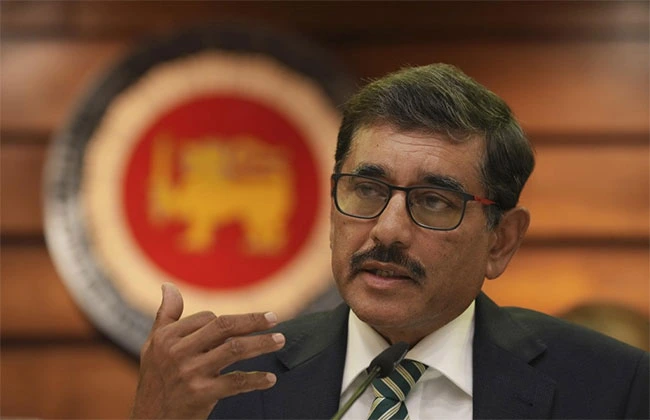
Central Bank of Sri Lanka (CBSL) Governor Dr. Nandalal Weerasinghe has urged the nation’s banks to fundamentally rethink capital allocation, moving away from traditional return on investment (ROI) metrics toward a “return on learning” (ROL) approach. Speaking at the National Conference in Banking and Finance 2025, organised by the Institute of Bankers of Sri Lanka on 20-21 January 2026, Dr. Weerasinghe emphasised that experimentation, data capabilities, and long-term resilience are essential for financial sustainability in an era of rapid digital disruption and escalating climate risks.
As Sri Lanka’s banking sector navigates post-crisis recovery with strong private credit growth and improving profitability in 2025, this call signals a strategic pivot. Traditional ROI-focused strategies, the Governor argued, fall short in a volatile environment where technological change and environmental shocks are reshaping asset values and credit performance.
Also in Explained | Sri Lanka’s Rubber and Rubber Products Exports: Navigating Global Opportunities in 2026
From ROI to ROL: Investing in Experimentation for Future-Proof Growth
“We have to shift from ROI to ROL return on learning where capital is allocated to high-potential experiments, even if the immediate ROI is uncertain,” Dr. Weerasinghe stated. This mindset prioritises learning through trial and innovation, enabling banks to build adaptive capabilities rather than chasing short-term gains.
For business leaders, this means redeploying capital toward initiatives that may not deliver instant profits but yield critical insights. In a competitive landscape, banks embracing ROL can outpace rivals by fostering innovation in products, processes, and risk management. The Governor highlighted that learning-driven investments reduce information asymmetries, sharpen strategic decisions, and enhance overall resilience key advantages in attracting deposits, talent, and international partnerships.
Digital transformation, he stressed, must evolve from a mere IT project to a core financial strategy. “The ability to learn from data, rather than simply automate existing processes, will determine whether banks remain financially sustainable in a connected and volatile global economy,” he said.
Climate Risks as Financial Imperatives: Building Analytical Capacity
Dr. Weerasinghe directly linked this learning-centred approach to managing climate-related financial risks, declaring: “Today, sustainability is not just a moral responsibility climate risks are financial risks.”
Environmental factors are already impacting asset valuations, loan performance, and long-term stability, he noted. Banks exposed to vulnerable sectors such as agriculture, tourism, and infrastructure face growing threats from extreme weather events like the late-2025 Cyclone Ditwah. Failure to address these could erode balance sheets and investor confidence.
The solution lies in building robust analytical and technological capacity to identify, measure, and mitigate climate exposures across portfolios. Digital tools are pivotal here: advanced analytics, artificial intelligence, and real-time data processing enable precise risk modelling and transparent reporting meeting demands from regulators, investors, and customers.
“The goal has to be a data-centred management system where financial, operational, and customer data are unified for quality, real-time decision-making,” the Governor emphasised. Such systems allow accurate risk forecasting, efficient capital allocation, and swift responses to market shifts.
Unlocking Business Opportunities in Sustainability and Digitalisation
Beyond risk mitigation, ROL-guided investments unlock significant opportunities. Digitalisation supports sustainability goals by enhancing traceability in green financing, reducing operational waste, and improving efficiency often leading to lower borrowing costs through access to green capital pools.
Banks that prioritise these areas can differentiate themselves, attracting ESG-focused investors and premium customers. In Sri Lanka’s context, where the CBSL’s Sustainable Finance Roadmap 2.0 is expanding green taxonomies, early adopters stand to gain competitive edges in lending and fee-based services.
As the sector consolidates under the CBSL’s Master Plan and adapts to post-crisis dynamics, Dr. Weerasinghe’s vision positions learning and sustainability as drivers of profitable growth. For banking executives, the message is clear: capital deployed wisely today toward experimentation and resilience will secure tomorrow’s returns in an increasingly unpredictable world.
This strategic shift aligns with broader economic goals, including the CBSL’s 2026 agenda for enhanced financial stability and inclusive growth. As climate and digital forces intensify, banks embracing ROL could lead Sri Lanka’s financial sector toward greater innovation and global competitiveness.
Also in Explained | Sri Lanka’s Participation in Indian Ocean Coastal Alliance: Enhancing Sustainable Tuna Fisheries for Business Growth