
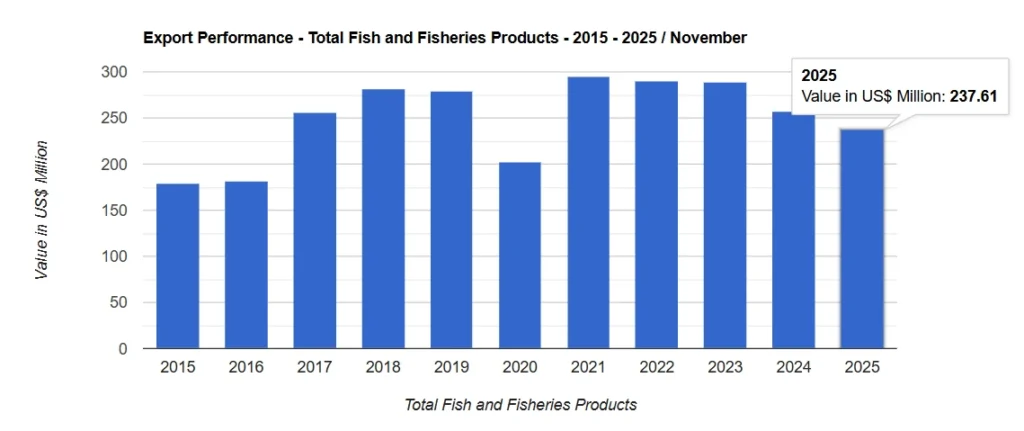
Sri Lanka’s seafood and fisheries sector emerges as a dynamic pillar of the export economy, harnessing the island’s rich marine resources to fuel growth and sustainability. In 2025, exports from this category climbed to approximately $238 million over the first 11 months, marking a 1.87% rise despite market fluctuations. With the global seafood industry poised for expansion, valued at around $387 billion in 2025 and expected to reach $651 billion by 2032 at a 7.72% annual growth rate, Sri Lankan producers are gearing up for enhanced opportunities through targeted developments. This analysis examines the sector’s roots, recent performance, evolving dynamics, business prospects, forward-looking strategies, and its broader importance, emphasizing pathways to amplify economic contributions and international presence.
Also in Explained | Sri Lanka’s Rubber and Rubber Products Exports: Navigating Global Opportunities in 2026
Background on Sri Lanka’s Seafood and Fisheries Industry
Sri Lanka’s fisheries heritage traces back centuries, rooted in coastal communities that have long relied on the Indian Ocean’s bounty. The sector includes marine capture, inland fishing, and aquaculture, yielding products like frozen fish, fresh chilled varieties, and ornamental species. Annual production has averaged around 410,000 metric tons in recent years, with exports focusing on value-added items to meet international standards. It supports over 200,000 direct jobs, vital for rural and coastal livelihoods, while generating essential foreign earnings.
Internationally, seafood demand is driven by health-conscious consumers seeking protein-rich options, with fish comprising over 70% of the market. Leading exporters such as China, Norway, and Vietnam set the pace, but Sri Lanka differentiates through sustainable practices and diverse offerings like tuna and shrimp. Challenges include overfishing risks, climate impacts on stocks, and supply chain vulnerabilities, prompting a shift toward aquaculture and eco-friendly methods to ensure long-term viability.
Key Details, Insights, and Statistics
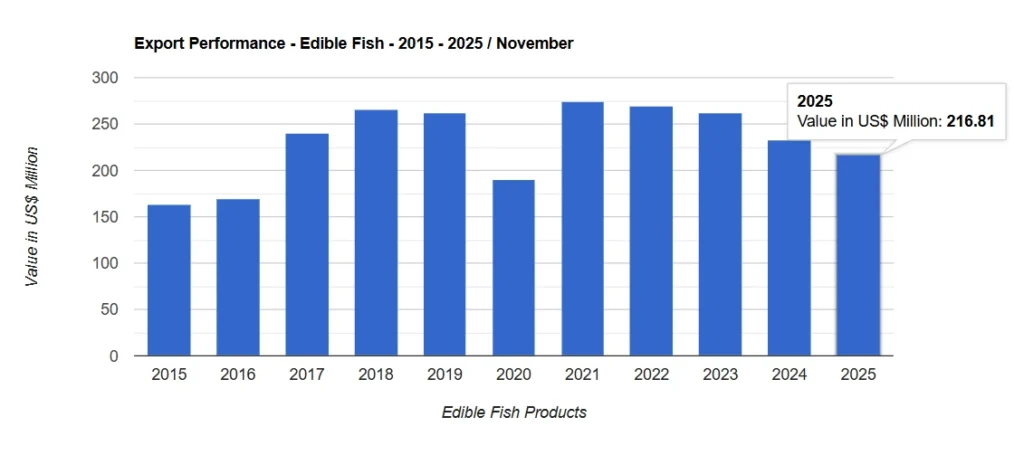
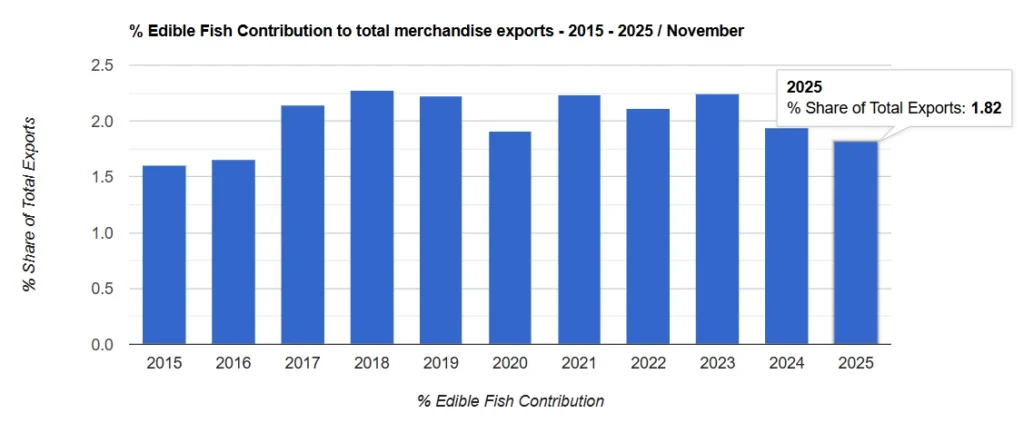
Export figures for 2025 demonstrated resilience in Sri Lanka’s seafood segment. From January to November, revenues totaled about $217 million, a 1.87% increase year-on-year, bolstered by stronger frozen fish shipments up 17.93%.
November alone saw $16.89 million, up 2.49%, with frozen fish leading at 16.4% growth. Earlier periods reflected variability: January to September reached $184.56 million, up 2.89%, while September hit $22.7 million, surging 53.07% due to fresh chilled fish (108.16%) and frozen types (53.9%). October dipped to $15.36 million, down 9.54%.
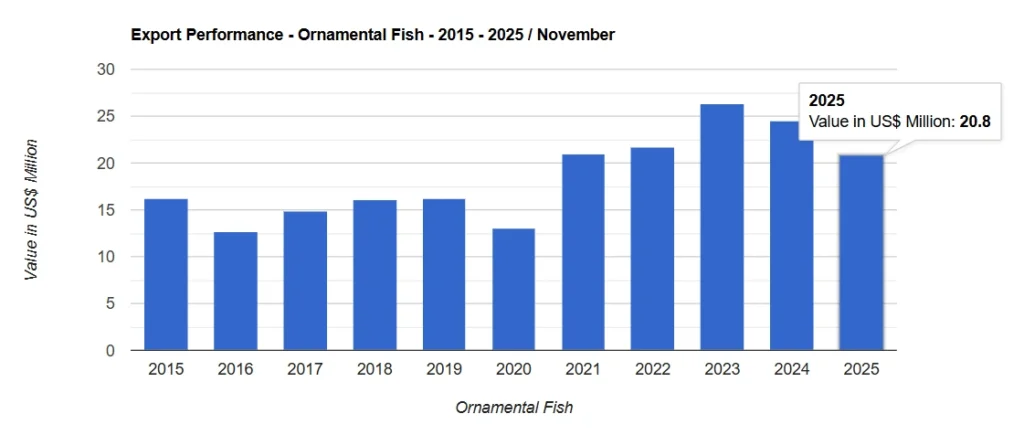
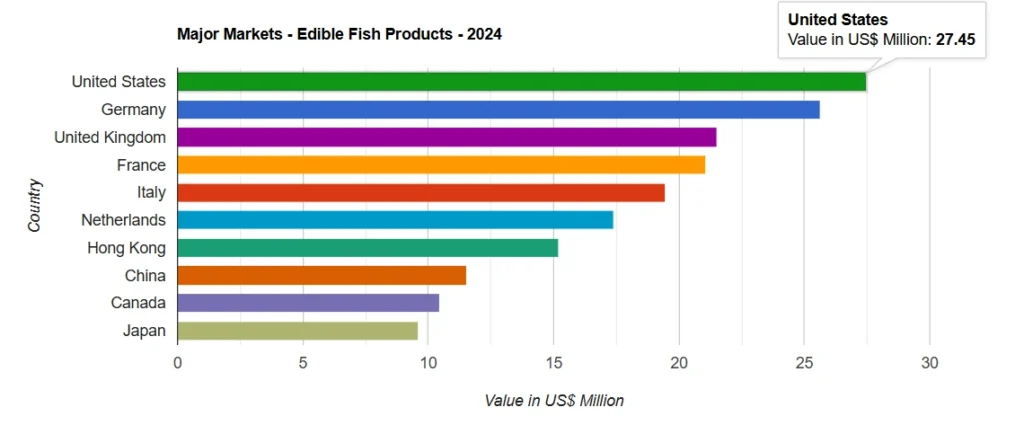
Comparatively, 2024 exports stood at $233 million, down from $262 million in 2023, with an average annual growth of 3.66% from 2020 to 2024. Primary markets span Europe, the United States, and Asia, where premium products like tuna and ornamental fish thrive. Ornamental exports added $2.39 million in September, up 10.14%.
Globally, the seafood arena showed vigor in 2025. The market, encompassing wild catch and farmed varieties, was pegged at $369 billion in 2024, growing to $387 billion in 2025. Aquaculture production is set to moderate in 2026 after robust 2025 gains, influenced by demand softening and feed cost swings. Asia-Pacific dominates consumption, propelled by population growth and dietary shifts toward nutritious foods.
Recent Changes and Implications
The year 2025 introduced key evolutions in the fisheries landscape. Sri Lanka saw export gains tied to improved frozen and fresh product demand, yet faced dips from global economic slowdowns and competitive pressures. Tariff reforms on bait fish imports eased shortages for deep-sea tuna operations, fostering efficiency without undermining local suppliers. Acceptance of international agreements on subsidies curbed harmful practices, aligning with sustainability goals.
Domestically, environmental hurdles like weather disruptions affected yields, while labor and infrastructure gaps persisted. The sector’s GDP contribution hovers at 1.1%, spurring plans to elevate it to 1.14% by 2027 through modernization.These shifts signal cost pressures from compliance but also open avenues for premium pricing in regulated markets. Globally, softer U.S. demand and inflation could temper growth, yet rising health trends favor natural proteins, potentially benefiting Sri Lanka’s eco-focused exports.
Business Perspectives and Opportunities
Businesses in Sri Lanka’s seafood domain find ample scope for expansion and innovation. Emphasis on value-added processing, such as canned tuna and ready-to-eat shrimp, yields higher returns over raw exports. Opportunities lie in vertical integration, linking capture with aquaculture to stabilize supplies and cut costs.
Sustainability stands out as a core opportunity: Certifications for responsible fishing unlock access to discerning markets in Europe and North America. Partnerships with global entities could infuse technology, like real-time data platforms for shrimp farming, enhancing yields by 15-20%. The electric vehicle trend indirectly boosts demand for diversified proteins, where Sri Lankan tuna expertise can excel.
For small and medium enterprises, government-backed training and financing facilitate market entry via trade fairs. Branching into ornamental fish and inland products diversifies risks from marine volatility. Forward-thinking firms adopting circular practices, like waste repurposing, could realize annual revenue boosts over 10%, aiding economic diversification.
Future Vision and Outlook
Sri Lanka’s fisheries sector aspires to become a sustainable, tech-integrated leader by 2030. In 2026, developments like the Pesalai fisheries port and digital shrimp platforms will enhance capacity, potentially lifting exports beyond $250 million. Global forecasts peg the market at $741 billion in 2026, driven by aquaculture expansion and health-driven consumption.
Persistent issues like climate risks and IUU fishing demand vigilant action, but trends in recycled products offer solutions. Budget allocations for 2026, including infrastructure and training, will prove pivotal. With these, the sector could attain growth rates matching global averages, surpassing $300 million in exports by the decade’s end and elevating GDP impact.
Why It Matters
Sri Lanka’s seafood industry’s vitality extends to economic stability, coastal job creation, and environmental health. As a foreign exchange generator, it cushions against shocks and bolsters food security. Globally, it sustains supply chains in nutrition and hospitality, advancing sustainability amid ocean conservation needs.
For enterprises, it offers innovation-led gains; for leaders, it calls for enabling policies. A vibrant fisheries sector strengthens national endurance, promotes equitable advancement, and establishes Sri Lanka as a key global contributor.
Also in Explained | Unlocking the Export Potential of Sri Lanka’s Cinnamon and Spices Sector