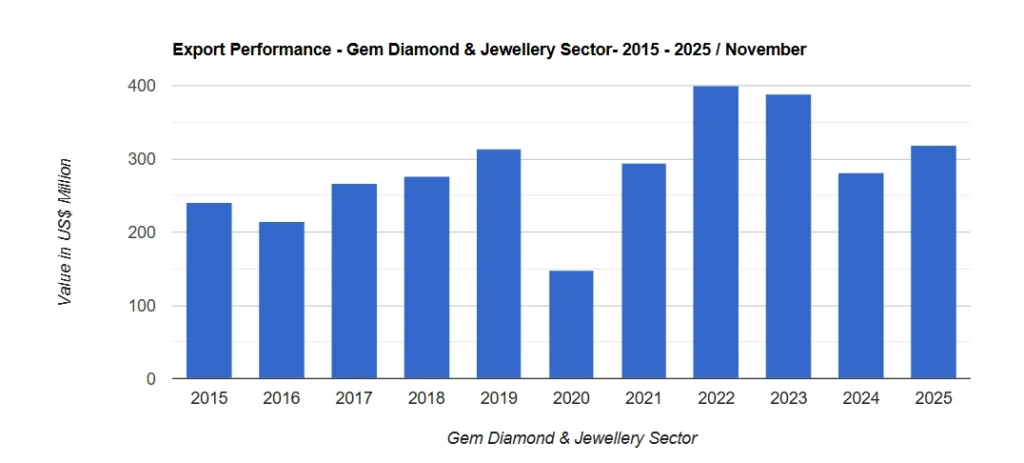
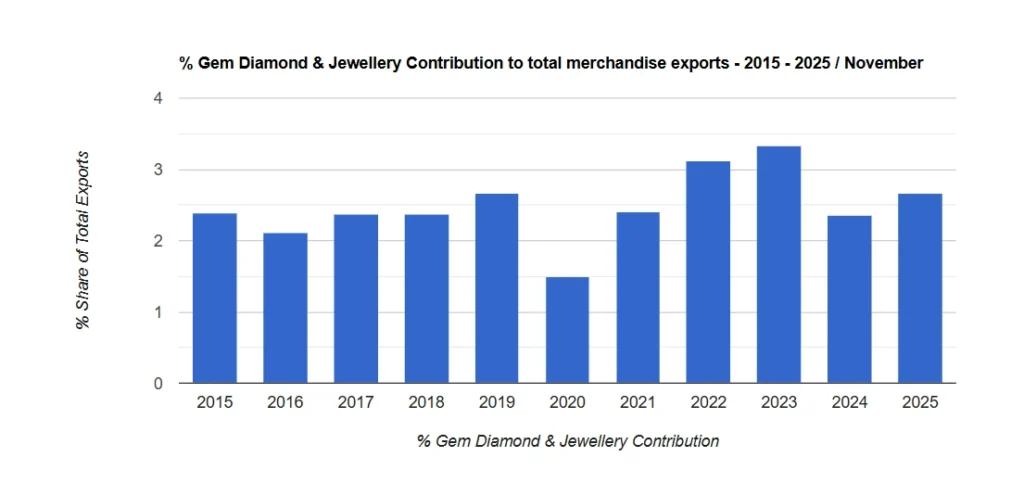
Sri Lanka’s gem and jewellery industry is building momentum toward a long-term target of $1 billion in annual export earnings, supported by recent reforms and the nation’s established reputation for premium coloured gemstones. Exports for the first nine months of 2025 reached USD 310.52 million, with full-year projections estimating USD 400-500 million, reflecting steady progress amid ongoing enhancements to licensing, ethical practices, and value addition.
As global demand grows for responsibly sourced and distinctive gems, particularly sapphires, the sector leverages its geological strengths and lapidary expertise to stand out in luxury markets. Continued focus on transparency and innovation positions the industry for stronger contributions to foreign exchange and economic diversification.
Also in Explained | Unlocking the Potential of Sri Lanka’s Hand-Woven Textile Sector
Recent Export Performance and Growth Momentum
The gem and jewellery sector has demonstrated resilience, with provisional data showing USD 310.52 million in earnings from January to September 2025. This builds on USD 360 million for the full year 2024 and USD 475 million in 2023, indicating gradual recovery driven by improved formal channels and international buyer interest.
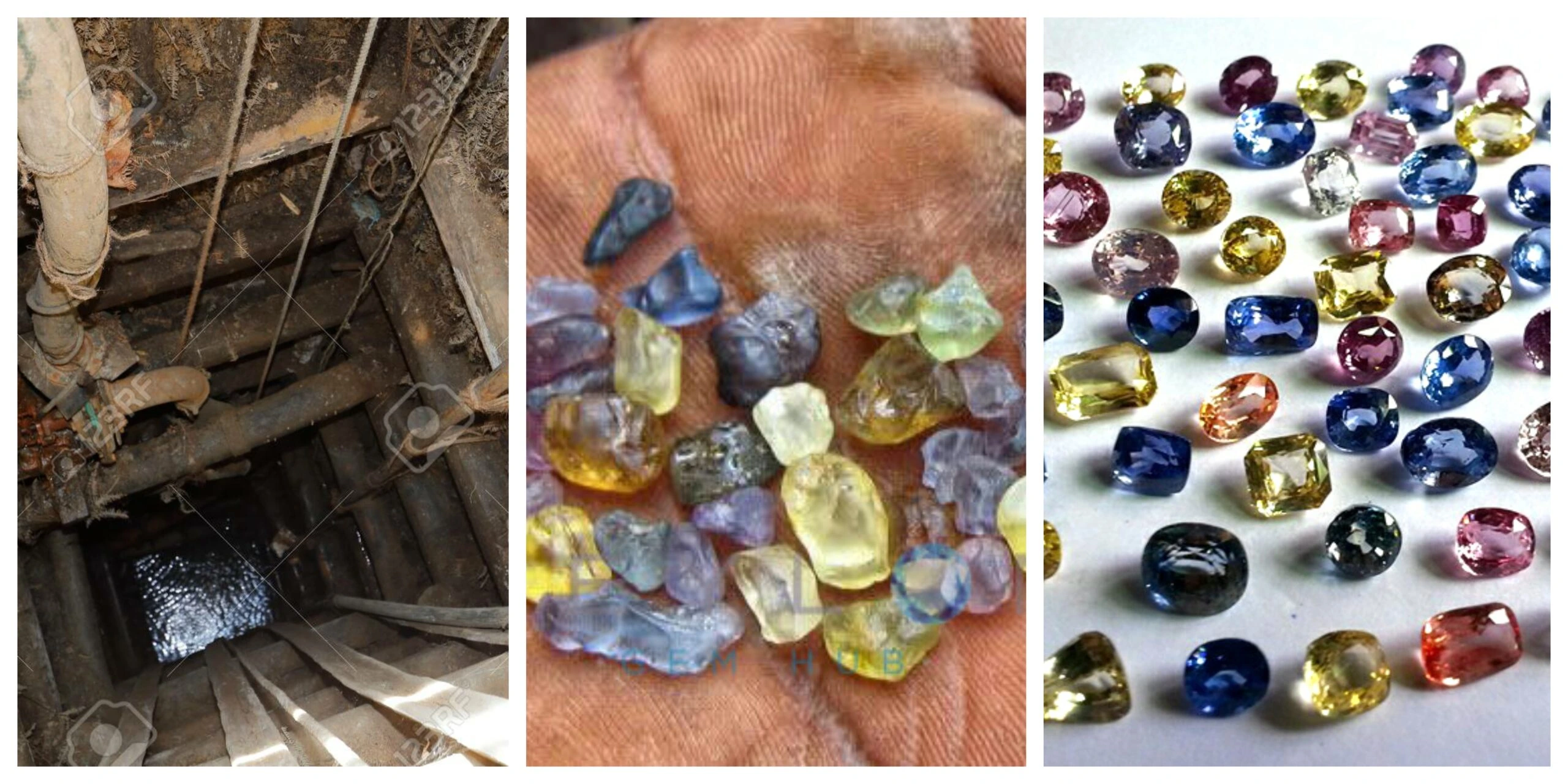
Sapphires remain the cornerstone, comprising the majority of exports due to their renowned quality and variety. Sri Lanka continues to supply a significant portion of the world’s fine sapphires, including sought-after blue and rare padparadscha types. Other coloured stones, such as rubies and cat’s eye, complement the portfolio, appealing to high-end jewellery applications.
Reforms implemented in 2025, including streamlined licensing and measures to curb informal trade, have facilitated greater formalization. These changes support traceable supply chains, boosting confidence among overseas partners.
Strengths and Global Differentiation
Sri Lanka’s gems are prized for exceptional colour, clarity, and often minimal treatment, setting benchmarks in the coloured stone category. Regions like Ratnapura yield stones with intense hues that command premiums at auctions and in bespoke jewellery.
Generations of cutting and polishing expertise ensure precision that maximizes each stone’s potential. Jewellery production blends traditional craftsmanship with contemporary design, creating unique pieces for international brands.
Increasing emphasis on ethical mining and environmental responsibility aligns with buyer expectations in major markets. Certifications for conflict-free sourcing enhance appeal, particularly in Europe and North America.
This blend of rarity, skill, and accountability distinguishes Sri Lankan offerings in a competitive landscape.
Business Opportunities Across the Value Chain
The sector presents diverse avenues for entrepreneurs and investors. Mining reforms enable licensed, systematic operations, improving efficiency and sustainability over traditional methods.
Advanced cutting and polishing facilities offer potential for technology upgrades, retaining more value domestically from rough stones. Jewellery manufacturing hubs can develop branded collections, incorporating gems with metals for complete products.
Partnerships with global designers and retailers facilitate co-branded lines in luxury and ethical segments. Export-focused ventures benefit from promotional platforms, while digital channels enable direct outreach to buyers.
Niche opportunities include custom designs, certified sustainable jewellery, and services like gem testing or appraisal. SMEs can thrive in specialized areas, supported by training and certification initiatives.
Investments in logistics, quality control, and branding infrastructure create supportive ecosystems, generating skilled employment along the chain.
Challenges and the Impact of Reforms
Historical issues, such as informal exports and regulatory complexities, have constrained formal earnings despite abundant resources. Competition from synthetic gems and other producing nations adds pressure.
2025 reforms address these through simplified processes, stronger enforcement, and incentives for value addition. A forthcoming law in early 2026 aims to further elevate Sri Lanka as a global gem hub.
Environmental management and skill development remain priorities, requiring balanced approaches to mining impacts and workforce training.
Spotlight on Facets Sri Lanka 2026
The ongoing Facets Sri Lanka 2026 international gem and jewellery exhibition, held from January 3 to 5 at The Forum in Cinnamon Life, City of Dreams, serves as a key catalyst for the sector. This 32nd edition features over 100 exhibitors showcasing exquisite gems, innovative jewellery, and industry advancements, attracting international buyers and fostering valuable partnerships. The event underscores ethical sourcing and modern design, providing direct momentum toward export goals.
With platforms like Facets and sustained reforms, the industry targets accelerated growth. Branding efforts around Ceylon gems and certifications will strengthen positioning.
Long-term objectives focus on reclaiming prominence in coloured stones through sustainability and innovation, contributing meaningfully to reserves and livelihoods.
Why the Gem and Jewellery Sector Matters for Sri Lanka
Sri Lanka’s gem heritage represents a valuable natural asset with strong international appeal. Targeted development can elevate the sector as a significant export contributor, supporting broader recovery efforts.
Businesses in this field benefit from markets that reward quality and traceability. As preferences shift toward authentic and responsible products, the industry holds promise for innovation, job creation, and enduring economic value.
Also in Explained | Sri Lanka’s Coconut Sector Achieves Historic $1 Billion Export Milestone in 2025