
Sri Lanka’s fragile economic recovery has been shaken once again. In the aftermath of Cyclone Ditwah, which struck in late November 2025, more than 120 leading global economists have issued a public statement urging the immediate suspension of Sri Lanka’s external sovereign debt payments and a fresh round of restructuring.
The statement, released on December 21, 2025 and coordinated by the campaign group Debt Justice, argues that the devastation caused by the cyclone has overwhelmed the limited fiscal space created by Sri Lanka’s 2024 debt deals. For businesses, policymakers, and investors, the call underscores the urgent need to balance humanitarian recovery with financial discipline.
Also in Explained | IMF Warns Sri Lanka’s Economic Gains Still Vulnerable: Supportive but Firm on Discipline
Cyclone Ditwah’s Economic Toll
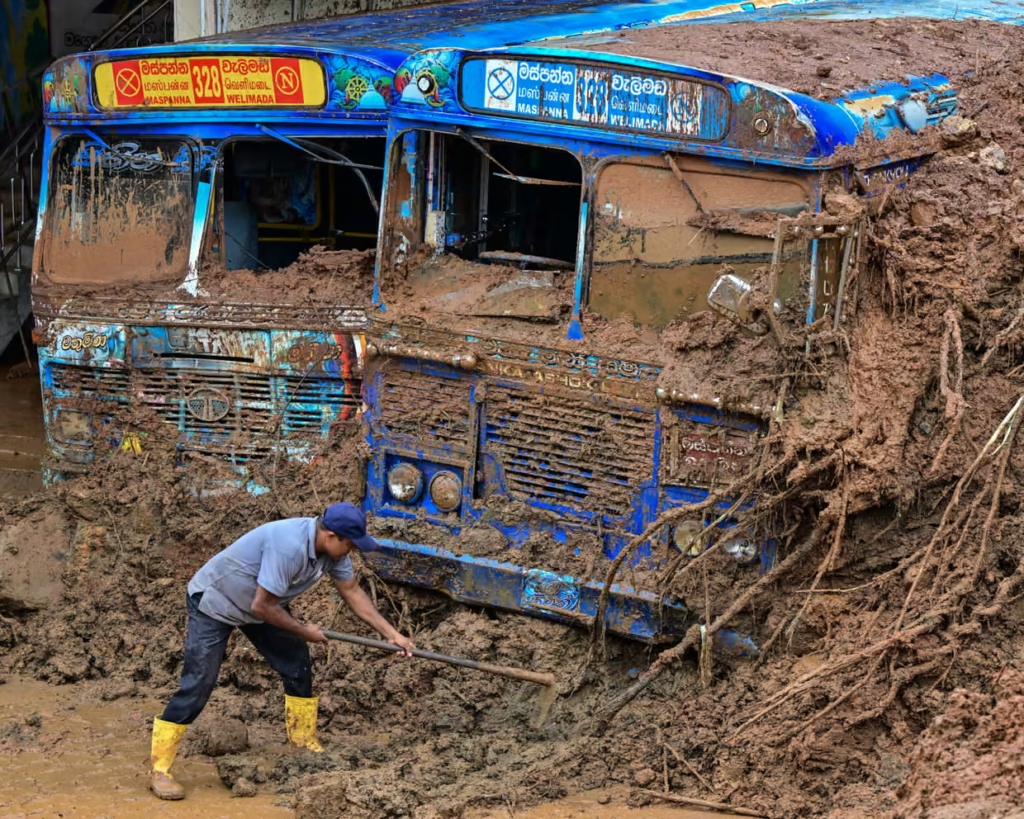
Cyclone Ditwah made landfall on Sri Lanka’s eastern coast on November 28, 2025, unleashing widespread flooding and landslides across all 25 districts. The human and economic toll has been staggering:
- Death toll: Over 600 confirmed, with hundreds still missing.
- Affected population: Up to 2.3 million people (over 10% of the population), with hundreds of thousands displaced.
- Infrastructure damage: Thousands of homes destroyed, rail lines and bridges collapsed, power grids disrupted, and farmland submerged.
- Sectoral impact: Tea plantations, agriculture, and tourism key pillars of foreign earnings have been devastated. Peak tourist season was disrupted, while farmland losses threaten food security.
- Economic cost: Direct physical damage estimated at US$4.1 billion (World Bank, December 2025), with officials warning broader reconstruction costs could reach up to $7 billion.
Climate attribution studies, including those by World Weather Attribution, suggest global heating intensified the flooding severity, underscoring the link between climate change and economic vulnerability.
The Economists’ Statement
The joint statement by economists including Joseph Stiglitz, Thomas Piketty, Jayati Ghosh, Martín Guzmán, Kate Raworth, and Yanis Varoufakis is unequivocal:
“Sri Lanka is now confronting a severe economic shock triggered by the recent cyclone, extensive flooding and landslides, which has inflicted extensive damage to infrastructure, livelihoods, and key sectors of the economy. This environmental emergency is poised to absorb and potentially exceed the extremely limited fiscal space created by the current debt restructuring package.”
The experts urge:
“Immediate suspension of Sri Lanka’s external sovereign debt payments, and a new restructuring that restores debt sustainability under the new circumstances.”
This call reflects growing recognition that climate disasters can render conventional debt deals obsolete, requiring adaptive frameworks that account for environmental shocks.
Debt Background: Why 2024 Restructuring Is Insufficient
Sri Lanka defaulted on its external debt in 2022, triggering its worst economic crisis in decades. After protracted negotiations, the country restructured approximately USD 9 billion in 2024, including haircuts for some creditors.
Yet even after restructuring, debt payments were projected to consume 25% of government revenue among the highest ratios globally. Research by Debt Justice indicates that private creditors still stand to earn 40% higher profits than lending to the US government, highlighting the imbalance between creditor gains and debtor sustainability.
Cyclone Ditwah has now rendered these projections unrealistic. With billions needed for reconstruction, Sri Lanka cannot sustain debt payments without sacrificing humanitarian relief and economic recovery.
IMF Loan Approval
The International Monetary Fund approved US$206 million in emergency financing on December 19, 2025, under the Rapid Financing Instrument, repayable in 3–5 years. While helpful for immediate needs, this allocation pales in comparison to the estimated reconstruction costs. Economists argue that without debt suspension, such loans merely add to the burden rather than resolving structural constraints.
Local Political Response
The economists’ call has resonated domestically. Opposition Leader Sajith Premadasa endorsed the demand, urging President Anura Kumara Dissanayake’s government to pursue substantial debt relief.
President Dissanayake has described Cyclone Ditwah as potentially the largest natural disaster in Sri Lanka’s history, appealing for international aid and emphasising the need for global solidarity.
Broader Implications for Business and Economy
For Sri Lanka’s business community, the debt suspension debate carries direct consequences:
- Fragile recovery delayed: Pre-cyclone growth projections of 4–5% in 2025 are now at risk, with analysts forecasting a slowdown to around 3% in 2026 (though government targets exceed 5%, aided by reconstruction spending).
- Tourism disruption: The sector, expected to generate USD 5 billion in 2025, faces cancellations and infrastructure setbacks.
- Agriculture losses: Tea, rice, and other crops have been severely impacted, threatening rural incomes and export earnings.
- Investor confidence: Transparency and reform discipline will be critical to maintaining international confidence.
- Poverty risks: Rising food insecurity and job losses could reverse recent gains in stabilisation.
The broader narrative highlights climate injustice: Sri Lanka contributes less than 0.08% of global emissions yet suffers disproportionately from climate-linked disasters.
Reactions from Creditors and Global Context
Private creditors have resisted deeper concessions, citing contractual obligations and profit expectations. Yet the economists’ statement underscores the moral and economic case for relief: without suspension, Sri Lanka risks a prolonged humanitarian and economic crisis.
Globally, the call adds momentum to debates on climate-linked debt restructuring. As climate disasters intensify, traditional debt frameworks may prove inadequate, requiring innovative instruments such as climate clauses or disaster-linked debt relief.
Conclusion: The Path Ahead
Sri Lanka stands at a crossroads. The devastation of Cyclone Ditwah has exposed both physical vulnerabilities and financial constraints. The IMF’s emergency loan offers short-term relief, but economists argue that without debt suspension, recovery will remain fragile.
For policymakers, the challenge is clear:
- Protect the vulnerable through targeted relief.
- Rebuild smarter with climate-resilient infrastructure.
- Negotiate firmly for debt suspension and restructuring.
- Maintain discipline to preserve investor confidence.
For businesses and investors, vigilance is essential. Short-term volatility in tourism, agriculture, and prices is likely, but long-term resilience depends on Sri Lanka’s ability to secure fair debt terms and adapt to climate realities.
The global economists’ call is both a warning and an opportunity. If Sri Lanka can leverage international solidarity to suspend debt and rebuild sustainably, it may yet transform fragile recovery into resilient growth.
Also in Explained | Bank of Ceylon’s Rs. 20 Billion Sustainability Bonds: What It Means for Sri Lanka’s Capital Market