Sri Lanka’s pathway out of its historic economic crisis has faced a new test in the aftermath of Cyclone Ditwah. While the International Monetary Fund (IMF) has reassured continued support, including supplementary financing its latest remarks clearly signal both confidence in progress and caution about risks ahead.
IMF Mission Chief for Sri Lanka Evan Papageorgiou, speaking at a virtual briefing, acknowledged that reforms under the Extended Fund Facility (EFF) have helped stabilise the economy. Yet, he stressed the recovery remains fragile, growth is still below pre-crisis levels, and fresh shocks could easily derail hard-won gains if discipline slips.
A Crucial Lifeline – What the IMF Is Offering
The IMF’s supplementary allocation of approximately USD 206 million is designed not merely as short-term relief but as a bridge between immediate humanitarian assistance and longer-term reconstruction. The funding is expected to support:
- Disaster recovery and relief efforts
- Reconstruction and rebuilding initiatives
- Protection of vulnerable communities
- Continued economic stabilisation
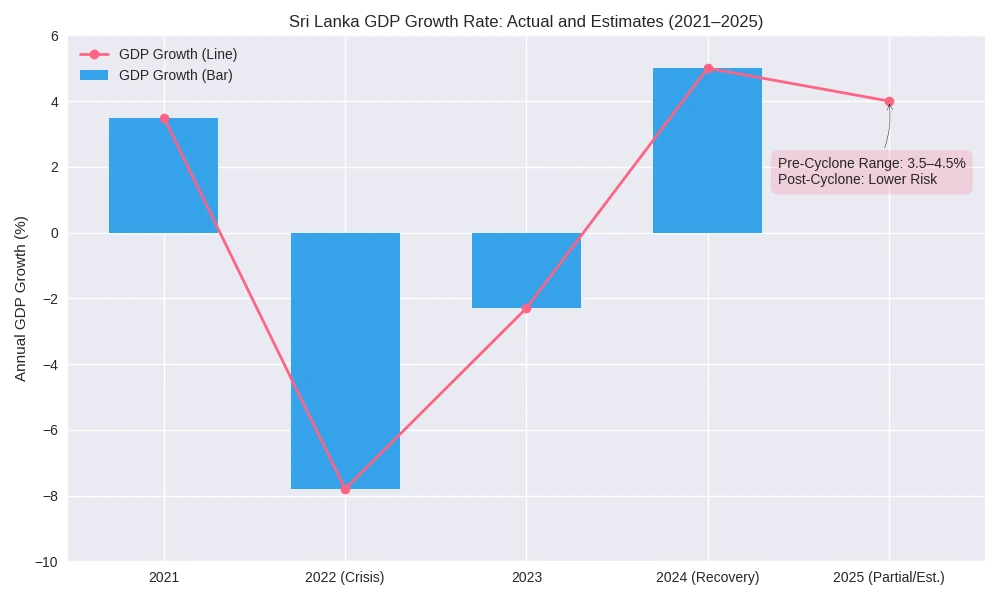
This comes at a sensitive time. Sri Lanka has only recently begun showing signs of economic stabilisation, improved price stability, reserve rebuilding, debt restructuring progress, and strengthened fiscal discipline through revenue reforms. The IMF acknowledges this progress, which is important both for investor sentiment and international confidence.
Also in Explained | Bank of Ceylon’s Rs. 20 Billion Sustainability Bonds: What It Means for Sri Lanka’s Capital Market
IMF Hits Pause – Why the Fifth Review Is Deferred
Given the scale of damage caused by Cyclone Ditwah and uncertainty over full economic impact, the IMF has temporarily deferred Sri Lanka’s Fifth Review under the EFF. A fresh mission is expected in early 2026 to reassess:
- Economic performance
- Reconstruction financing needs
- Policy discipline
- Progress of structural reforms
This pause is not a withdrawal of support, but a recalibration. However, it underlines that Sri Lanka cannot afford complacency.
Key Areas of Concern Raised by the IMF
- Economic Fragility
While stabilisation has taken place, GDP has yet to return to pre-crisis levels. The IMF warns that disaster-linked disruptions may weigh on short-term economic activity. - Agriculture and Tourism Risks
Agriculture and tourism, two pillars of livelihoods and foreign earnings are expected to be the most heavily impacted sectors. Supply disruptions could affect food security and rural incomes, while tourism recovery momentum risks being slowed. - Inflation & External Pressures
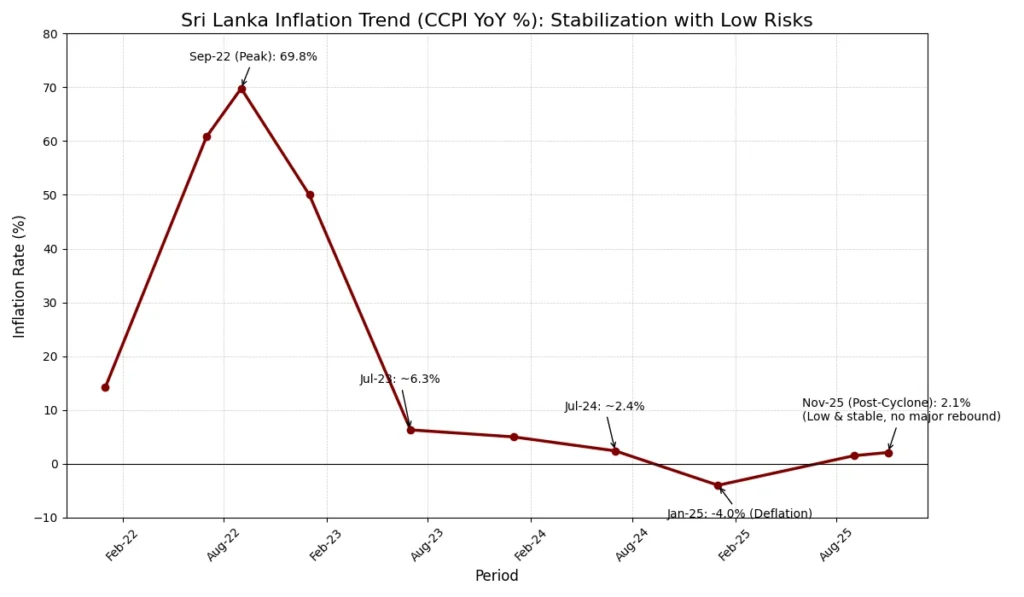
The IMF expects inflationary pressures due to supply shocks and warns the current account deficit may widen. This could pressure foreign reserves if not carefully managed. - Fiscal Management – Spend, But Spend Right
Emergency spending is encouraged but the IMF makes it clear;
it must be targeted, transparent, accountable, and compliant with the Public Financial Management Act. Strong monitoring and disclosure will be expected. - No Return to Money Printing
A key reminder is aimed squarely at monetary policy. The IMF insists the Central Bank must avoid monetary financing and maintain discipline, even under pressure.
The Positives – Where the IMF Stands Firmly Supportive
There are strong notes of endorsement as well.
- Reforms have strengthened fiscal discipline
- Public debt restructuring has improved sustainability prospects
- CBSL preparedness to support the financial system is acknowledged
- IMF reiterates commitment to Sri Lanka and its reform journey
- Protection of vulnerable communities remains a priority
There is reassurance that Sri Lanka is not alone, development partners are expected to support alongside the IMF.
The Balancing Act Ahead
Sri Lanka now faces a complex dual challenge – respond compassionately to a humanitarian disaster while maintaining economic reform discipline.
Spend too little, people suffer.
Spend unwisely, stability suffers.
This is the policy tightrope Sri Lanka must walk.
What This Means for Businesses and the Economy
- Short-term uncertainty remains likely
- Prices may face renewed upward pressure
- External financing will be critical
- Tourism and agriculture stakeholders should prepare for volatility
- Transparency and governance expectations will intensify
- Investor confidence depends heavily on continued reform commitment
The IMF’s tone is supportive but not indulgent. Sri Lanka’s progress earns respect; the risks earn caution.
Conclusion
The IMF’s latest stance is both a warning and a reassurance. It recognises progress but underscores vulnerability. It offers funding but demands discipline. It pauses the review but does not step away.
For Sri Lanka, the message is clear, “stay the course, protect the vulnerable, rebuild smarter, and avoid repeating mistakes of the past”.
If done right, the country can transition from fragile recovery to resilient growth.
Also in Explained | Rebuilding Sri Lanka’s Industrial Backbone: How Large-Scale Industries Will Recover After Cyclone Ditwah