
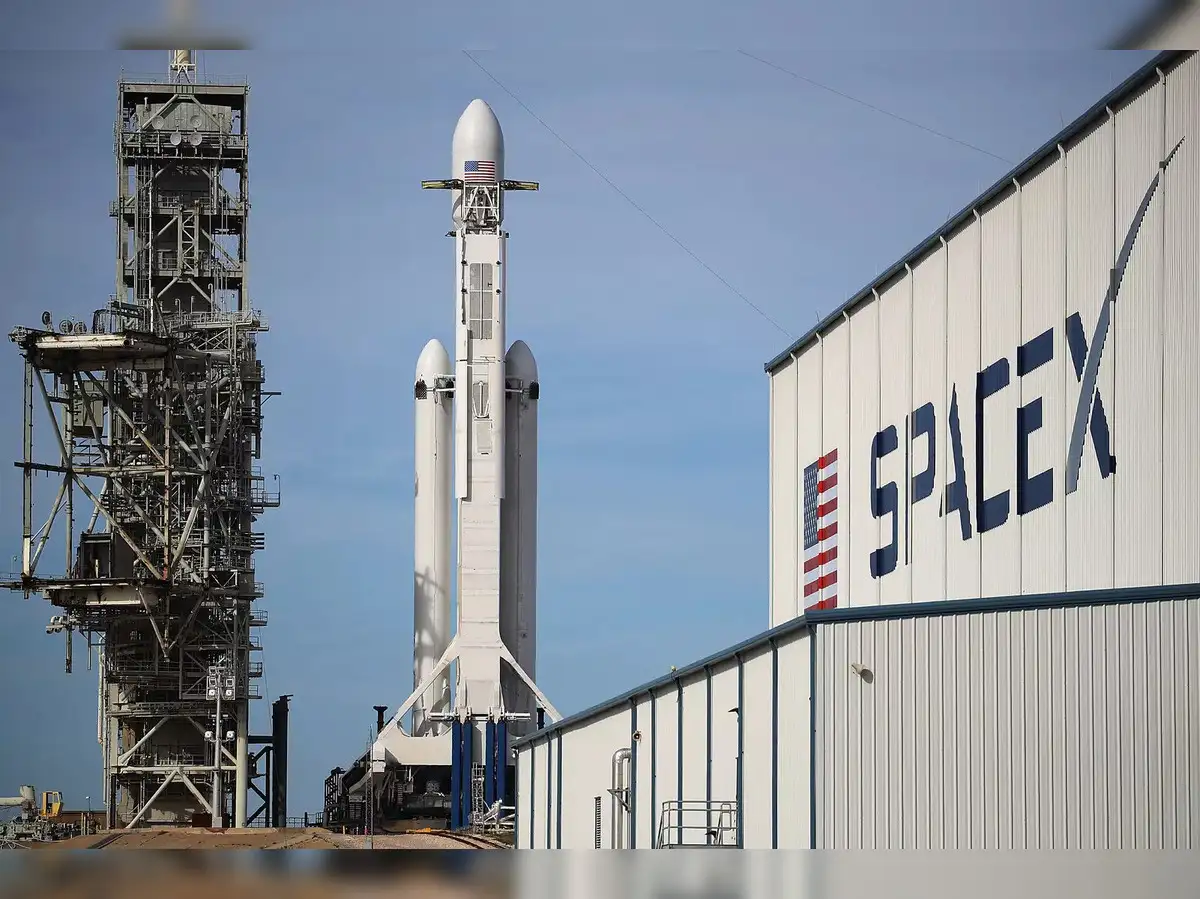
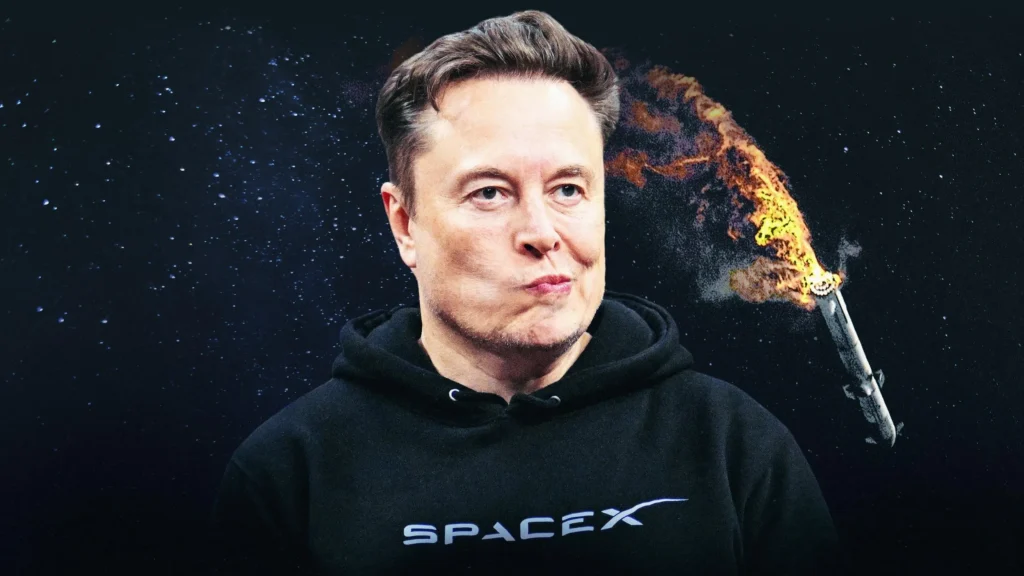
Elon Musk’s SpaceX is preparing for what analysts project could be the largest initial public offering in corporate history, with a 2026 launch targeting over $30 billion in capital at a potential valuation exceeding $1 trillion. This marks a fundamental strategic pivot for the private space company, and reveals an ambitious solution to artificial intelligence’s most pressing constraint: energy availability.
The announcement, confirmed by Musk in response to financial analyses, represents more than a conventional capital raise. SpaceX’s IPO timing aligns precisely with plans to deploy next-generation Starlink V3 satellites equipped with AI processing capabilities, positioning the company to capture emerging demand for space-based computing infrastructure as terrestrial data centers approach operational and environmental limits.
Also in Explained | The AI Platform Wars: How Grok, Gemini, and ChatGPT Are Reshaping Enterprise Technology in 2025
Current Valuation and Market Position
Recent insider share transactions value SpaceX at approximately $800 billion, making it one of the world’s most valuable private companies—surpassing established aerospace and technology giants. This valuation reflects not just the company’s rocket manufacturing and launch services, but increasingly its Starlink satellite constellation, which has deployed over 7,000 operational satellites since 2019.
SpaceX’s revenue trajectory supports these valuations. Financial projections indicate revenue growth from approximately $15 billion in 2025 to $22-24 billion in 2026, driven primarily by Starlink’s expanding subscriber base and enterprise services. The company’s reusable rocket technology, particularly the Falcon 9 and developing Starship provides cost advantages that competitors struggle to match, creating sustainable margins in what was historically a low-margin industry.
The planned IPO would likely surpass Saudi Aramco’s 2019 offering, which raised $29.4 billion and held the record for largest IPO. However, SpaceX’s differentiation lies not in scale alone, but in the strategic deployment of capital toward solving one of technology’s most critical emerging bottlenecks.
The AI Energy Crisis: Understanding the Constraint
Artificial intelligence development faces an accelerating energy constraint that threatens to slow innovation across the technology sector. Modern AI models require massive computational resources, with training runs for frontier models consuming tens of megawatts continuously over weeks or months.
Goldman Sachs projects data center power demand will surge 165% by 2030 compared to 2023 levels, with AI workloads representing the primary growth driver. Major technology companies are responding with unprecedented infrastructure investments. Microsoft has signed agreements to restart nuclear facilities, Amazon is investing billions in modular nuclear reactors, and Google is exploring similar partnerships to secure reliable baseload power.
These investments reveal a fundamental problem: terrestrial data centers face compounding constraints including electrical grid capacity limitations, cooling requirements that can equal computing power consumption, real estate constraints in viable locations, and increasingly stringent environmental regulations around energy usage and carbon emissions.
Oracle’s recent earnings reports illustrated this challenge vividly, with the company reporting negative operational cash flow despite strong revenue growth, driven by multi-billion dollar data center construction costs. The capital intensity of AI infrastructure is approaching levels that challenge even the largest technology companies’ balance sheets.
Traditional solutions building more data centers, securing more power purchase agreements, investing in renewable energy, address symptoms rather than fundamental constraints. Grid infrastructure upgrades require years and regulatory approvals. Cooling technologies have physical efficiency limits. Land suitable for massive data centers near population centers is finite and expensive.
SpaceX’s Orbital Computing Solution
SpaceX’s proposed solution sidesteps terrestrial constraints entirely by relocating AI computing infrastructure to low Earth orbit. The company plans to upgrade its next-generation Starlink V3 satellites with AI processing chips, creating a distributed orbital computing network that leverages space’s unique advantages.
The physics of orbital computing offer compelling benefits:
Solar power in space provides continuous, uninterrupted energy with approximately 40% greater intensity than terrestrial solar installations due to atmospheric absorption elimination. Satellites in sun-synchronous orbits can maintain nearly constant illumination, eliminating the intermittency that challenges ground-based renewable energy.
Thermal management becomes dramatically simpler in space’s vacuum environment. Heat rejection through radiative cooling is highly efficient without atmospheric interference, eliminating the massive water and energy consumption required for terrestrial data center cooling systems.
Latency concerns—historically a barrier to space-based computing are addressed through SpaceX’s laser inter-satellite links. Starlink V3 satellites feature optical communication systems enabling data transmission between satellites at light speed through vacuum, often faster than fiber optic cables routing through terrestrial infrastructure.
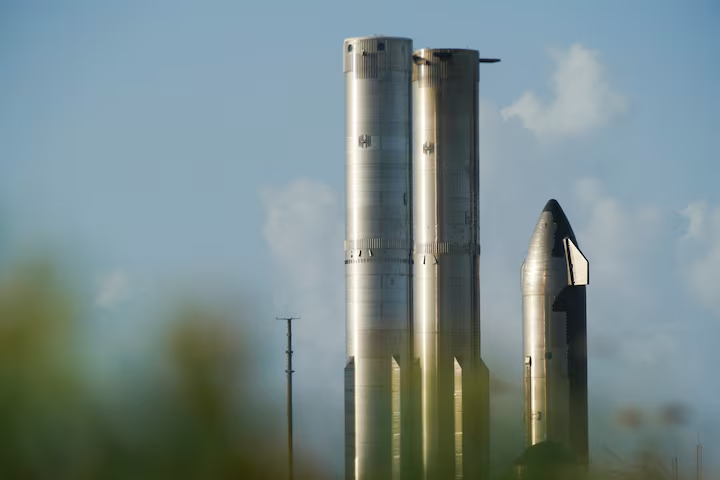
The Starship launch vehicle provides the economic foundation for this vision. With a projected payload capacity exceeding 100 metric tons to low Earth orbit and full reusability, Starship could deploy AI-equipped satellites at costs per kilogram dramatically lower than any existing launch system. This economic advantage makes mass deployment financially viable where previous space-based computing concepts remained theoretical.
Implementation Timeline and Technical Roadmap
Mass deployment of Starlink V3 satellites is projected for late 2026, aligning strategically with the proposed IPO timing. Initial prototype units would likely launch earlier, validating the concept and hardware before full-scale deployment.
Musk has indicated that achieving full cost-effectiveness for orbital AI computing requires approximately 4-5 years of development and scaling, but the foundational infrastructure begins deploying much sooner. This timeline suggests SpaceX views the IPO proceeds as enabling rapid scaling rather than funding initial research and development.
The technical challenges are substantial but addressable. Cosmic radiation requires hardened computing components and error-correction systems. On-orbit maintenance presents logistical complexity, though SpaceX’s approach of deploying replaceable satellite units rather than servicing individual platforms mitigates this concern. Regulatory frameworks for orbital computing remain undeveloped, requiring engagement with international telecommunications and space authorities.
However, SpaceX’s existing satellite operations provide crucial experience. The company has refined mass production, launch cadence, orbital management, and regulatory navigation through Starlink deployment. Extending this infrastructure to accommodate AI processing represents evolution rather than revolution in operational approach.
Competitive Landscape and Market Dynamics
SpaceX’s head start is significant but not unchallenged. Jeff Bezos’ Blue Origin is reportedly developing similar space-based computing concepts, leveraging Amazon Web Services’ cloud computing expertise. Google has explored satellite-based AI accelerators through various research initiatives. Traditional satellite operators are evaluating how to participate in emerging orbital computing markets.
However, SpaceX’s advantages are substantial. The existing constellation of over 7,000 operational satellites provides immediately available orbital infrastructure. Proven reusable launch capability through Falcon 9 and developing Starship offers cost advantages competitors cannot match without multi-year development programs. Integration between launch services, satellite manufacturing, and network operations creates vertical integration that streamlines development and reduces coordination costs.
Perhaps most significantly, SpaceX controls the timeline. While competitors conceptualize orbital computing, SpaceX can deploy prototype systems and begin gathering operational data, creating knowledge advantages that compound over time.
Business Model Implications and Revenue Potential
If SpaceX successfully develops viable orbital AI computing, the business model implications extend far beyond current revenue projections. Rather than competing with hyperscale cloud providers, SpaceX could become infrastructure for those providers—turning competitors into customers.
Major technology companies spending tens of billions annually on data center infrastructure would evaluate orbital computing as complementary capacity. Use cases with specific requirements, continuous processing workloads, global data collection and analysis, latency-insensitive training runs, could migrate to orbital platforms while latency-sensitive applications remain terrestrial.
This infrastructure positioning explains valuation targets exceeding $1 trillion. SpaceX would transform from a launch and satellite services company into a foundational layer of global computing infrastructure, comparable to internet backbone providers or cloud platform operators in strategic importance.
Revenue models could include capacity leasing to cloud providers, dedicated satellite clusters for enterprise customers, and hybrid offerings combining orbital and terrestrial computing. The recurring revenue nature of infrastructure services would provide stability complementing the more variable launch services business.
Investment and Economic Implications
A 2026 SpaceX IPO at the projected scale would represent a watershed moment for space economy investment. Public market access would enable broader institutional and retail participation in space infrastructure development, potentially accelerating capital formation across the sector.
For emerging markets and developing economies, orbital computing offers potential leapfrog opportunities. Countries without extensive data center infrastructure could access advanced AI computing through satellite connectivity, similar to how mobile telecommunications enabled developing markets to bypass landline infrastructure investments.
The geopolitical implications merit consideration. Orbital computing infrastructure raises questions about data sovereignty, security, and regulatory jurisdiction. International frameworks governing space-based services will require updating to address computing workloads, not just telecommunications.
Environmental considerations present both opportunities and concerns. Orbital computing’s energy efficiency and reduced terrestrial footprint offer sustainability advantages, but satellite deployment at scale raises questions about orbital debris, light pollution, and atmospheric impacts from increased launch cadence.
Strategic Outlook and Broader Implications
SpaceX’s orbital AI computing strategy exemplifies Elon Musk’s approach to grand challenges: identify fundamental constraints, develop solutions that bypass rather than incrementally improve existing approaches, and leverage vertical integration to execute at scale.
Whether the full vision materializes as planned remains uncertain, space projects face technical and regulatory risks that can extend timelines and inflate costs. However, the underlying logic is compelling. AI computing’s energy requirements are growing exponentially. Terrestrial infrastructure faces physical and regulatory constraints. Space offers abundant energy and natural cooling. Launch costs are declining dramatically through reusability.
For business leaders and investors, SpaceX’s IPO represents more than a space company going public. It signals the emergence of space-based infrastructure as viable for computing-intensive applications, potentially opening new categories of investment and business development.
The next 18-24 months will prove critical. Prototype deployments, regulatory negotiations, and technical validation will determine whether orbital computing transitions from concept to operational reality. If successful, SpaceX’s IPO may be remembered not just for its size, but for marking the moment computing infrastructure began extending beyond Earth’s surface.
The stars, quite literally, may hold the key to sustaining artificial intelligence’s computational demands—and SpaceX is positioning itself as the infrastructure provider enabling that expansion.
Key Takeaways
- SpaceX targeting 2026 IPO with over $30B capital raise at potential $1T+ valuation
- Current insider valuations place SpaceX at approximately $800B, making it one of world’s most valuable private companies
- Orbital AI computing addresses terrestrial data center constraints: energy limits, cooling requirements, grid capacity
- Starlink V3 satellites will feature AI processing chips, leveraging continuous solar power and vacuum cooling
- Goldman Sachs projects 165% increase in data center power demand by 2030, primarily driven by AI workloads
- SpaceX’s reusable Starship enables economically viable mass deployment of computing satellites
- Late 2026 mass deployment timeline aligns precisely with IPO, suggesting capital will fund rapid scaling
- Successful implementation could transform SpaceX into global computing infrastructure provider
Also in Explained | Google’s Bold Leap: Building Data Centers in Space to Power the Future of AI